Get Full Government Meeting Transcripts, Videos, & Alerts Forever!
Get email alerts on the Veterans Relief topic
No spam. Unsubscribe anytime.
Commissioners, staff debate uses as veterans relief fund tops $1 million
Summary
County finance and Health & Human Services staff told commissioners the veterans relief fund balance has grown to just over $1 million; officials said state rules require money be used for low-income veterans and described possible program options ranging from direct emergency assistance to larger veteran housing projects.
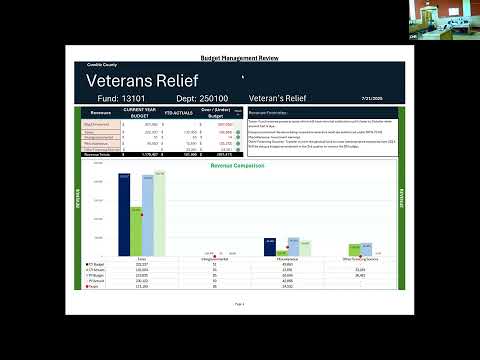
The Cowlitz County Board of Commissioners heard Monday that the county’s veterans relief fund balance has grown to a little over $1 million and discussed how the money can legally be used. Kathy Funk Baxter, the county’s finance director, and Health and Human Services staff briefed commissioners on revenue sources, current spending and eligibility rules. The fund receives a required portion of the general-fund levy and also records intergovernmental revenue, miscellaneous investment earnings and occasional transfers in from the general fund. Kathy Funk Baxter said the fund’s growth accelerated during the COVID period when utilization fell and investment income increased. Health and Human Services staff said the fund’s assistance typically pays for food, emergency auto repairs and utility bills. Commissioner Dahl and Health and Human Services staff emphasized legal limits on the money’s use. “If there was something identified that the board wanted to do with that funding, it has to go towards indigent veterans,” Health and Human Services staff said, adding the program uses federal poverty guidelines to determine eligibility. The county noted the advisory board recently recommended raising some assistance limits, which staff said has already increased expenditures this year and is expected to bring annual expenditures closer to annual revenue. Commissioner Dahl said he was reluctant to use fund money for staff salaries and favored “tangible” assistance tied to veterans’ needs. “It had to be in, like, job programs or housing or things like that that would help a veteran that’s struggling,” Dahl said. Staff outlined additional options under consideration, including partnering with larger organizations or exploring a veteran housing unit, but said no formal action was taken Monday. Commissioners asked staff to continue reporting back and to follow the advisory board’s recommendations as they consider program changes.