IURA reviews CDBG/HOME spend-down risks; three projects flagged for delay
Summary
IURA staff reported a HUD notice over slow CDBG spend-down and identified three projects slowing expenditures—the Cecil Malone sidewalk, INHS homeowner rehab program, and the agency's economic development loan fund—while proposing a midyear workout plan and potential reprogramming of funds.
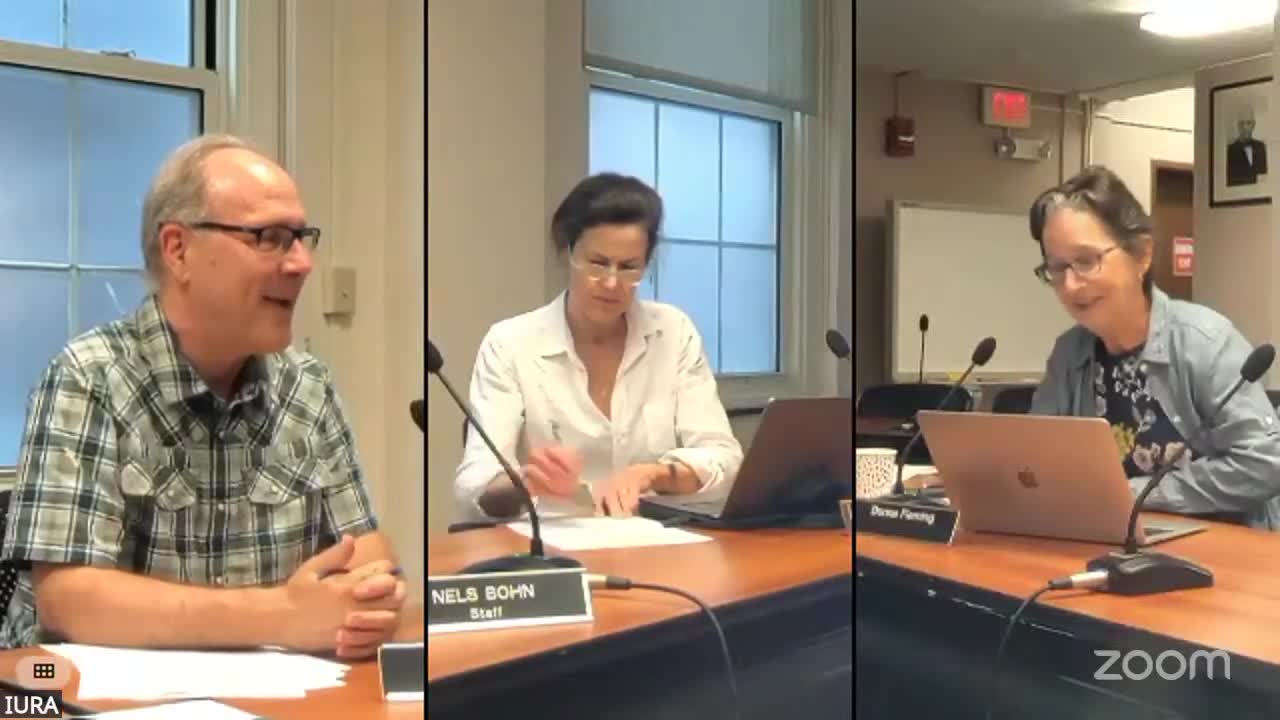
Ithaca Urban Renewal Agency staff told the Governance Committee they received a HUD notice that the agency did not meet CDBG spend-down expectations and warned that continued under-spending could reduce future grants. The committee discussed a proposed workout plan and identified three projects that are responsible for the lag.
Nels summarized the HUD rule described to the committee: a jurisdiction cannot have more than 1.5 times its most recent grant outstanding in unexpended CDBG funds; failing to meet that standard can prompt a reduction in future grants. "If you have access to that money and you haven't spent it, then they're counting that against you," Nels said.
Staff identified three projects slowing CDBG expenditure: the Cecil Malone sidewalk project (under contract but scheduled for late-season construction), the INHS homeowner rehab program (delayed during and after the pandemic by contractor shortages and a three-quote requirement for some grants), and the IURA economic development (ED) loan fund (about $270,000 sitting available for loans). Nels said the homeowner rehab program currently is constrained by the program's practice of requiring three bids in some contexts and by contractor capacity; he noted the agency has authority to allow two quotes for its funds where permitted and is working with INHS to explore flexibility.
Staff recommended a midyear review to check spend-down progress earlier in the funding cycle, and to identify potential backup projects that could be reprogrammed and billed promptly if existing projects do not meet timelines. "The workout plan is suggesting, besides looking at those projects and possibly reprogramming some funds, to do a midyear analysis ... If not, we should do some reprogramming. And to do that, we need to identify some backup projects," Nels said.
Committee members asked for more detailed project tables and for staff to track monthly target spend-downs; staff said the committee will receive a grants summary that identifies spending by year and a monthly target (about $75,000 per month on CDBG) to meet the HUD standard. The committee also discussed constraints on eligible uses—CDBG eligibility rules require that reprogrammed activities meet program rules and that the funds be expended by the HUD deadlines.
Separately in staff reports, Nels said the IURA finalized a sale of 309 College Avenue to an LLC controlled by Nick Robertson and Charlie O'Connor for $5,525,000; he said the sale proceeds will help defray the new East Hill Fire Station construction costs. The committee also heard that the Community Housing Development Fund awarded funding to multiple projects, including an INHS project on the 200 block of West State Street proposing 59 senior affordable units and a ground-floor childcare center; Nels said that fund was supplemented by over $2.6 million in developer contributions in lieu of on-site affordable housing.
The committee asked staff to provide a printed table of grants-by-year and pledged to revisit reprogramming options if spend-down targets are not met.