Get Full Government Meeting Transcripts, Videos, & Alerts Forever!
Get email alerts on the Economic Development topic
No spam. Unsubscribe anytime.
Dubois Strong outlines jobs-first strategy, housing and childcare priorities in 2026 budget briefing
Summary
Colton Pippen, executive director of Dubois Strong, told county commissioners that the organization will focus on job retention and growth, housing ‘missing middle’ solutions, childcare expansion, and infrastructure to support employers; no formal county appropriation or vote on the presentation was taken.
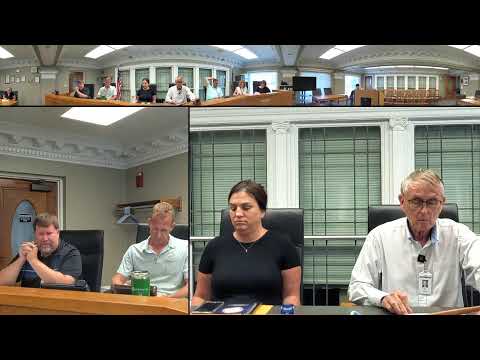
Colton Pippen, executive director of Dubois Strong, presented the organization’s priorities and 2026 budget overview to the Dubois County Commissioners on topics ranging from manufacturing clusters to housing and childcare needs.
Pippen said the group’s approach centers on jobs as the driver of income, housing demand, retail activity and tax revenue, and described four strategic focus areas: business retention and expansion, talent attraction, quality of place and infrastructure. He told commissioners Dubois County has about 27,982 jobs across 1,397 establishments, and that manufacturing accounts for roughly 10,700 jobs across 105 employers.
The presentation stressed that Dubois County is highly specialized in furniture and related product manufacturing (a very high location quotient in the presenter’s industry analysis) and that the region must pursue reskilling and industry support where employment is declining. Pippen said his office has completed 26 targeted employer visits in 2025 and that two local companies are pursuing expansion projects, one in planning stages and one actively seeking property.
Housing and childcare were singled out as urgent constraints on workforce growth. Citing a county housing study, Pippen said Jasper needs about 1,300 new housing units by 2035, a second community (transcript: "Einberg") needs 480 and Ferdinand 80. He described a proposal to adopt “incremental development” or preapproved small-scale housing plans (a set of 30–50 preapproved plans) so owners or small developers can add duplexes, cottages or other “missing middle” housing without lengthy site-by-site approvals. He said that approach reduces upfront architectural and engineering risk and can encourage higher-density use of existing lots.
On childcare, Pippen said the Community Foundation is leading a countywide effort and Dubois Strong will partner to expand capacity, improve quality and support the early childhood workforce. He noted the plan includes a dedicated Smart Start coordinator shared across nearby counties to advance childcare seats and workforce development.
Pippen reviewed Dubois Strong’s prior remote-worker incentive: 36 people accepted stipends since 2021; 18 of those relocated and joined the local workforce, and the program’s organizers estimate roughly 100 total new residents when spouses and children are counted. He reported an estimated $2.3 million in new annual economic activity tied to those moves, roughly $280,000 in state and local tax revenue and an average income of about $94,000 among stipend recipients. He said the remote-worker program’s minimum income qualification was lowered from $60,000 to $50,000 and that employer-led hires still have access to a $5,000 stipend structure.
Pippen also discussed site-selection marketing, mapping of utilities and proximity to interstates, and an industry analysis based on NAICS clusters and Bureau of Labor Statistics wage data to identify “mature,” “star,” “emerging” and “lagging” industry clusters for targeted work.
No formal county action or vote was taken on Dubois Strong’s presentation; county commissioners asked procedural budget questions (for example whether the organization’s budget had been submitted to the auditor) and Pippen said the budget had been filed and that Dubois Strong’s historical county funding has been roughly stable (the presenter gave an operating figure around $60,000 for Dubois Strong and $40,000 for another local entity, per his remarks). Commissioners did not direct a staff report or make an official funding decision during the presentation.
The presentation materials were offered to commissioners by email or handout; Pippen said he would tinker with slides and send an updated file. Commissioners requested the presentation be circulated to the full board for review before any funding decisions.
Why it matters: Commissioners will weigh Dubois Strong’s priorities and any county funding requests against broader budget obligations. Pippen identified housing and childcare as the two main barriers local employers cite when recruiting and retaining workers; addressing those is presented as a prerequisite to translating industry specialization into local job growth and new households.
For follow-up: Commissioners asked for the presentation slides by email and for confirmation that the organization’s 2026 budget had been filed with the county auditor. No formal appropriation or policy change was adopted at the meeting.