Get Full Government Meeting Transcripts, Videos, & Alerts Forever!
Get email alerts on the Permits Housing topic
No spam. Unsubscribe anytime.
Madison County grants six-month camper permit extension to resident building house with 90-day rough-in condition
Summary
The board approved a six-month extension for a camper permit for William Patrick while he completes construction; the extension is conditioned on a passing rough-in inspection within 90 days and the applicant's continued effort to secure a construction loan.
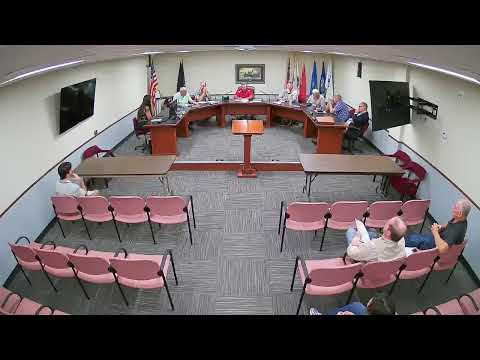
MADISON COUNTY, Ga. — The Madison County Board of Commissioners granted a six-month extension July 28 for a camper permit for William Patrick, who said he is living in a camper on his lot while he works to complete a house. Patrick told the board he bought an 8.5-acre parcel and is living in a camper with two cats while he arranges funding and a construction loan. He said he had obtained previous permission to extend permit timelines when he anticipated delays and that he is working with his builder, Stratton, to get the next-stage permit and a construction loan. County building staff told the board the residential permit dates back to January 2024 and the camper permit was issued in July 2024; inspections completed to date include slab plumbing and slab prep but no rough-in inspection yet. Staff recommended that, if the board approves a six-month camper permit extension, the board require a passing rough-in inspection within 90 days as a condition of the extension. The board motioned to approve the six-month extension with the 90-day passing rough-in condition; commissioners expressed concern about the applicant's finances and the risk that, if a construction loan does not materialize, the property could contain a partially built structure after the permit period ends. Why this matters: County building codes and permit timelines regulate temporary living arrangements tied to ongoing construction. The board balanced the applicant's individual circumstances against the county's interest in ensuring active, progressing construction and safety inspections. Details and conditions: Staff said the applicant must pay the required extension fees to the office; staff recommended approval provided a passing rough-in inspection occurs within the 90-day window. Commissioners noted the extension would not guarantee a certificate of occupancy (CO) within six months and warned the applicant that if larger funding plans fail, he might face having to vacate the lot at the end of an extended permit term. Next steps: Applicant to submit fees and aim to complete the rough-in inspection within 90 days; building staff to inspect and report back to the board if the condition is not met.