
APC members warn of possible surge in solar and battery projects; say county ordinances need tighter rules
Get AI-powered insights, summaries, and transcripts
Subscribe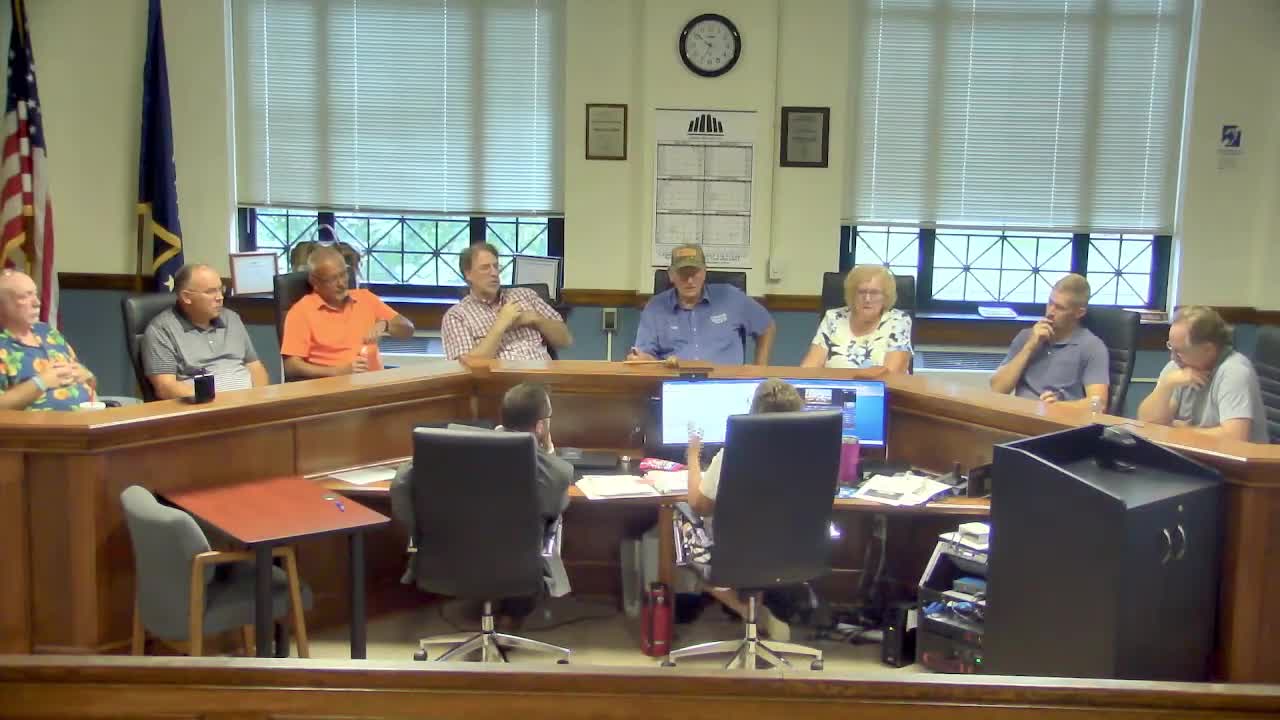
Summary
Commission members said they expect a wave of solar and battery projects in Vermillion County and flagged gaps in the unified development ordinance, especially for battery storage, emergency response and density of installations.
Members of the Vermillion County Area Plan Commission spent substantial time discussing a likely influx of utility‑scale solar and battery storage projects and whether existing local ordinances sufficiently regulate density, buffers and safety.
Commissioners and staff said they are aware of multiple projects in early planning and noted that some developers are under time pressure because of federal tax and incentive rules. Meeting participants reported they had seen proposals totaling several gigawatts in the region and that the MISO queue contained multiple local projects, though the exact totals were not independently verified at the meeting.
Members emphasized three specific concerns: the ordinances do not yet address battery storage risks in detail; solar layout rules do not limit how widely small parcels could be aggregated; and emergency responders need guidance for lithium‑ion battery fires. One commissioner described the current industry guidance and said such fires are treated differently: “You can’t put water on a lithium fire,” and responders often let the unit burn to avoid spreading the blaze to adjacent stored batteries.
Commissioners also discussed local infrastructure: road weight limits, drainage requirements and tie‑in points to existing transmission lines. Staff said a county drainage ordinance is in preparation and that developers have already been asking for drainage and road‑use standards.
Why it matters: members said a rapid increase in development could outpace the county’s regulatory framework and that clearer zoning, drainage and emergency requirements would help protect residents and clarify expectations for applicants.
Next steps: commissioners suggested reviewing the unified development ordinance (UDO) language on solar, adding explicit battery storage standards and considering a short‑term pause on accepting some applications while the county finalizes specific rules. No moratorium was adopted at the meeting.