Get Full Government Meeting Transcripts, Videos, & Alerts Forever!
Get email alerts on the Drainage Reestablishment topic
No spam. Unsubscribe anytime.
Vermillion County drainage board moves to reestablish D Ralphs Drain; engineer to be hired for survey
Summary
Vermillion County drainage board voted to reestablish the D Ralphs Drain and instructed the surveyor to begin engineering work; board members said the project may require grants, interjurisdictional coordination with Illinois and possible Army Corps involvement.
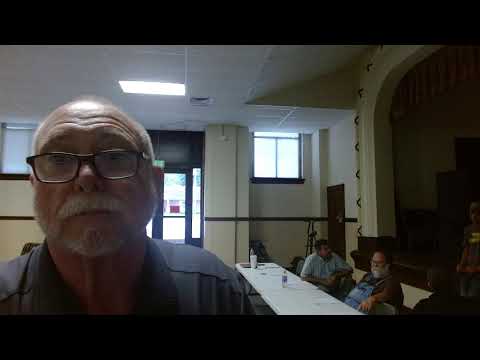
The Vermillion County Drainage Board voted to reestablish the D Ralphs Drain and instructed the surveyor to begin engineering work and watershed mapping, board members said at a public hearing.
The board opened a public hearing on the status of the D Ralphs Drain and heard comments from landowners and farmers who described chronic backyard flooding and standing water in a mobile-home neighborhood near the drain. Board members said preliminary work will include hiring a civil engineer to define watershed boundaries and elevations, a necessary step before cost estimates and assessments are set.
Board members discussed options for financing the work, including state and federal grants, tax assessments on benefited acres and county-administered funds. The board cited a prior example in which preliminary engineering to reconstruct a two-and-a-half–mile tile system had an initial estimate of about $1 million. Members noted grant matches can range from about 10% to 50% depending on the program and that banks sometimes offer below‑prime loans to help provide matching funds.
The board and presenters described a cross‑state complication: roughly 200–220 acres of the watershed lie over the Illinois state line. Staff reported outreach to the Danville city engineer and county engineers in Illinois had yielded little or no response to date. The board discussed two approaches: asking Illinois landowners and agencies to participate in assessments and representation through an interstate drainage board allowed under Indiana statute, or pursuing legal remedies that could require court action in Illinois.
Board members said they had discussed the possibility the U.S. Army Corps of Engineers could provide assistance if the project qualifies under the Clean Water Act, but that Corps involvement would require substantial permitting work. The board’s legal adviser (referenced in the hearing) warned that litigation in Illinois could be lengthy and expensive and that local judges and attorneys frequently interact across county lines, potentially complicating enforcement.
At the meeting the board authorized staff to solicit engineering proposals. Members stated that, under the board’s procurement practice, the surveyor may hire an engineer directly if the cost is below the board’s professional‑fees threshold (discussed at the hearing as approximately $150,000); higher amounts would return to the board for approval. The board also noted other potential funding sources, including a county riverboat fund and redevelopment‑TIF proceeds in areas where development would increase local tax capture.
Board members emphasized two decisions landowners will face: whether to reestablish the drain as a regulated county drain (which allows the county to perform work and assess benefited properties) or to vacate the drain (which would end county responsibility and leave maintenance to private parties). Several landowners and farmers present said they favored reestablishment to allow coordinated work and access to grants.
The board recorded a motion to instruct the surveyor of the Drainage Board to reestablish the D Ralphs Drain as presented; the motion received a second. The motion text was placed on the record and the board proceeded to discuss hiring an engineer and funding paths. The meeting record does not include a roll‑call vote tally in the transcript excerpt provided; the board proceeded with next steps consistent with the motion.
Next steps the board listed at the hearing included: soliciting engineering proposals to map the watershed and calculate acreages, contacting Illinois counterparts for interstate coordination, preparing to pursue applicable grants and permits (including potential Army Corps requirements), and returning to the board with cost proposals if engineering estimates exceed the procurement threshold.
The public hearing record on the drain also included discussion of other county business raised by residents, including questions about a legacy fiber‑optic route and the existence of a county riverboat fund that staff reported could be used for professional services. Those matters were discussed but left for separate follow-up.
The drainage board said it will return to the matter after receiving engineer proposals and clearer cost estimates; the board directed staff to collect proposals and to notify affected landowners as required by statute.