Get Full Government Meeting Transcripts, Videos, & Alerts Forever!
Get email alerts on the Unified Development Ordinance topic
No spam. Unsubscribe anytime.
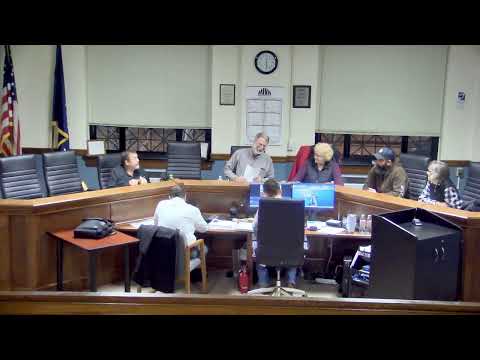
Area planning commission backs Vermillion County Unified Development Ordinance with targeted changes
Summary
The Vermillion County Area Planning Commission voted Jan. 9 to forward a revised Unified Development Ordinance to the county commissioners with changes on driveway standards, temporary RV rules, signage, pesticide language and energy uses.
The Vermillion County Area Planning Commission voted Jan. 9 to forward a revised Unified Development Ordinance (UDO) to the county commissioners with several changes and clarifications, including new long-driveway standards, temporary RV rules for agricultural lots, and edits to solar- and energy-storage provisions.
Brian Stevens, a staff member who presented the draft, told the commission the latest version incorporated edits requested by the county commissioners, corrections for scrivener errors, and comments from outside parties. "The only changes that have been made to this document are the ones that are coded in in red," Stevens said while summarizing the revisions and the process of public notice and review.
Why it matters: The UDO would replace or update multiple zoning rules across Vermillion County, affecting where commercial uses, temporary activities and utilities are allowed and setting new standards that could influence future development approvals and permit conditions.
The commission discussed and accepted specific policy changes. Notable changes the commission recorded include: - Driveway standards and emergency access: The commission adopted a standard that long driveways of 150 feet or longer must meet access and turnaround criteria to accommodate emergency vehicles. Specs discussed and incorporated from emergency-service input included a 30-foot clearway, 11-foot minimum driving surface width, a 50-foot turning radius, an unobstructed width of 20 feet and vertical clearance of 14 feet, a 50,000-pound minimum weight-bearing capacity for surface, and requirements that fire apparatus be able to get within 30 feet of the primary structure. Gates must have a Knox box on a post within 4 feet of the latch and at least 4 feet above grade. Variances remain available but the authority having jurisdiction (the local fire district) must be contacted on variance requests. - Temporary RVs in agricultural districts: The ordinance was clarified to allow RVs outside RV parks to be placed on lots for up to six months per year through a special-exception process; those RVs must provide basic living features (kitchen, bathroom, reliable water and waste disposal and electrical service). - Signage and temporary displays: Agricultural ground signs were allowed as a single, double-sided ground sign (50 square feet, up to 10 feet tall) with a second sign allowed only on parcels with 1,000 feet or more of frontage (signs must be at least 500 feet apart). Temporary signs for open-space residential uses were extended from 7 days to 14 days contiguous, with up to 30 days total annually. - Landscaping: New single-family residential lots would be required to plant one deciduous tree measuring at least 1.5-inch caliper (commercial development would be asked for one deciduous tree per acre with an absolute maximum of three). - Energy and industrial uses: The draft added server farms to the I-2 district and clarified bulk energy storage as a special-exception use; applicants need not submit a power purchase agreement at application but must provide required agreements and a final construction mitigation plan before permits are issued. The commission also clarified that battery storage and solar could be operated by different entities. - Pesticide language: The commission agreed to revise the environmental standard language to use the broad term "pesticide" and to state explicitly that the pesticide restriction would not apply to normal agricultural operations. - Zoning map edits: The city of Clinton requested map changes to rezone certain corridors and convenience store sites from residential to commercial; those map edits were included in the redlined draft and were publicly available prior to the hearing.
Public comment and legal questions: A resident who identified herself in public comment expressed opposition to some energy projects and emphasized property rights and community input. The commission also discussed deep-well carbon sequestration and whether county zoning language would stand up to federal pipeline law challenges. Stevens said the matter could be referred to the local judge for a legal determination; he said the county attorney and outside counsel were being consulted but that no filing had been made yet.
Votes at a glance - Close public hearing on the UDO (Motion by Barbara Phillips; second by Brandon Ruth): passed (record: "All in favor, aye"). - Favorable recommendation to county commissioners with the discussed changes, including pesticide wording, driveway-signage language retained for jurisdictions to handle, and the driveway and emergency-access standards (Motion by Bob Alexander; second by Brandon Ruth): passed (record: "All in favor, aye").
What comes next: The commission certified the record and will forward the revised UDO to the Vermillion County commissioners for consideration; presenters said the commissioners are expected to receive the draft at their next available meeting and typically will provide at least one reading before adoption. Stevens asked staff to formally transmit the certified record to the commissioners.
Commission members and staff emphasized that non-substantive scrivener edits would be corrected before publication and that any substantive additional edits would return to the commission for action.