Get Full Government Meeting Transcripts, Videos, & Alerts Forever!
Get email alerts on the Tax Abatement Affirmative Action topic
No spam. Unsubscribe anytime.
St. Joseph County commissioners approve council tax-abatement change that removes affirmative-action requirement amid heavy public comment
Summary
The Board of Commissioners voted 2-1 on July 15 to approve County Council–passed ordinance 48-25, which removes language requiring an affirmative-action plan from companies seeking county tax abatements, after extended public testimony urging rejection.
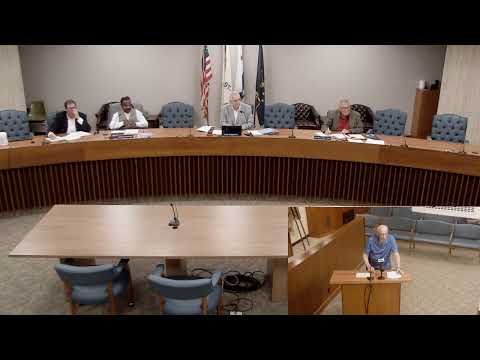
St. Joseph County Board of Commissioners on July 15 voted 2-1 to approve ordinance 48-25 — a County Council measure that removes references to affirmative action from the county tax-abatement policy. The vote followed more than an hour of public comment from residents, civic leaders and former elected officials who urged commissioners to block or send the measure back for more work.
The ordinance change stems from language in the County Council’s tax-abatement policy that, before the amendment, asked applicants to “maintain a written affirmative action plan” describing steps to hire and retain “qualified members of historically disadvantaged groups.” John Hamilton, a public commenter and longtime local attorney, read that operative provision aloud, quoting the council language: “the applicant maintains a written affirmative action plan ... positive steps being taken to encourage the hiring, promotion, and retention of ... qualified members of historically disadvantaged groups such as minorities, women, and the disabled.”
The public comment period featured repeated appeals to retain the affirmative-action language. Tom Roe said the change would “remove all references and requirements relating to affirmative action.” Carolyn Moore said she benefited personally from affirmative action and warned, “If this gets approved, this is what's gonna affect me.” Trina Robinson, president of the local NAACP, described local unemployment and business-ownership statistics and requested that the board rely on factual information rather than political preferences when deciding.
Commissioners debated procedure after public comment. Commissioner Hazen said he was “tempted to veto it, but I'm also tempted to pass it,” describing concern that a veto could allow the council to make the measure law by other means. The board then considered a motion to veto that received no second; the president then moved to “vote yes now,” and the roll call produced a 2-1 vote: Commissioner Morton voted no; Commissioner Hazen voted yes; Commissioner Max Meyer voted yes. That motion carried.
Officials and commenters referenced legal limits and process throughout the discussion. The board president noted an apparent jurisdictional issue earlier in the meeting when removing a separate zoning-related item from the agenda, citing County ordinance 154.599 subsection a(6) and Indiana Code section 36-2-4-8(e) in explaining why zoning matters are handled elsewhere. John Hamilton also referenced Indiana Code 22-9-1-2(a) when discussing the state's public-policy statements on equal employment opportunity.
The action taken leaves the council-passed text in place unless the board later takes a formal veto or the council amends the ordinance further. Multiple speakers urged the commissioners to send the ordinance back for wider community engagement or to exercise veto power; commissioners said they would pursue follow-up discussions with the County Council and the Area Plan Commission where appropriate. The county's next procedural steps for this specific ordinance were not specified during the meeting.
Community stakeholders said they would continue advocacy. Trina Robinson urged commissioners to base decisions on “factual information” and cited ongoing local examples of racial disparities; other speakers urged the board to veto or ask the council to redraft the ordinance with broader input. The meeting record shows the commissioners approved the council language by a 2-1 vote at the July 15 session.
Less-urgent details: the ordinance was identified on the agenda as ordinance 48-25; numerous public commenters representing civic organizations, faith groups, and residents spoke during the public-comment period prior to the roll-call vote.