Get Full Government Meeting Transcripts, Videos, & Alerts Forever!
Get email alerts on the Land Use Shipyard Rezoning topic
No spam. Unsubscribe anytime.
Planning commission backs rezoning for Kalona Shipyard amid community objections
Summary
The Norfolk Planning Commission voted to recommend approval of a conditional rezoning that would return about 9.5 acres on West Indian River Road to industrial use for shipyard operations, subject to proffered environmental and site-control conditions, after residents raised concerns about dust, noise and outreach.
The Norfolk Planning Commission on July 15 recommended that city council approve a conditional change of zoning to allow Kalona Shipyard Incorporated to operate industrial shipyard uses on roughly 9.5 acres along West Indian River Road and Emmett Place. The commission’s approval was tied to proffers requiring a site plan and remediation work to address erosion and Chesapeake Bay preservation-area violations.
The matter matters to nearby homeowners because the site sits adjacent to residences in the Berkeley neighborhood; several residents said they have endured years of dust, noise and vehicle traffic they attribute to shipyard activity. Opponents asked the commission to postpone action until Kalona completes more intensive outreach and environmental review.
Staff presented the site history and the applicant’s proffers. The property was rezoned to a planned residential development years ago for a project that did not proceed; the applicant acquired the land in 2019 and is seeking to return it to industrial use. Staff recommended approval conditioned on the applicant’s commitments to submit a site plan within 120 days, complete required erosion- and sediment-control improvements within 120 days of plan approval, and remove a derelict barge embedded in the north bank.
Rob Beeman, a land-use attorney representing the applicant, described long-standing maritime uses at the site and said the owner, Kalona, plans to integrate the parcel into its shipyard operation. Randall Crutchfield, identified as chairman and CEO of Kalona, told commissioners the company has invested tens of millions of dollars in local shipyard upgrades, said about 550 of the yard’s approximately 800 employees work in Norfolk, and said bringing more operations indoors is part of a long-term plan.
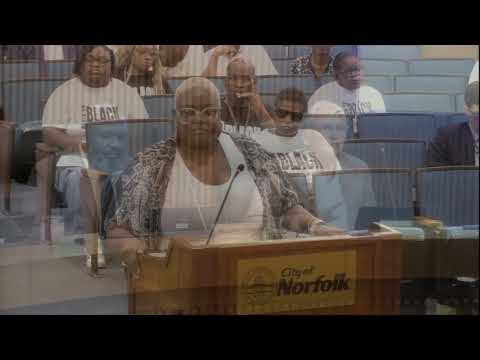
Residents who spoke urged delay and additional mitigation. Maurice Wiggins, 200 West Indian River Road, said he can see heavy equipment from his windows and asked the commission to prolong review. Michael Howard, 125 Bellamy Avenue, described what he said were repeated sandblasting and nighttime operations that had coated vehicles and houses with dust. Vincent Hodges, a civic leader who identified himself as a Norfolk 2050 community champion, asked for intentional, neighborhood-wide engagement and for environmental agencies to review potential impacts before council acts.
Commissioners and staff discussed mitigation and outreach. Planning staff and the applicant said they have notified adjacent owners, met with the Beacon Light Civic League and provided other outreach; the Southside Coalition requested a continuance in a written communication, the record shows. The applicant proffered the site-control and cleanup measures the staff recommended; the applicant also said it maintains regular contact with environmental and safety regulators.
After deliberation the commission voted to recommend approval of the conditional change of zoning subject to the applicant’s proffers. The motion passed by majority vote, with multiple commissioners saying they wanted to see the applicant continue outreach before the matter goes to city council.
The recommendation now goes to Norfolk City Council, which makes the final decision. The applicant will be required to submit the site plan and complete the proffered remediation before more intensive industrial work proceeds if the council follows the commission’s recommendation.