Get Full Government Meeting Transcripts, Videos, & Alerts Forever!
Get email alerts on the Misdemeanor Probation topic
No spam. Unsubscribe anytime.
Butte-Silver Bow probation officers describe growing caseload, ask study commission to consider independent office
Summary
Misdemeanor probation officers briefed the Butte-Silver Bow Local Government Study Commission on their duties, community-service work and resource gaps, and commissioners discussed whether the office should be moved out of city court into an independent county department.
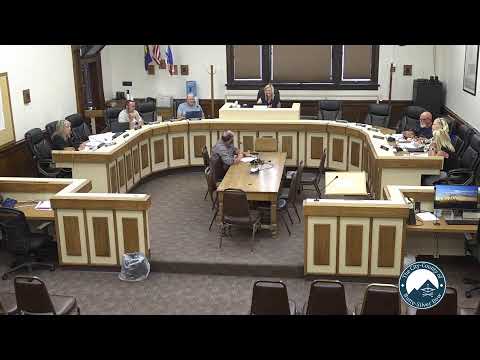
Mike, a misdemeanor probation officer, told the Butte-Silver Bow Local Government Study Commission on July 28, 2025, that the county’s misdemeanor probation program has grown since it began in 2010 and now supervises roughly 80–100 people across two officers.
The officers described probation as a court-ordered alternative to incarceration that emphasizes supervision, rehabilitation and restitution. “It’s typically ordered by a judge at the time of sentencing as an alternative to incarceration,” Mike said, adding that probation “is designed to promote public safety while providing the probationer with an opportunity for rehabilitation.” Rachel, also identified in the meeting as a misdemeanor probation officer, described the program’s community-service work, saying the office coordinated about “700 to 750 ish hours” last year with partners including the food bank, Butte Cares, the rescue mission and animal shelters.
Commissioners focused on two recurring issues: (1) staffing and resources, and (2) the program’s organizational placement under city court. Several commissioners, including Ben Thelen and Dan Dennehy, asked whether adding a third probation officer would ease caseload pressure; Mike and Rachel said an additional position would “more likely” help. County Attorney Matt Enruth (referred to in the meeting as Mr. Enruth) said many counties treat misdemeanor probation as a separate county-level office and recommended the program become an independent department to avoid any appearance that probation “works for” the court or county attorney’s office. Enruth also said the probation officers produce report writing and notifications to his office about violations, increasing workload beyond supervision.
Officers and commissioners also discussed operational challenges: transportation for community service participants who lack driver’s licenses or insurance; equipment needs (for example, commercial-grade lawn tools); limited winter community-service options because of snow; and the prevalence of mental-health and substance-use disorders among people on probation. Mike said many probationers have diagnosed or undiagnosed mental-health conditions and noted a lack of local behavioral-health resources to which officers can refer people.
Commissioners pressed staff on whether the probation office’s placement under city court was statutory or budgetary. The officers said the office was created in 2010 and has been funded under city court; Enruth and others said the ordinance (cited in discussion as section 2.18 0.01) creates an office of misdemeanor probation but does not require it be placed under city court. Commissioners discussed options the study commission could forward to the council: changing the ordinance to place misdemeanor probation in a county budget line, creating an independent county probation department, or leaving the current funding arrangement in place but seeking additional staffing and equipment.
No formal action or vote on reorganization occurred at the meeting; commissioners suggested a supplemental report and recommended the study commission consider a formal recommendation to the council to change the ordinance and budget placement. Several commissioners asked staff to provide additional information about budgets, comparative county models, and the specific ordinance language that places the office under city court.
The commission closed the probation discussion by thanking the officers for the presentation and asking staff and the county attorney to follow up on the ordinance, budget options and resource needs.