
County attorney briefs Planning Commission on quasi‑judicial duties, ex parte contacts and continuances
Get AI-powered insights, summaries, and transcripts
Subscribe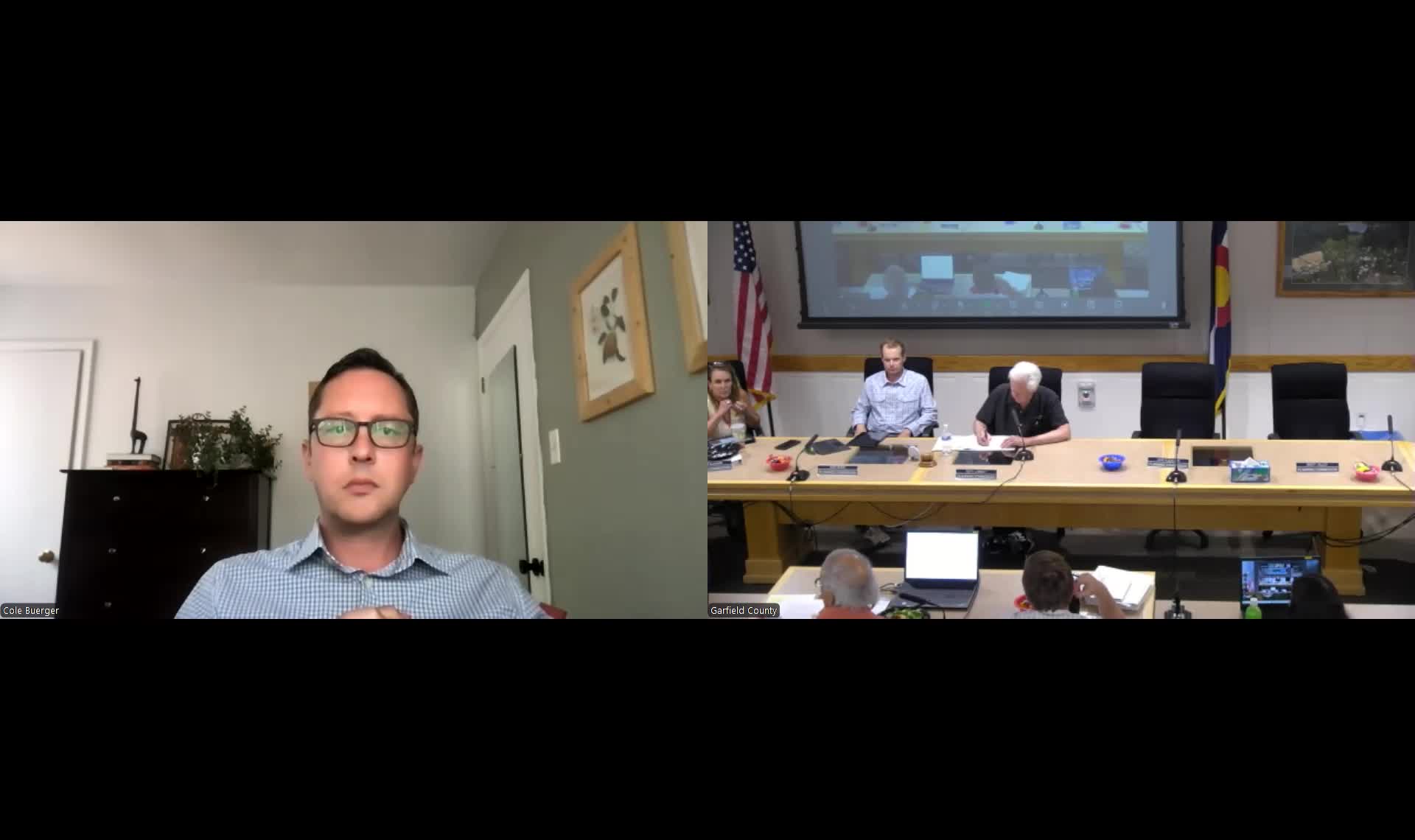
Summary
Garfield County attorneyrepresentative Kelly led a training explaining commissioners' quasi‑judicial role, restrictions on outside contacts and guidance on continuances and public comment during the June 25, 2025 Planning Commission work session.
Kelly, an attorney from the county attorney—s office, told the Garfield County Planning Commission on June 25 that when the commission acts in a quasi‑judicial capacity it must treat hearings like a court proceeding and preserve due process for applicants and neighbors.
Kelly said the distinction matters because the commission—s decisions can affect property rights and therefore must be based on evidence presented in the public hearing. "Quasi‑judicial means you're making a decision. So you're essentially acting as a court," Kelly said, adding that commissioners should hear evidence in the public hearing rather than accept information outside the record.
The attorney reviewed the county—s guidance on ex parte contacts, continuances and public comment. She told commissioners they should decline private conversations about pending applications and direct people to submit written comments or present testimony at the hearing. "If someone contacts you beforehand and says, 'I want to talk to you about an application,' you should say, submit comments to ComDev or please come to the hearing," she said. Kelly said that if a commissioner does receive outside information it should be disclosed on the record; staff will then ask whether the commissioner can remain impartial or should recuse themselves.
Kelly also recommended a cautious approach to continuances where new evidence is submitted after a hearing has begun. She said new evidence presented at a continuation normally reopens the evidentiary period and gives members of the public the right to comment on the new material. "If anyone says any new information or a continuing continuation, I would prefer that the public has a right to speak on that new information," she said. The commission—s existing practice of limiting individual public‑comment time (three minutes, 15 minutes total on some hearings) was restated as a procedural control staff enforces.
Commissioners and staff discussed how to manage mid‑hearing comments and how the chair should intervene if a commissioner—s remarks stray into advocacy before the evidentiary record is closed. Kelly said staff and the chair will step in when necessary to preserve the record, and she suggested that commissioners ask questions rather than make statements during the evidentiary phase. "I prefer for due process, for constitutional rights, let people speak," she said, "but ask questions, not make statements."
The session included practical examples: Kelly and staff explained how site visits, developer meetings and attendance at applicant public events can create the appearance of bias and how to avoid that by routing comments through staff or by disclosing contacts on the record.
The training closed with procedural reminders about open‑meeting rules: commissioners were warned not to use e‑mail, group text threads or social media in ways that create a de facto meeting, and were told to forward constituent e‑mails to staff so they become part of the application packet rather than informal exchanges.
Commissioners expressed interest in additional training and in written clarifications to the commission's bylaws to help them apply these rules consistently.
Ending: Staff said they will prepare bylaw options and written reminders of the key legal points discussed and bring those back to the commission later in 2025.