
Board plans policy to comply with governor's order limiting student use of personal electronic devices
Get AI-powered insights, summaries, and transcripts
Subscribe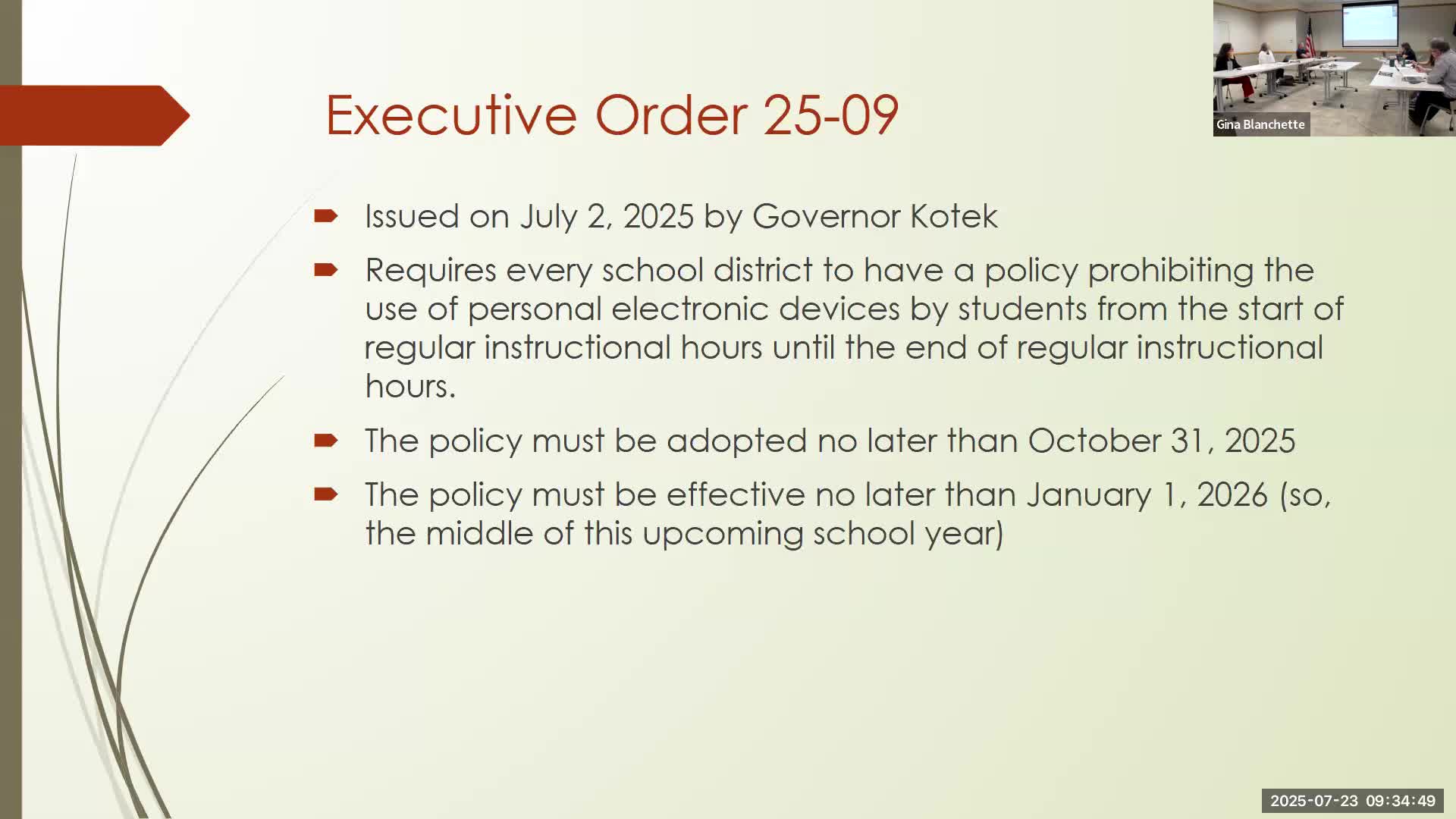
Summary
At a July 31 Redmond School District board work session, district counsel and district leaders briefed members on Governor Kotek's Executive Order 02/1400 and set a near-term goal to adopt a student personal electronic device policy so the district can comply by the state deadline.
Redmond School District leaders told the school board July 31 they plan to adopt a policy this fall to comply with Governor Tina Kotek's Executive Order 02/1400 limiting student use of personal electronic devices during the school day.
District counsel Lauren (district lawyer) told the board the executive order requires a policy prohibiting use of personal electronic devices — most commonly cell phones — from the start of regular instructional hours until the end, with limited exceptions such as documented medical needs. The order directs districts to adopt a policy no later than Oct. 31 and make it enforceable on Jan. 1.
The board and administration said they want an implementable policy in place before classes begin. Superintendent Sharan and staff described two linked tasks: (1) adopt a board-level policy that meets the executive order's baseline requirements and (2) prepare administrative rules describing how schools will store devices, how exceptions will be granted (for example, for medical documentation or individualized education program accommodation), and what progressive consequences will apply. Counsel advised the board that consequences must not include removal from instruction.
Board members pressed for clarity on exceptions, enforcement and communication. Several asked that teachers, principals and parents be consulted so the policy can be enforced consistently and so families understand the change. Counsel said ODE guidance treats bus travel to and from school differently from on-campus supervision and that districts may allow device use on buses while restricting use during supervised school activities. She cautioned that executive orders are not statutes, but they are enforceable if issued within the executive's statutory authority, and that courts will review executive orders for legal sufficiency if challenged.
The board directed staff to prepare a recommended policy and administrative rules on a condensed timeline. Members discussed scheduling a work session and a regular meeting in September to review a draft; the board asked the administration to prioritize a final policy before the executive order's Oct. 31 adoption deadline.
Why it matters: the order changes routine classroom practice across the state; districts must adopt and publish an enforcement approach, including rules for exceptions and consequences. Implementation affects daily operations (storage/confiscation), communications with families, and teachers' procedures.
What happens next: the district will draft a policy and AR (administrative rule), circulate it to the board and principals for feedback, and return for board approval on the accelerated schedule announced in the July 31 meeting. The board asked staff to include partner input and examples of practices other Oregon districts have used so the policy is implementable on day one.