Commissioners approve lead-dispatch classification; defer FTO stipends and jailer request
July 02, 2025 | Miami County, Kansas
This article was created by AI summarizing key points discussed. AI makes mistakes, so for full details and context, please refer to the video of the full meeting. Please report any errors so we can fix them. Report an error »
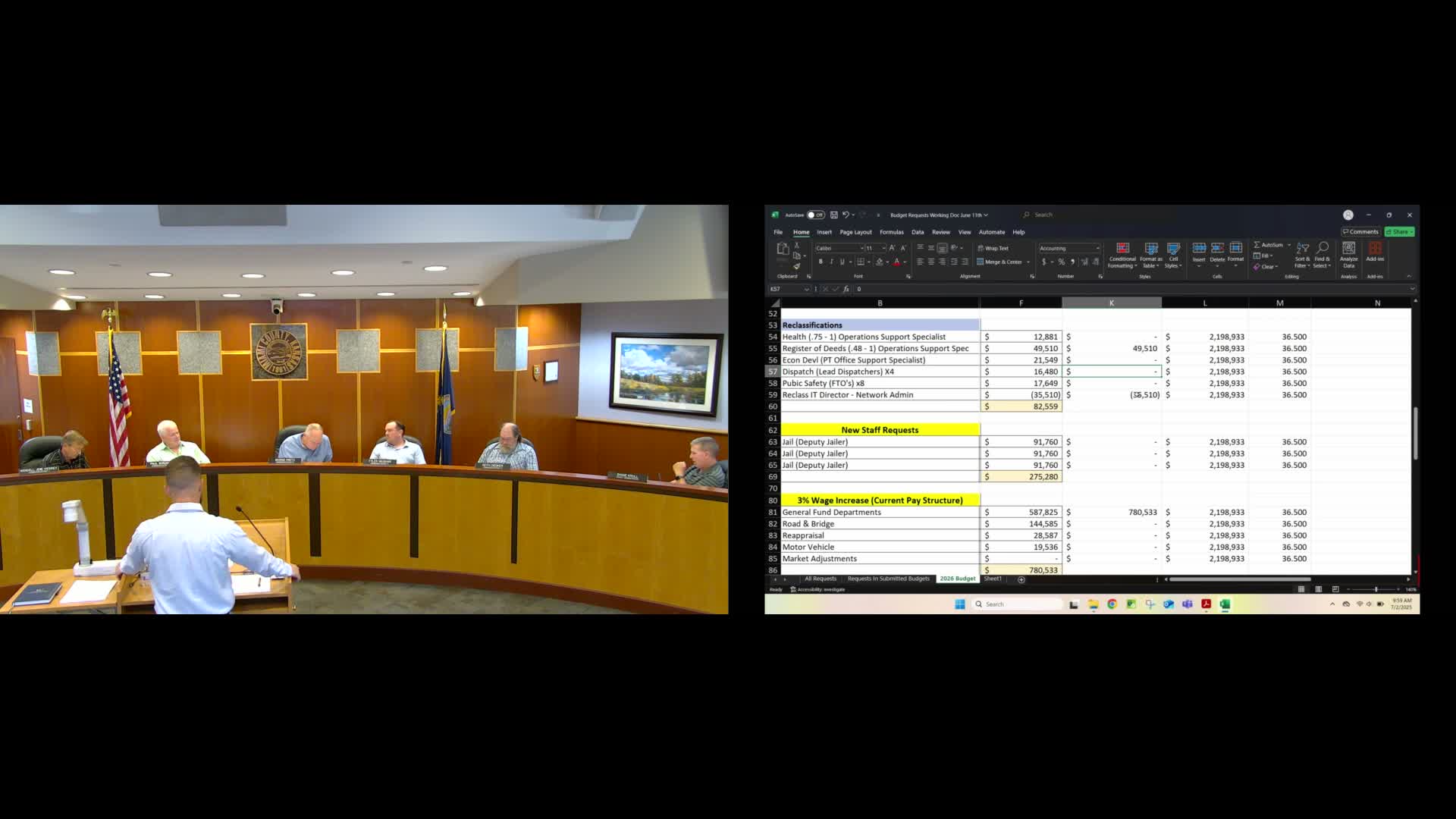
Sarah (Sheriff's office representative) described longstanding turnover and training needs in dispatch and said the sheriff's office had sought a stipend to compensate employees who train new hires. "If you assign as an FTO, you get the stipend; if you're not assigned as an FTO, you don't get the stipend," Sarah said, explaining the proposal and its operational rationale.
Why this matters: commissioners framed the decision as an attempt to recognize ongoing lead responsibilities in a 24/7 dispatch operation without immediately expanding stipends countywide. Commissioners raised equity concerns about creating a stipend that only a single department received and asked for a county-wide, merit-based framework for future rewards.
Details: staff explained two compensation approaches: a classification (lead-dispatch) that raises base pay for incumbents performing defined supervisory duties, and a stipend (FTO pay) paid for performing training functions. Staff said the proposed FTO stipend would be a set amount (described in the presentation as $60 per pay period for jailers and $75 per pay period for deputy sheriffs when performing FTO duty), which would be paid across 26 pay periods and cost less than $2,000 per person annually when benefits were included. Commissioners asked for a broader policy that would allow other departments to offer similar rewards for added responsibilities.
Outcome: the commission approved the lead-dispatch classification and associated budget impact, and it directed staff to work toward a county-wide merit/stipend policy before extending FTO stipends to other departments. No formal vote on creating permanent, county-wide stipend rules occurred during the study session.
Next steps: Human Resources/Finance will draft classification details and add the cost to the proposed budget; staff will also explore a policy for department-head-driven merit or stipend awards.
Don't Miss a Word: See the Full Meeting!
Go beyond summaries. Unlock every video, transcript, and key insight with a Founder Membership.
30-day money-back guarantee
Sponsors
Proudly supported by sponsors who keep Kansas articles free in 2025

