Get Full Government Meeting Transcripts, Videos, & Alerts Forever!
Get email alerts on the Public Comment Policy topic
No spam. Unsubscribe anytime.
Severance council begins drafting public-comment policy focused on decorum, access and safety
Summary
At a June 10 work session the Town of Severance council discussed a draft public-comment policy that would set time limits, decorum standards and rules for audiovisual materials; staff will return with revisions and legal guidance.
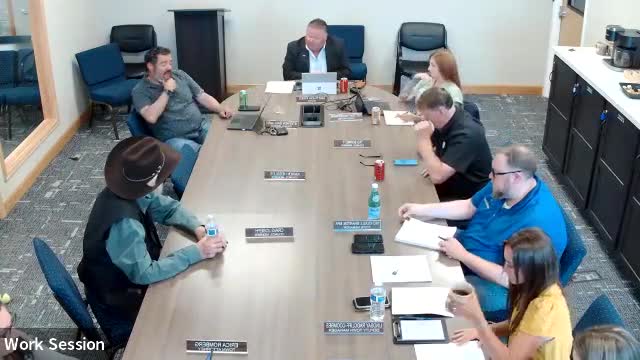
Severance town council members spent the June 10 work session reviewing a draft public-comment policy intended to set decorum, safety and access expectations for council meetings. The discussion, led by Town Manager Nick Wharton and Mayor Friess, was presented as a starting template drawn from other Colorado municipalities and the Colorado Municipal League.
Council members discussed whether the policy should set fixed time limits for public comment, how to handle large turnouts, and whether different rules should apply to general public comment versus formal public hearings. Wharton and the mayor said the draft was not intended to restrict speech but to provide guidance and to reduce risks to public safety if meetings become disorderly.
“We talked quite a bit about public comment in general,” Mayor Friess said, describing advice from the Colorado Municipal League. He added the policy is intended “as a tool to use to keep order during the meeting,” while cautioning the council to avoid infringing First Amendment protections.
Council members debated specific provisions. Several favored allowing everyone to speak but shortening each speaker’s time when turnout is heavy. One councilmember suggested allowing a designated group representative more time rather than splitting minutes among multiple speakers with the same viewpoint. The council also considered procedural options used by other public bodies — sign-up sheets that distinguish commenters from attendees, lotteries when speaker numbers exceed available time, and on-the-fly adjustments by the mayor for extraordinary events.
The council discussed handling audiovisual or recorded material offered during comment. Wharton said the town must review whether playing recordings or showing PowerPoint slides in public comment is considered protected expression, and committed to research and legal advice. Councilmembers raised concerns about deceptive audio created with artificial intelligence and asked staff to consider requiring submission of audio/visual materials in advance.
On enforcement the council acknowledged the practical limits: aside from true threats, speakers may use inflammatory or personal attacks that the council cannot legally bar, and removing an individual from the meeting is legally difficult. The mayor said the town may recess or adjourn meetings if public safety is at risk.
Councilmembers asked staff to align the draft policy with language already on the town agenda (which vests the mayor with discretion to adjust time limits) and to return with a revised draft that clarifies differences between general public comment and public hearings, addresses audiovisual submissions, and cites applicable legal limits. No final action was taken; the item was a work-session discussion and staff will prepare another draft for future consideration.