Get Full Government Meeting Transcripts, Videos, & Alerts Forever!
Get email alerts on the Governance Meetings Schedule topic
No spam. Unsubscribe anytime.
Pueblo West board weighs moving meetings to Fridays, condensing schedule in trial to reduce repeated item discussions
Summary
Directors debated three scheduling models — consolidating work sessions and meetings on Fridays, compressing meetings into adjacent weeks, or a midweek discussion/action split — and directed staff to run a public survey and bring a trial plan back after summer.
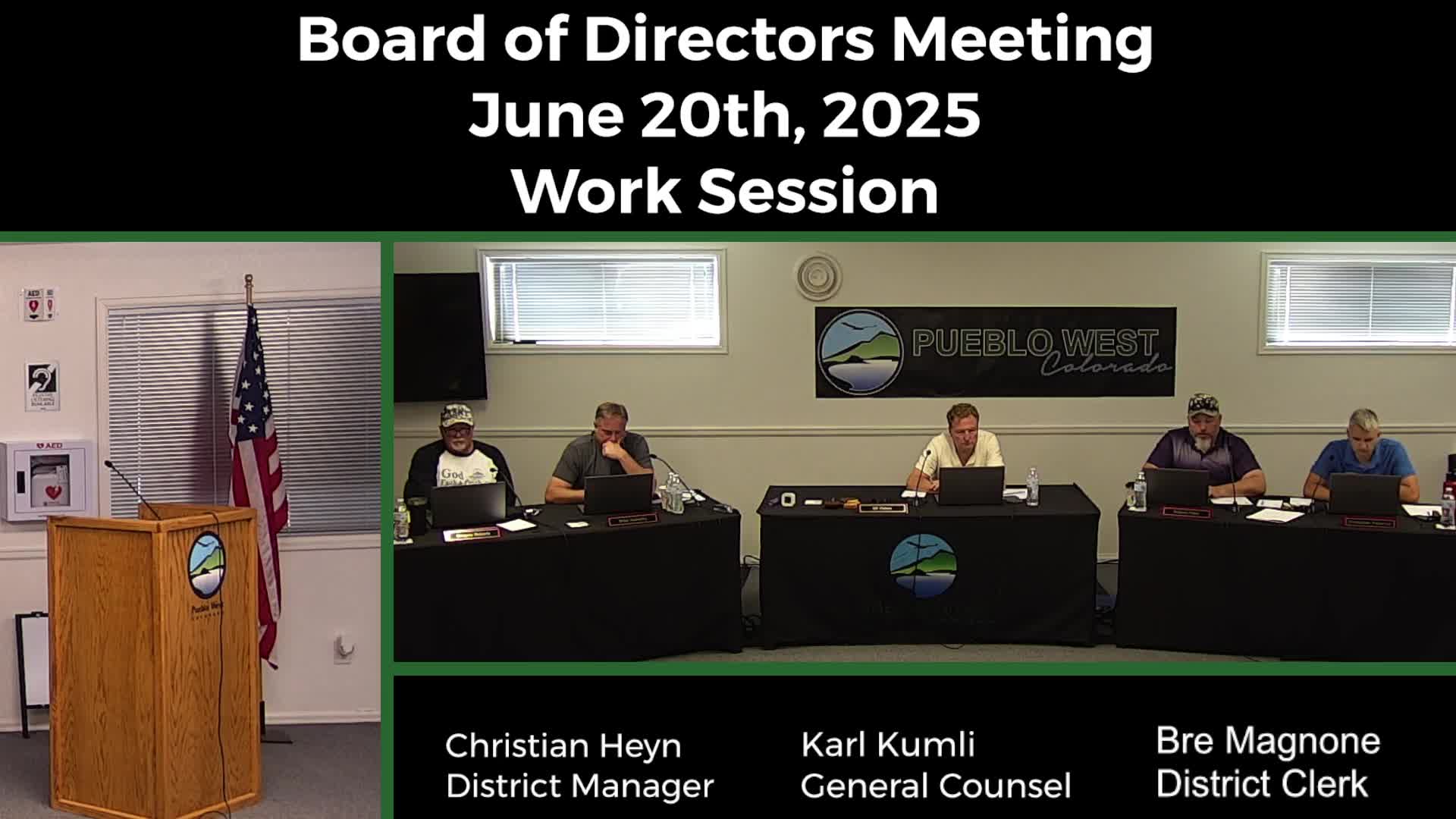
PUEBLO WEST, Colo. — The Pueblo West Metro District board spent the largest portion of Friday’s session debating whether to change its meeting calendar and format, considering three models that would shift work sessions, board meetings and action items to different days and cadences.
Staff presented three options: 1) keep the current two‑meeting model but move both to Fridays (work session in the morning, action meeting in the afternoon), 2) compress both meetings into adjacent weeks (two Fridays in a row or similar) to free other weeks, or 3) adopt a Highlands‑Ranch‑style model with an evening discussion followed by a later evening action meeting. Staff framed the options as experimental and recommended a trial period after the summer.
Board members exchanged concerns and tradeoffs. Supporters said a consolidated Friday model reduces the number of days staff and directors spend preparing and can cluster discussion and action close together so items do not get rehashed across multiple meetings. Opponents said moving meetings to business hours or Fridays would reduce public in‑person attendance and could discourage working residents from serving on the board. Several directors said they value the work session because it allows longer discussion without extending public meeting hours.
Directors asked for clarity on packet timing, public notice and agenda amendment mechanics if a work session outcome requires changing the published agenda; staff explained agendas could still be amended at the meeting and that packet distribution timing could be adjusted (for example, distributing draft materials the prior Friday or Monday and asking members to resolve changes by midweek).
The board did not vote on a permanent change. They directed staff to keep the current schedule through the summer, prepare a community survey comparing a primarily‑Friday model versus the current schedule, and return in late summer or early autumn with trial timing recommendations and participation data. Several directors suggested starting any trial after summer to avoid seasonal viewership distortions.
Ending: Staff will draft and distribute a public survey, refine packet timing options, and bring a trial plan and communications proposal for board consideration later this year.