Get Full Government Meeting Transcripts, Videos, & Alerts Forever!
Get email alerts on the Public Safety Fire Station Remodel topic
No spam. Unsubscribe anytime.
Pueblo West board reviews $2.29 million estimate for Fire Station 1 remodel; designers seek additional $200,000
Summary
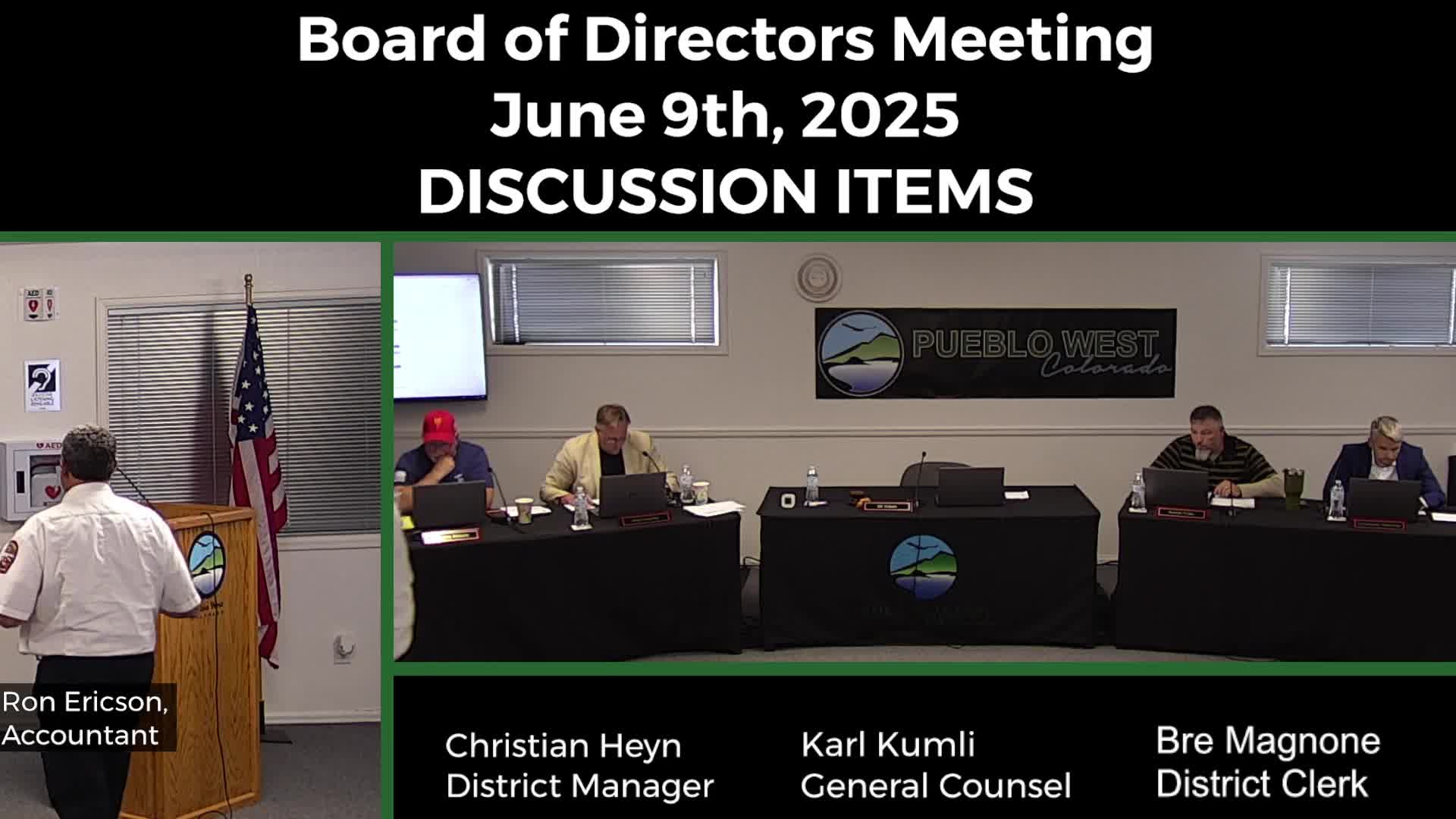
Board members and fire department leaders spent more than an hour Wednesday reviewing revised costs and scope for renovations at Fire Station 1, with staff saying updated design work and code requirements pushed the project’s estimated construction cost to about $2,286,771 and the architect’s new design fee to $200,000.
Board members and fire department leaders spent more than an hour Wednesday reviewing revised costs and scope for renovations at Fire Station 1, with staff saying updated design work and code requirements pushed the project’s estimated construction cost to about $2,286,771 and the architect’s new design fee to $200,000.
The discussion matters because the station, built in the 1990s, does not meet modern living-quarters and accessibility requirements and staff called the current sleeping arrangements a safety concern. “This project is basically allowing us the opportunity to fix a situation that will improve the living conditions, the safety conditions for the firefighters staying there,” Fire Chief Brian Caserta told the board.
District Manager Christian J. Hine said the revised construction estimate covers roughly 4,104 square feet of renovated space (excluding the apparatus bays) and equals about $557 per square foot. He said the major cost drivers are general conditions (administration, mobilization and site setup) and the mechanical systems — HVAC, electrical and plumbing — which together account for roughly 55% of the non-contingency construction total. Hine also said the district and architect previously spent about $80,000 on an earlier design that is no longer being used; the new design proposal adds $200,000, bringing the total design work to about $280,000 so far.
Why the new fee: Hine said the earlier scope did not produce the product needed for a phased renovation and that the architect must now address code and phasing challenges the district did not fully foresee in earlier work. “The updated number of $208,000 exists based on what has already been done and what needs to happen to make sure we can produce the final product,” he said.
Board members pressed for alternatives. Director (name not specified in the transcript) suggested building an ancillary steel structure adjacent to the station to house fitness, dormitory or office space at lower cost rather than performing a comprehensive renovation within the existing footprint. Caserta and Hine answered that an external annex is possible in concept but would delay fixing the immediate safety and egress concerns in the existing building and would require new design work and additional funding. Hine said the alternative would require returning to the drawing board and discarding the work already paid for, and that doing so would postpone resolving the current safety issues.
Members also asked for clarity about the fee breakdown and earlier payments. Vice President Axworthy asked for the exhibit that compares the 2021 fee breakdown to the 2025 proposal; staff explained that about $80,000 of work was done under the original contract and is being superseded by the new scope. Hine and Caserta offered to return with more granular cost detail and to invite the architect and a consultant to the next meeting to explain code triggers, phasing and whether an annex would reduce triggering accessibility upgrades.
No motion was taken. Board members directed staff to return with more detailed cost documentation, alternatives analysis on a smaller ancillary building, and an architect representative prepared to explain code requirements and schedule implications.
The board’s next steps will include staff-led cost comparisons and a follow-up public discussion; Caserta said the district is trying to resolve immediate safety needs while preserving long-term flexibility.