
Council raises nuisance parking concerns, asks staff to revisit residential limits; code enforcement directed to enforce 30-day sign rule
Get AI-powered insights, summaries, and transcripts
Subscribe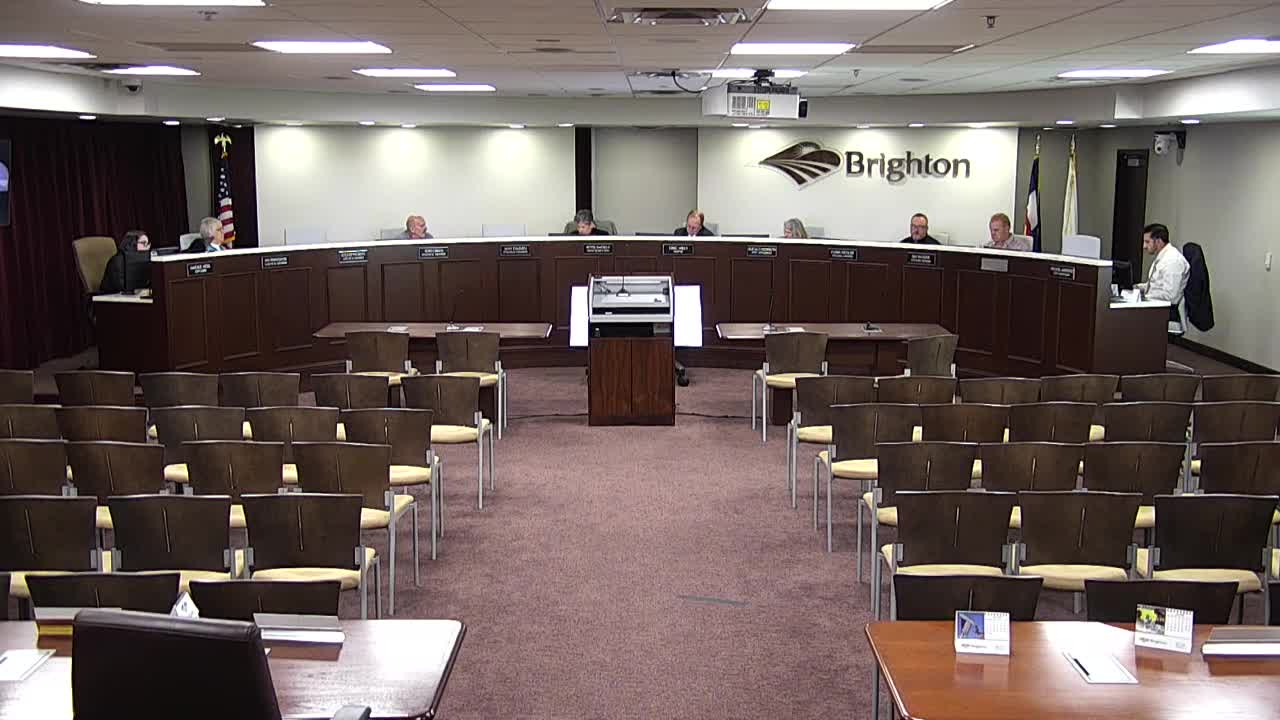
Summary
Councilmembers expressed recurring complaints about commercial vehicles, roll-off dumpsters and long trailers in residential neighborhoods and asked staff to return with potential time-limit changes; council also asked code enforcement to enforce a 30-day temporary sign limit after members spotted long-standing promotional signs.
Brighton councilmembers used the July 15 study session to flag recurring neighborhood complaints about commercial vehicles and long-term temporary signs and asked staff to return with potential ordinance changes and to have code enforcement enforce existing sign limits.
The matter is locally important because residents told councilmembers they face persistent obstructions in residential streets from parked commercial vehicles, long trailers, roll-off dumpsters and landscaping vehicles that stay for extended periods, and councilmembers said the current municipal code is permissive on how long many types of licensed vehicles may be parked in residential neighborhoods.
A councilmember (Mayor Pro Tem) described receiving “increased complaints and comments in my neighborhood and surrounding around what I guess I will call nuisance parking,” citing roll-off dumpsters, long trailers and landscaping/snowplow equipment stored in summer months. The councilmember said the code currently permits many licensed vehicles to remain parked if they are in good repair and that prior discussions did not adopt a set time limit for how long such vehicles may remain stationary. City Attorney Calderon confirmed that, in prior code discussions, the council declined to set a specific time limit.
Council members asked staff to bring a study-session item back “very, very soon” to reconsider permitted time limits for commercial and large vehicles in residential areas. Separately, Council Member Snyder reported temporary marijuana advertising signs and other promotional banners had been up beyond what he believed was the 30-day limit. Snyder asked for code enforcement to contact businesses and request removal; a staff speaker replied, “Yes. The answer is yes,” agreeing to ask code enforcement to enforce the 30-day sign limit.
No ordinance or sanction was adopted at the study session; staff agreed to return with potential code amendments to address nuisance parking and to ask code enforcement to follow up on signage complaints.
Council directed staff to draft potential time-limit language and return with options and enforcement considerations at an upcoming study session.