
Public‑safety and municipal employee groups urge council to avoid benefit cuts, propose tax and reserve options
Get AI-powered insights, summaries, and transcripts
Subscribe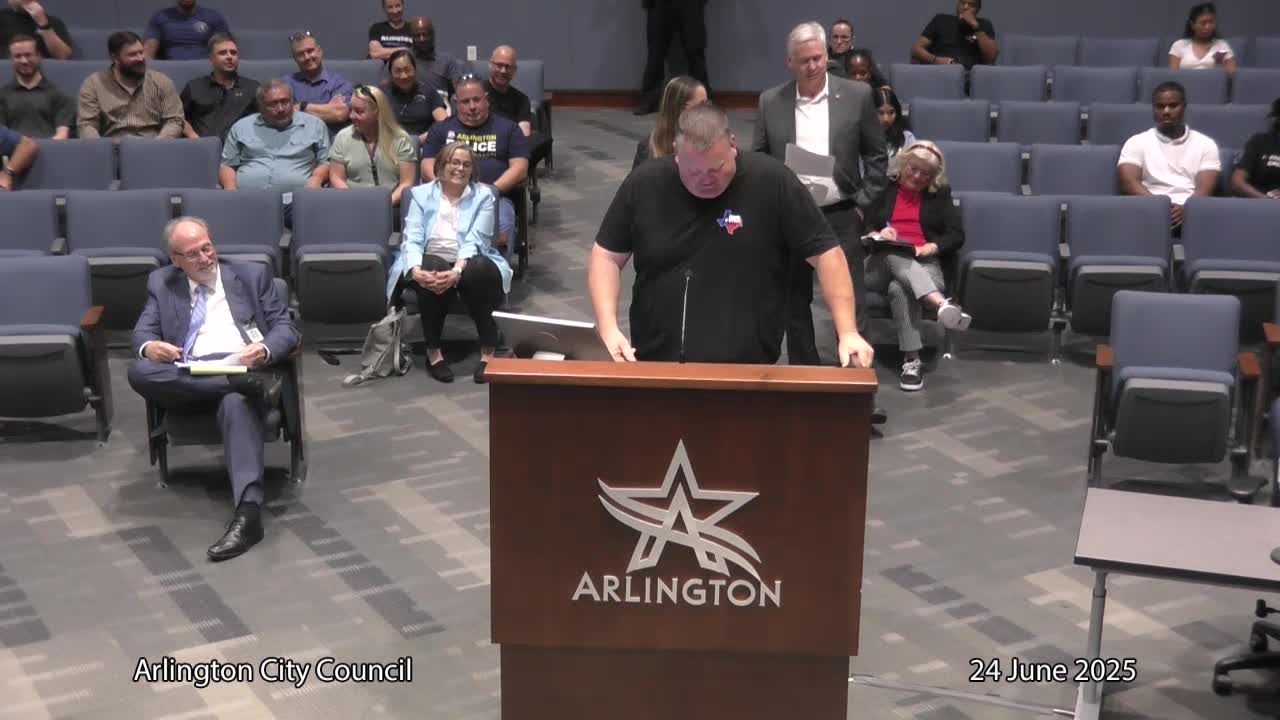
Summary
Representatives of Arlington public‑safety and municipal employee associations urged the council during citizen participation to avoid shifting insurance and benefit costs to employees, and suggested alternative revenue options including a 2¢ property tax increase and use of the Tomorrow Foundation reserve.
Representatives of several city employee associations urged the Arlington City Council to avoid balancing next year’s budget on the backs of employees and first responders.
Brett Worman, identified in his remarks as president of the Arlington Municipal (organization name transcribed in the record), told council the associations oppose strategies discussed in a recent work session that would shift insurance premium costs to employees, reduce 401(k) matching, suspend sick‑leave sellback and cut stability pay and overtime definitions. He urged the council to “consider other options when preparing this budget.”
Jesse Minton, president of the Arlington Police Association, echoed that position and warned that reducing employee benefits and pay could degrade city services. “Balancing the budget for next year is undeniably a challenge, but balancing it by reducing employee benefits and reducing the quality of services provided to the citizens is not only the wrong decision, it's a harmful 1,” Minton said in public comment.
Speakers asked the council to consider alternative revenue measures, including a 2¢ increase to the city’s property tax rate and drawing on the Arlington Tomorrow Foundation fund or reserves to cover a portion of the shortfall. Association leaders said employee morale and retention would suffer under the proposed cuts and argued that reductions could increase long‑term costs if recruitment and service levels decline.
Council did not take immediate action during citizen participation; the comments were entered into the record and council may consider them as part of the formal budget process.