
Arlington staff warns of $6.4 million budget gap as senior tax freeze, appraisal changes bite
Get AI-powered insights, summaries, and transcripts
Subscribe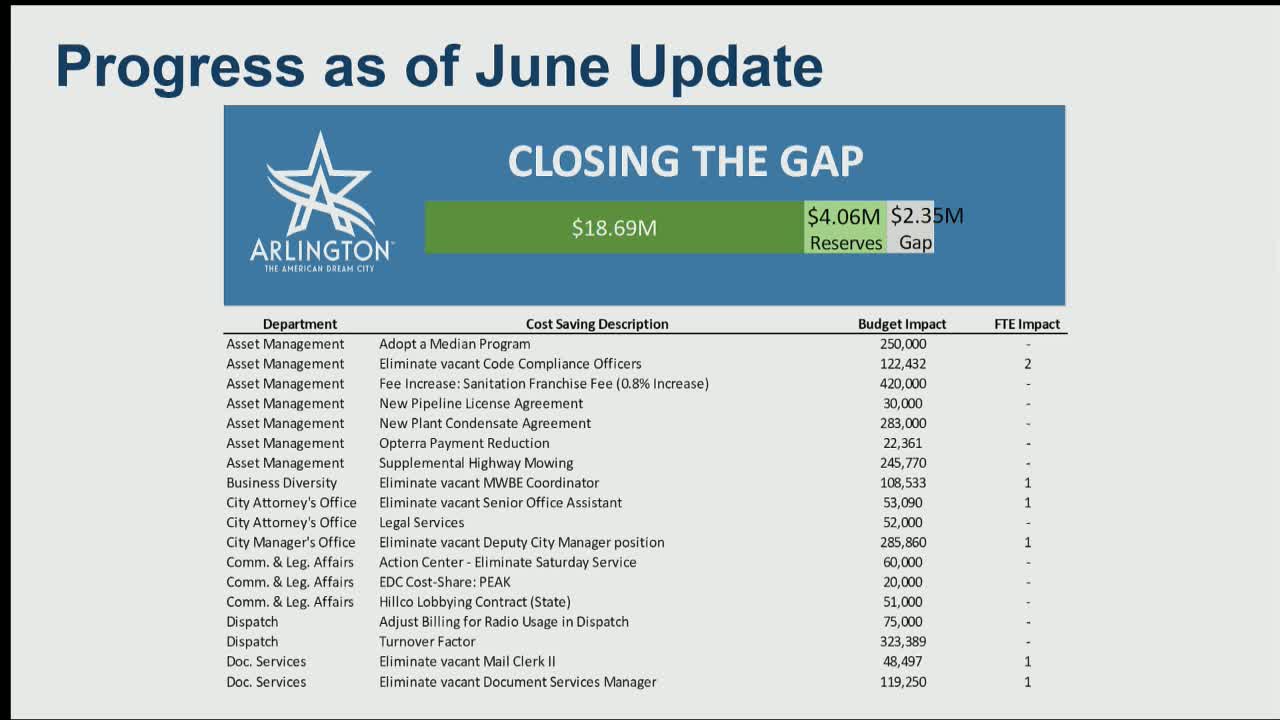
Summary
City staff told the Arlington City Council that the end of ARPA funds, appraisal-district valuation changes and a growing senior tax freeze have left a roughly $6.36 million structural gap; staff outlined options including reserve use, staffing reductions, benefits changes and a possible tax-rate adjustment.
City staff told the Arlington City Council on June 24 that the city faces a roughly $6.36 million budget gap for fiscal 2026 after a year of falling revenues and growing, irrevocable property-tax relief measures. The presentation by Trey (staff member) said the gap stems from three linked issues: the final year of American Rescue Plan Act (ARPA) funds, changes and protests at the appraisal district that reduced taxable values, and a voter-approved senior tax freeze that staff described as “eating our lunch.” The gap is the remaining, unidentified portion after months of reductions and restructuring. Staff reported roughly $2.3 million in unidentified recurring cash needs and argued that when a $4 million business-continuity reserve is considered the effective gap grows to about $6.36 million. Why it matters: the council must close that gap before adopting a balanced budget later this summer. Staff presented a package of revenue and cost options — from using reserves, cutting positions and freezing or reducing compensation increases to targeted changes in benefits and a portion of the tax rate — and asked the council for policy direction. Most important facts - Staff said ARPA funding is in its last year and has been a critical bridge in the city’s multi-year service-restoration plan. The presentation noted appraisal-district valuation changes and above-normal protest losses as a major revenue pressure. - The senior tax freeze was described as irreversible and now impacts about 25,000 accounts; staff estimated the freeze reduced the city’s levy by about $13.6 million and that it will continue to grow. Trey said the freeze alone “is really candidly eating our lunch.” - Staff outlined a remaining shortfall of about $2.3 million in recurring revenues and said that when reserve-management decisions are included the cash-equivalent issue is about $6.364 million. - Staffing and benefits: between last year and this year staff identified roughly 52 vacant positions targeted for elimination; the city currently holds more than 100 vacant positions (staff cited about 109). Eliminating compensation increases (the example shown was a full 3.0% adjustment) would save roughly $6.9 million, staff said. - Tax-rate math provided by staff: a one-cent change in the city tax rate equals about $4.3 million in revenue; a quarter-cent pass-through to offset new senior-freeze accounts would cost the average homeowner roughly $6 a year in the example staff used. Options presented and council discussion - Reserve-funded challenge grants: staff explained a “challenge grant” approach for targeted positions. Rather than immediate layoffs, the city would fund marked positions from reserves for up to a year while trying to redeploy employees to vacancies or restructure jobs. Trey said the approach “is a very...compassionate way to facilitate change in the organization.” - Compensation: staff proposed combinations of pay-step changes and contingent midyear restorations. Council members asked about sunset or contingent approaches; Trey said the city could give a portion of a raise and hold the remainder contingent on midyear financial results. - Benefits: staff outlined shifting some health-premium cost-share on family tiers while keeping employee-only coverage unchanged. Trey said 50% of accounts are employee-only and would see no change; the other 50% could see higher employee costs under the proposal. Open enrollment would begin in August, with an October 1 plan year change. - Tax-rate adjustment: several council members, including Council member Pham and Council member Gonzales, said they would consider a modest tax-rate increase to spread the burden rather than deeper personnel or benefits cuts. Staff reiterated that a one-cent increase would not fully close the gap but would cover roughly two-thirds of the shortfall in the example shown. Process and timing Staff said it will continue to refine revenue and expenditure estimates through August 5, when certified appraisal rolls and additional sales-tax and franchise-fee information are expected. Town halls and additional rate-setting sessions will be scheduled before the council’s final budget adoption in September. Council reaction Council members expressed a mix of priorities: protect employees and benefits where possible; avoid deep service-level cuts; and, if needed, balance modest tax-rate increases with other measures. Several members asked for combinations of the measures so the impact could be spread rather than borne by a single category. Ending note Staff emphasized the multi-year nature of the pressure: the senior freeze was voter-approved in 2005 and the city cannot modify it unilaterally, so staff framed the current budget work as managing structural constraints as well as short-term revenue volatility.