Get Full Government Meeting Transcripts, Videos, & Alerts Forever!
Get email alerts on the Housing topic
No spam. Unsubscribe anytime.
Housing director outlines rental assistance, rehab and homelessness programs as HUD funding and rent pressures rise
Summary
Executive Director Mindy Cochran and staff reviewed Arlington Housing Authority operations: a $54.8 million FY2025 budget (95% for Housing Choice Vouchers), rising voucher costs, housing-rehab grants, and homeless programs including rapid rehousing, permanent supportive housing and diversion.
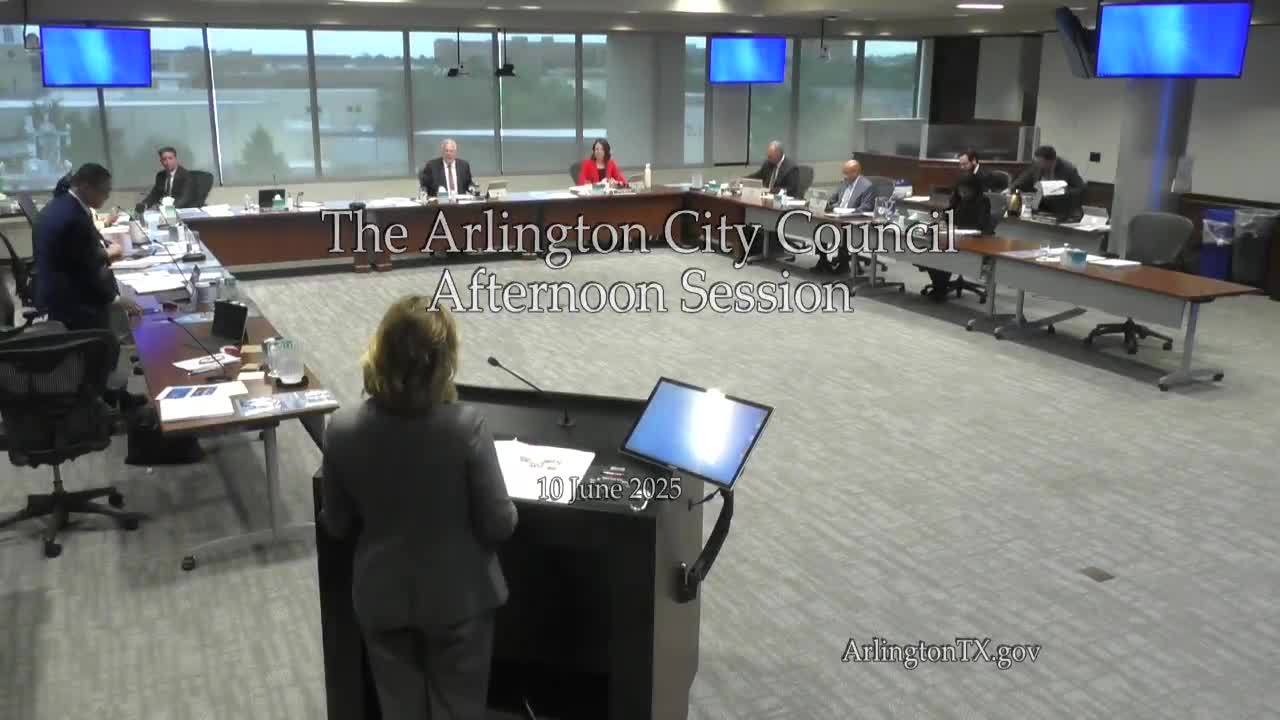
Mindy Cochran, Executive Director of Housing, presented a comprehensive annual report to the council on June 10 outlining Arlington Housing Authority programs, funding and trends in rental assistance and homelessness.
Cochran said the authority’s FY2025 budget is about $54.8 million, with roughly 95% devoted to the Housing Choice Voucher (HCV) program. Staff reported that average voucher costs have risen substantially — from an average of about $885 per unit in FY2021 to a projected $1,248 in FY2025 — reflecting a roughly 30% increase in rents over that period. Cochran stressed that as average voucher costs rise, the authority can serve fewer families with the same federal allocation and that administrative fees depend on actual expenditures.
The report summarized core programs: the standard HCV (Section 8) voucher program (Arlington does not own public housing), family self-sufficiency (rebranded as Assistance Plus), homeless-targeted vouchers and rental programs including permanent supportive housing (32 units), short-term rapid rehousing, a small Nurse Family Partnership targeted at first-time pregnant mothers, and VASH vouchers for veterans. Cochran said the Housing Authority also pursued grant funding and new initiatives: a “Home for Heroes” rehab grant for veterans, a housing mobility planning grant, and locally funded diversion seed money from the Arlington Housing Finance Corporation that helped secure $250,000 from the Bezos Foundation for homeless diversion.
On inspections and rehab, Jessica Perry described Housing Quality Standards inspections (HQS) performed before move-in and at least biannually; HUD’s INSPIRE standard is expected to replace current HQS on October 1, she said. The housing rehab program provides barrier-removal grants (up to $7,500), emergency grants (up to $10,000) and forgivable loans (up to $24,500) for eligible homeowners; since 1976 the program has invested roughly $28 million and served about 3,100 homeowners.
Council questions addressed a range of topics: whether voucher rent comparability considers nearby unassisted units (staff said they compare to nearby unassisted units, typically within the ZIP code), how occupancy standards are applied (the authority uses a two-person-per-bedroom standard but HUD allows living rooms to be counted as sleeping space in some situations), and funding uncertainty from federal proposals. Cochran noted the Housing Authority does not receive general fund dollars and said administrators are monitoring federal budget proposals that could alter HUD funding flows or add work requirements.
Ending: Staff will continue to pursue grants and report back on new programs and the INSPIRE implementation timeline as HUD rules and federal budgets evolve.