
Mesquite departments outline FY2026 budget offers; communications, IT, economic development and housing present priorities
Get AI-powered insights, summaries, and transcripts
Subscribe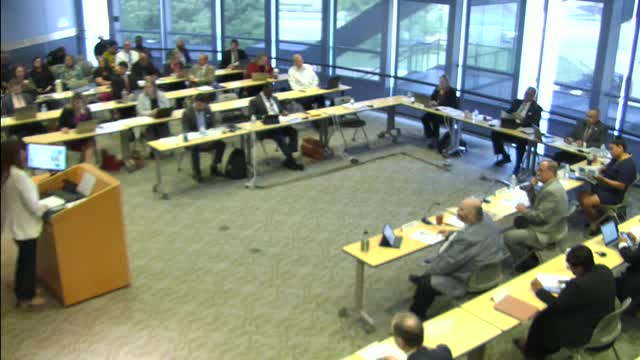
Summary
City department leaders presented condensed FY2026 budget briefings and named several new or expanded budget offers for council consideration during a June pre‑meeting session.
City department leaders presented condensed FY2026 budget briefings and named several new or expanded budget offers for council consideration during a June pre‑meeting session.
Communications: Whitney Golan, Director of Communications, said the department has six full‑time staff and highlighted a brand refresh, expanded Spanish translations of landing pages and campaigns, a doubling of the email subscriber list after a utility billing opt‑in, and a print Newcomers Guide. Golan said the city’s email newsletter reach rose to nearly 6,000 weekly subscribers and that social engagement improved after adopting a new social scheduling tool.
Information Technology: Sam Bradford, IT Director, outlined major capital and operations items including replacement of mobile data computers for public safety vehicles (about 210 units), a strategic IT plan due later in the summer, printer contract consolidation and a request for an audio‑visual specialist to support roughly 40 conference/training rooms. Bradford said his staff is roughly fully staffed but noted 33% of his team are new hires within the last year.
Economic Development: Kim Bedram, Economic Development Director, reviewed business attraction, Visit Mesquite tourism efforts, and downtown development. Budget offers included a front‑street sound system and solar restroom installation for downtown public space (one‑time costs) and a proposed $500,000 pilot package to fund façade/interior readiness and start‑up grants for small businesses plus staff to administer the program (SPUR). Bedram said targeted area market studies (five areas) would be funded to guide longer‑term development strategies.
Housing and Community Services: Tony Cowell, director, described six divisions including housing, behavioral health, volunteer services, neighborhood vitality, youth services, and transit. Budget requests included $10,000 to expand the summer youth internship program to add six slots, $8,500 to support youth council travel, $20,000 in neighborhood matching grants for beautification and safety projects, and $24,000 for a graduate intern to support victim‑advocate case work.
Next steps: Councilmembers asked clarifying questions (e.g., translation priorities, AV staffing, small‑business program administration, TIRZ funding possibilities) and asked staff to return with budgets and funding‑source analysis during the formal budget workshop schedule. Several councilmembers recommended matching projects to TIRZ/4B funding where allowed and urged personnel to be budgeted where sustained program management is required.