
Council adopts citywide fee for trash containers, extends removal window to 24 hours
Get AI-powered insights, summaries, and transcripts
Subscribe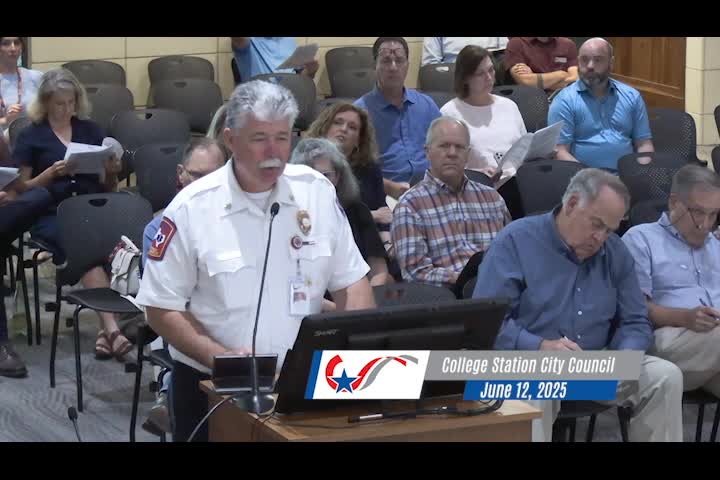
Summary
College Station City Council approved an amendment to the city—s solid-waste ordinance that creates a streamlined civil-fee process for leaving automated trash containers at curb after collection and changes the post-collection removal window from 12 to 24 hours. Council voted 5—to—.
College Station City Council on Thursday approved an amendment to the city—s solid-waste ordinance that lets the city assess a civil fee on utility bills when residents fail to remove automated trash containers after the designated collection time, and extended the period allowed after collection from 12 hours to 24 hours.
Supporters said the change is intended to reduce repeated violations and avoid overburdening the criminal-citation and court systems. "It's just an added tool in the code enforcement toolbox," said Tommy Schilling, Code Enforcement Supervisor, explaining the new process would begin with education and warnings and move to a $25.50 administrative fee as a last resort instead of summons requests that rarely produced compliance.
The ordinance change moves enforcement from a summons-based, criminal process to a civil-fee mechanism that can be added to utility accounts. Under the amendment council approved, enforcement will still include outreach and staged warnings. Council members who favored the change said the Northgate ordinance that already uses fees suggested the city could expand a working tool across the whole jurisdiction.
During discussion, Council Member White and others stressed the need for discretion when officers encounter residents who have legitimate reasons to miss the removal window. "If you're a night nurse and you can't move it in, we're not gonna go out there and just automatically issue a fee," Schilling said. Council Member Smith proposed lengthening the 12-hour requirement to 24 hours; an amendment to change the timeline to 24 hours passed unanimously before council approved the amended ordinance 5—to—.
Council also directed staff to reconcile the 12-hour language in other ordinance sections so the city does not have conflicting timeframes. City staff said the law currently requires containers be removed within 12 hours of collection, and stressed that the amendment alters the enforcement method rather than the basic rule; council—s 24-hour decision will be propagated consistently across the code.
The ordinance creates a new administrative fee and process: officers will document violations (including photographic evidence) after outreach and warning steps, and staff will be able to place the fee on the utility account for the service address as an administrative collection method. Councilmembers said that system should reduce court workload while preserving opportunities for residents to explain exceptions.
Council voted 5—to— to approve the ordinance amendment as amended to 24 hours. Council Member White cast the lone dissent.
What happens next: staff will prepare ordinance text reconciliations and an administrative procedure for public notice, bill inserts and appeals. The new civil-fee process will not go back retroactively to citations already in the court pipeline; staff said those will be handled under current practice.