
Katy ISD proposes wide discipline-code changes after 2025 legislation; board debates DAEP, antisemitism definition and fighting rules
Get AI-powered insights, summaries, and transcripts
Subscribe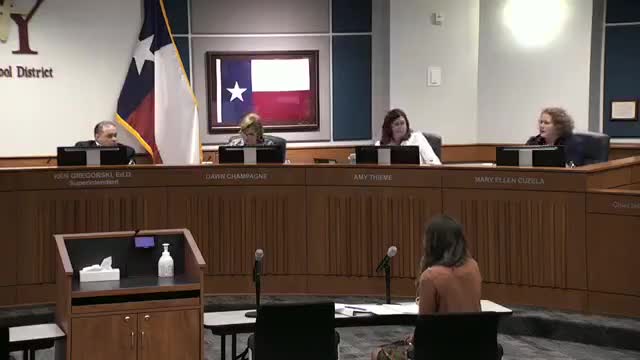
Summary
Katy ISD staff presented an extensive update to the district's discipline management plan and student code of conduct at the July 21 work study, saying the changes respond to multiple bills passed in the 2025 legislative session.
Katy ISD staff presented an extensive update to the district's discipline management plan and student code of conduct at the July 21 work study, saying the changes respond to multiple bills passed in the 2025 legislative session and to the commissioner's rules.
Sherry Ashbourne, Director of Student Affairs, summarized the principal changes she will present for board adoption: renaming telecommunications-device language to "personal communication devices" and aligning to House Bill 1481; implementing new teacher-removal and suspension provisions added by House Bill 6; adding a statutory definition of antisemitism under Senate Bill 326; clarifying permissible DAEP reasons and expanding off-campus DAEP placements for elementary students under certain conditions; and adding academic dishonesty language that references artificial intelligence misuse.
Ashbourne said the district plans to expand the use of off-campus DAEP placements (previously used for fourth and fifth graders) to younger students if district-level review finds the placement appropriate based on age, maturity and the severity of the incident. She described a district-level discipline committee of assistant superintendents that would review and approve such placements and noted transportation and program staffing would be handled case by case; historically fourth- and fifth-grade placements at the Opportunity Awareness Center used certified elementary teachers and lasted about 20 days for older elementary placements.
Trustees asked detailed questions about implementation and equity: how parents would be involved in a behavioral agreement; whether a parental-agreement early-release option would be adopted now or later (staff said TEA will produce a model behavioral agreement and staff will return once that guidance is available); how the definition of antisemitism differs from existing bullying/harassment rules (general counsel and staff said the statutory definition must be included but that behavior falling under antisemitism would be handled through the existing discipline framework); and whether self-defense language in the code could be clarified so students who cannot flee a violent attack are not unfairly disciplined. Ashbourne and general counsel described existing procedures and the six statutory factors administrators must weigh when assigning out-of-school suspensions, DAEP placements or expulsions (intent, discipline history, self-defense, disability, foster/homeless status, and other contextual factors).
Board members raised practical concerns about discipline consistency, PEIMS reporting alignment for removals, and the training and preparation of substitutes and campus staff to respond to violent incidents. Ashbourne said campuses will receive additional training, administrators will rely on existing district processes (including special-education review for students with IEPs), and the district will provide resources to principals and appointed campus behavior coordinators. Counsel also advised trustees that the law requires the district use the antisemitism definition in Government Code §448.001 and that the district can note that statutory citation in its code of conduct.
No final adoption occurred at the work study. Staff will provide the final code-of-conduct language and supporting materials to the board and bring the discipline management plan for formal approval at the regular meeting next week.