Get Full Government Meeting Transcripts, Videos, & Alerts Forever!
Get email alerts on the Wind Energy Ordinance topic
No spam. Unsubscribe anytime.
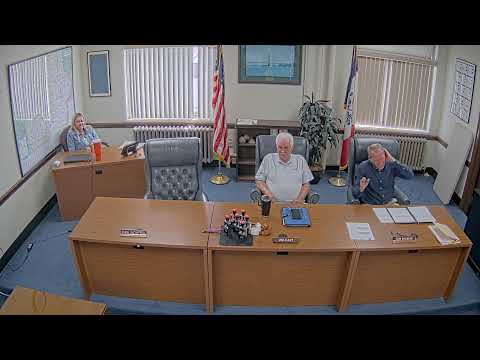
Des Moines County supervisors continue wind-ordinance work session as residents raise medevac, wildlife and notice concerns
Summary
Des Moines County supervisors continued a prolonged work session June 10 on a proposed wind-energy ordinance after residents and first responders raised concerns about medevac access, wildlife and notice. The board directed staff to sharpen language on permitting, decommissioning, bonds and notice.
Des Moines County supervisors spent the bulk of a June 10 work session hearing residents' safety and environmental concerns about proposed utility-scale wind turbines and discussing how the county should structure permitting, decommissioning and bonding for large projects.
The public raised emergency-response and aviation safety concerns, possible ecological impacts and gaps in public notice. Jacob Long, a Yarmouth first responder who spoke as a resident, told the board he feared that turbines could restrict helicopter medevac landings and add minutes to time-sensitive transports. “If I have a stroke patient and we're clear in the northwest corner of the county, I'm calling helicopter,” Long said. “If I don't have that helicopter, now I'm gonna have to ground transport that person. The golden hour of strokes, that could be the difference between life and death.”
Other speakers cited federal tax-credit deadlines and foreign-made components, potential interference with radios and Doppler radar, downward pressure on property values, the effects of turbine noise and infrasound, and threats to bats and migratory birds. Niall Shade of EDH asked the board to consider a moratorium or more time for review because of federal tax-credit rules that can accelerate construction timetables.
Why it matters: Supervisors are drafting a county wind-energy ordinance that would set the rules for how large wind projects are permitted, how they must be maintained, how abandoned or inoperable turbines are handled, and what financial guarantees (bonds) are required to pay for removal. The policy will determine whether future large projects are treated as one aggregated “project” with a single siting permit and set of plans, or as multiple individual permits, and it affects neighbors who may be nonparticipating landowners.
What the board discussed
- Permitting unit: Staff and several supervisors said they prefer one siting permit per wind project (often called a “wind farm”) accompanied by a comprehensive set of plans that show the location of each turbine, collector lines and substations. Several supervisors and staff also emphasized the need for permit language that allows enforcement and decommissioning on an individual-turbine basis. “If turbine 15 goes bad and it can't be repaired within the 90-day timeline, from a technical perspective, turbine 15 could be decommissioned individually without the whole project having to be decommissioned,” a county staff member said during the discussion.
- Decommissioning thresholds and timing: The draft ordinance the board reviewed treats a turbine or portion of a facility as potentially abandoned if it has not operated for 365 consecutive days. The owner or operator would have 90 days to show intent and ability to reactivate the applicable structure or to begin dismantling and removal; the board discussed adding clear language that ties an explicit completion deadline to any required removal (several supervisors suggested a second timeframe to finish removal after the 90-day notice period). County staff and outside speakers said they plan to specify that removal includes foundations and lines.
- Financial guarantees and enforcement: Board members asked staff to tighten the bond and insurance language so the county can access funds to complete decommissioning if the owner fails to act. County staff noted that decommissioning language also contemplates the county’s authority to act and, if necessary, execute on a decommissioning bond after the statutory timelines are met.
- Road use and construction windows: Supervisors and staff said road use agreements will be required for construction and decommissioning and will specify restoration standards and pre-construction documentation (video/photo) of road condition. Developers present described typical commercial construction timetables and landowner agreements that commonly give up to two years for construction of a project.
- Notice and participation: Several residents said they had not received timely notice of the developer’s plans. The board asked staff to add or clarify requirements for direct notice to record owners, lessees and lienholders (staff recommended certified mail to owners within one mile of each turbine) and agreed that the ordinance should define protections and setbacks for nonparticipating properties.
- Emergency response: County staff said they have reached out to Medforce, a medical flight operator, which advised that turbines are an added obstruction and that pilot discretion, conditions and updated guidance affect landings near turbines. Supervisors discussed adopting language from neighboring counties on emergency-response coordination, including pre‑planning and a required on‑site emergency response plan.
Public comments and evidence raised by residents
- Aviation and medevac safety: Jacob Long (Yarmouth first responder) and other residents described incidents in which helicopters experienced problems and urged the board to seek written operational guidance from Medforce before finalizing the ordinance.
- Wildlife and environmental concerns: Speakers cited risks to bats (including ‘‘barotrauma’’ described by commenters) and migratory birds, asked the county to request DNR studies for sensitive areas such as Big Hollow, and asked for review of local wildlife impacts.
- Noise, infrasound and property values: Several attendees expressed worry about chronic noise and vibration in flat terrain and asked the board to study effects on property values.
Board direction and next steps
Supervisors and staff agreed to continue refining the written ordinance language. Specific items the board asked staff and counsel to return with included: clearer decommissioning language that permits per‑turbine removal without triggering whole‑project removal; explicit timelines for removal after abandonment; stronger bond and insurance provisions that protect the county and nonparticipating neighbors; more explicit notice requirements (certified mail to owners within the defined distance); and drafting of an emergency‑response requirement that references Medforce guidance and Lee County-style language on catastrophic events.
Votes at a glance (motions and routine business taken before/after the wind discussion)
- Payroll reimbursement (reimbursement plan of $161,618.74): approved by roll call. - Resolution setting public hearing for FY25 budget amendments (hearing set for 06/24/2025): approved by roll call. - Intercounty memorandum of understanding for mental-health patient advocates (counties listed in record): approved by roll call; the MOU positions the advocates in Des Moines County and reimburses costs through the ASO when funds flow. - Resolution supporting Midwest Realty Group workforce-housing tax-credit application and $1,000-per-unit local match (56 units; county match $56,000; county staff reported Midwest Realty agreed to cover road costs beyond the $56,000 local match): approved by roll call. - Workers’ compensation renewal (presented by Adam Kearns, HUB International): renewal approved by roll call. - Class C liquor license, Flint Hills Municipal Golf Course: approved by roll call. - Personnel actions and hires (Tara Krause Prouse hire; correctional officer pay increase; reserve deputy resignation of Ben Nohoney): approved by roll call. - Minutes of the June 3 regular meeting: approved by roll call.
Ending note
Supervisors set another work session to continue ordinance drafting. Several board members repeatedly emphasized they are not writing rules tailored to any single developer but are trying to establish county‑wide standards. Staff will return with proposed language on the items the board highlighted, and the board signaled it would not favor issuing a preliminary, conditional permit that creates a property interest before all required documentation and reviews are complete.