
County proposes converting three vacated part‑time EMT posts into one full‑time EMT to staff ambulance
Get AI-powered insights, summaries, and transcripts
Subscribe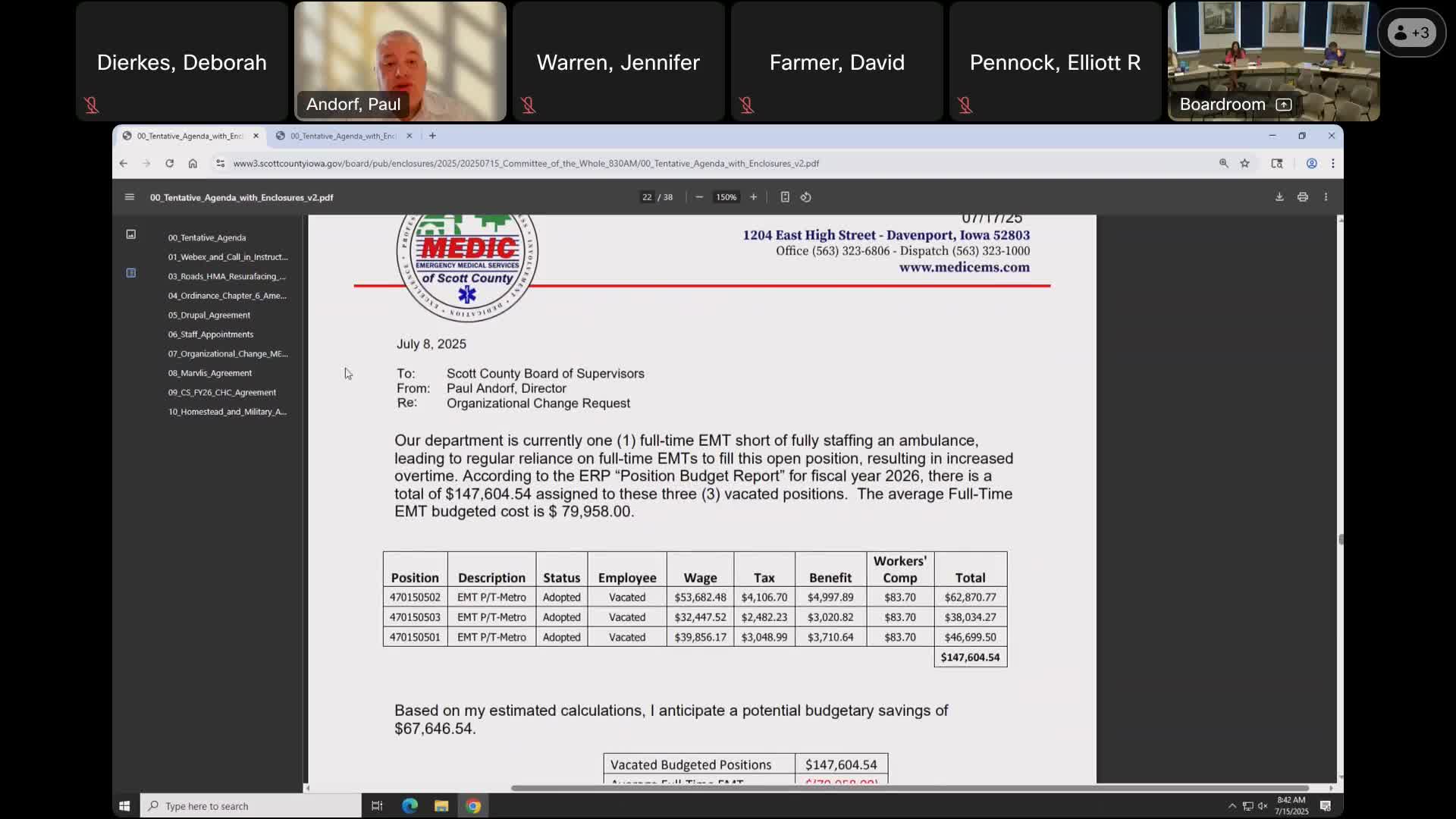
Summary
Emergency services officials told the board they are proposing to convert three unfilled part‑time EMT positions into one full‑time EMT post to fully staff ambulances; staff estimated a budgetary cost of about $147,000 and estimated net savings of roughly $67,000–$68,000 compared with continuing part‑time staffing patterns.
Paul (staff member) told the board that, as the county works to fill EMT positions, management has an opportunity to change how vacancies are used to sustain a staffed ambulance. Paul said the county is currently short one full‑time EMT and proposed converting three vacated part‑time EMT positions the county has been unable to fill into a single full‑time EMT position.
Fiscal effect and rationale: Paul estimated a budgetary cost of about $147,000 for the full‑time position based on an average full‑time EMT salary of roughly $80,000; by consolidating three part‑time vacancies into one full‑time position, staff estimated the county could save roughly $67,000–$68,000 compared with continued reliance on multiple part‑time hires and overtime.
Why it matters: ensuring sufficient full‑time staffing is central to maintaining an ambulance and consistent EMS coverage; staff framed the conversion as a staffing strategy to stabilize operations while vacancies persist.
Action and next steps: Paul presented the staffing conversion request during the committee of the whole; the transcript records the requested conversion and the budget estimates but does not record a formal vote. Staff will implement the conversion if approved through the county’s personnel and budgetary process.
Context: staff described this as the first time management had an opportunity to fill all open positions in the management team; the conversion is presented as a workforce management and budgetary optimization step rather than a net increase in positions beyond existing budgeted headcount.