
Brook Park council introduces Planned Unit Development ordinance for proposed stadium and mixed‑use district
Get AI-powered insights, summaries, and transcripts
Subscribe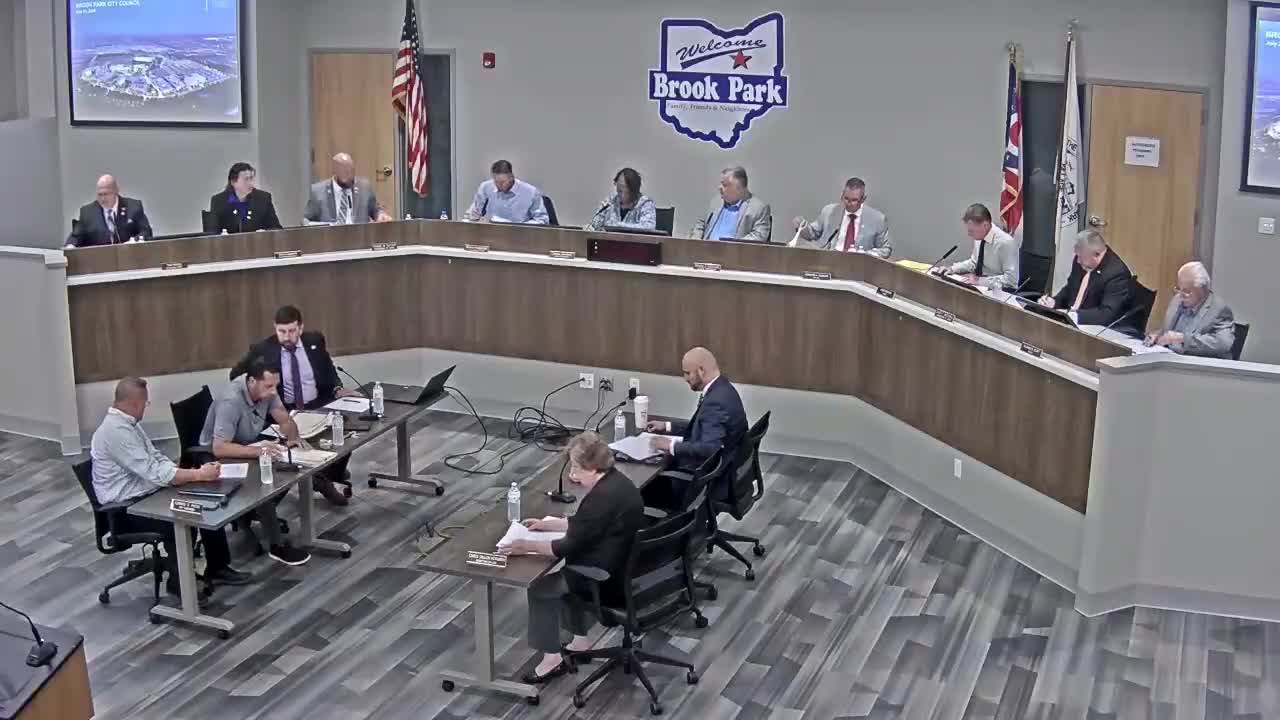
Summary
Council members on July 25 introduced an ordinance to create a Planned Unit Development district on roughly 176 acres around the site proposed for a new stadium and related mixed‑use development in Brook Park.
Council members on July 25 introduced an ordinance to create a Planned Unit Development district on roughly 176 acres around the site proposed for a new stadium and related mixed‑use development in Brook Park.
Developers from the project team and the city presented project details and a timeline before the planning committee and then council; the measure was placed on the council agenda and formally introduced, with a public hearing set for Aug. 21, 2025.
The PUD ordinance is intended to give the city and the development team a framework for a multi‑phase stadium and mixed‑use complex. Monica Lins, the project presenter, summarized the development program and schedule and said, “The stadium capacity will be 67,500, which is really similar to the current Huntington Bank Field down in downtown.” She described a construction timeline that would begin initial site work in October, start full construction in January 2026, proceed through a roughly 3½‑year build and aim for substantial completion in May 2029.
Why it matters: The project includes a very large private investment and changes the city’s zoning on the parcels in question; council members repeatedly pressed for language that preserves municipal authority on public‑safety rules, final approvals and future modifications to the development plan.
Most important facts first: The development team said the stadium is planned at 67,500 seats and will be sunk about 80 feet into the ground to meet Federal Aviation Administration considerations. The presentation described an initial phase that would include two hotels (about 450 keys total), roughly 200,000 square feet of experiential retail, and about 550 Class A multifamily units, with a longer‑term target of roughly 1,100 residential units across later phases. The firms named in the presentation included HKS and Mortenson on the stadium design and construction side and Lincoln Property Company on development.
Council concerns and the ordinance’s protections: Several council members — including Councilman Troyer and Councilman Mancini — asked for explicit safeguards in the PUD ordinance so the city retains control over key matters. Troyer asked whether the ordinance should expressly prohibit certain incompatible uses in specific subzones and whether the city would retain adequate oversight if parcels were sold or split in later phases. He also warned that once a final plan is approved under the PUD, subsequent legislative changes to the zoning may not affect that approved plan for several years unless the statute in the PUD provides otherwise.
Mayor Orcutt responded that the PUD was developed collaboratively with the investor group and city departments and that the draft contains “protections for investors and the city of Brook Park. Most importantly, our residents.” The mayor and the law director said city staff and the investor team have been working through detailed issues and that the draft PUD incorporates multiple review steps — preliminary and final development plans — intended to allow technical review by the city’s building, engineering and fire officials.
Fire code and precedence: Public comment and council discussion flagged one provision in the PUD language that reads, in part, that where the PUD conflicts with other city code provisions the PUD “shall take precedence.” A member of the public and the city’s Fire Prevention Office told the planning commission and council that if left unchecked that language could create tension with the city’s existing fire‑safety authority and the Ohio Fire Code. The mayor and law director said the point is recognized and that city staff, the building commissioner and the fire department are already engaged with the developer on technical requirements; the law director described the disputed phrasing as intended to allow flexibility in design but said the PUD includes other built‑in safeguards.
Plan modifications, appeals and who has final say: Multiple council members pressed on the process for plan modifications and appeals. The draft PUD delegates authority over “minor” plan modifications to the building commissioner and reserves “major” modifications for review by the planning commission; the draft also provides for administrative review and a 30‑day clock for appeals. Several council members asked whether major modifications should come back to council rather than be decided solely by the planning commission or by administrative staff. The law director emphasized the distinction between legislative functions (council) and administrative tasks (city officials) and said the document balances policy review with efficient technical administration.
Procedural steps taken: The planning committee moved the item forward and asked staff to prepare legislation for council. At the special council meeting later the same evening the ordinance was formally introduced (first reading). The council set a public hearing on the ordinance for 6 p.m. on Aug. 21, 2025, in the council chambers.
What’s next: Council members asked the law department and the administration to produce a revised draft that clarifies parcel identification, confirms the paper trail relating to the planning commission’s materials, and addresses the fire‑code precedence and appeal‑process questions before second reading. A public hearing will allow residents and technical reviewers to present comments before the council takes further legislative action.
Ending: The PUD ordinance creates a single regulatory framework intended to manage a very large, phased private investment; council members signaled support for the overall project while asking staff and the developer for tighter language to protect city authority on safety, review and future changes.