Get Full Government Meeting Transcripts, Videos, & Alerts Forever!
Get email alerts on the Infrastructure Flood Mitigation topic
No spam. Unsubscribe anytime.
Regional sewer district outlines $6.5 million Sheldon Road bridge rebuild to reduce routine flooding
Summary
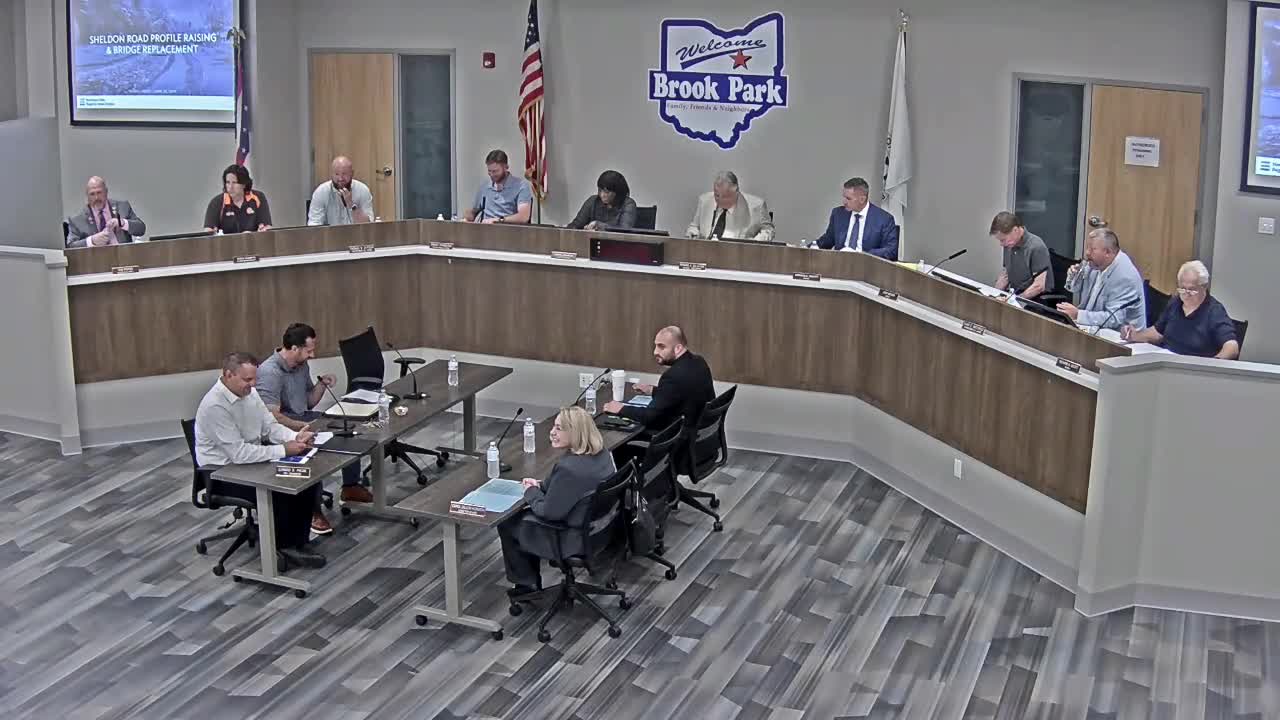
Brook Park — The Northeast Ohio Regional Sewer District on June 10 told the Brook Park City Council that a planned replacement of the Sheldon Road bridge aims to stop frequent flooding that now makes the road impassable after routine rain events.
Brook Park — The Northeast Ohio Regional Sewer District on June 10 told the Brook Park City Council that a planned replacement of the Sheldon Road bridge aims to stop frequent flooding that now makes the road impassable after routine rain events.
Nicole Noles, a district representative, said the district’s advanced planning showed the Abram Creek subwatershed near Sheldon Road overtops in two‑year storms and that the bridge — nearing its 90th anniversary — is undersized and showing concrete deterioration. “When the Regional Stormwater Management Program was being developed, one of the first things we did was take inventory of the entire regional stream system,” Noles said. “We identified problem areas and took a deeper dive into the flooding issues occurring right here in Abram Creek subwatershed.”
The nut graf: the sewer district is moving the project from design toward construction to reduce recurrent flooding and to remove utilities and maintenance burdens that now affect Brook Park residents and adjoining Middleburg Heights.
Most important facts: project schedule, scope, funding and traffic impacts. Noles said the sewer district is funding design with about $1.2 million drawn from the district’s Regional Stormwater Management Program (a fee collected on utility bills). A Stage‑2 cost estimate for the full project is “just over $6,500,000,” she said. The district said it has been awarded $2,700,000 in federal funding and Cuyahoga County is pursuing Ohio Public Works Commission funds that could cover up to 50% of construction. Noles said Brook Park’s estimated share of the construction cost at 5% would be about $321,000 and a related new local sanitary sewer line could cost roughly $161,000.
Project features and timeline: the bridge will be raised by about 3 feet and replaced with a conventional bridge structure designed to the 100‑year storm event (the district’s standard), officials said. Ed Piatek, the engineer working with the city’s contract firm Uthenix, described geotechnical challenges: “The material that’s there — it was built over a peat bog that extends down 50, 60, 70 feet,” he said, and that forced the team to select a geofoam solution rather than long periods of surcharge settlement. Piatek said architectural treatments are proposed — form liner, stained concrete to resemble stone and ornamental lighting — to improve appearance.
Traffic and construction impacts: Mike Blair, project manager for the district’s watershed programs, said alternatives examined include full road closure with traffic redirected to Bagley and Eastwind, and a partial‑closure option keeping at least one lane open. Given poor soils and the preferred bridge span, “it made better sense to fully close the road,” Blair said. He estimated a full closure could be on the order of about a year; a staged/partial‑closure option could extend to roughly 420 days in preliminary planning. Blair said final contractor selection and bidding will occur after completion of final design; the district anticipates final plans by the end of 2025, a construction start in third quarter 2026 and substantial completion by the end of 2027.
Utilities and other constraints: officials said a large Cleveland Water transmission main and substantial gas lines run along the roadway and will require coordination for relocation. The district and county will manage construction; the contractor is yet to be selected. Noles noted the district’s outreach and cost‑assistance resources for residents, including a utility assistance fair and monthly office hours, and reminded council that 25% of Brook Park’s stormwater fees are set aside for local stormwater uses.
What the council asked: Council members pressed whether closing local treatment plants years ago affected current conditions; district staff said the bridge project is unrelated to those past plant closures and that an interceptor sewer installed decades ago moved sanitary flow to regional treatment facilities. Council members also asked whether Cleveland Metroparks was involved; staff said Metroparks has been sent plans but is not a project partner. Council members raised questions about whether the bridge would be widened; staff said the design keeps the existing roadway width to avoid wetland impacts and costly mitigation in the Rocky/Black River watershed.
Next steps and council action: district staff provided hard copies of their presentation on request. After the update the council voted in favor of a motion that the item had been discussed (roll call recorded all yes votes), and the district said it will return with final plans and further outreach as design advances.
Background: the Sheldon Road location sits in the Abram Creek subwatershed between Brook Park and Middleburg Heights; the site has a history of visible, frequent flooding that prompted its earlier identification in the sewer district’s project scoring and advanced planning.