
Resident urges commission to investigate alleged constitutional nonconformance; board allows three extra minutes of public comment
Get AI-powered insights, summaries, and transcripts
Subscribe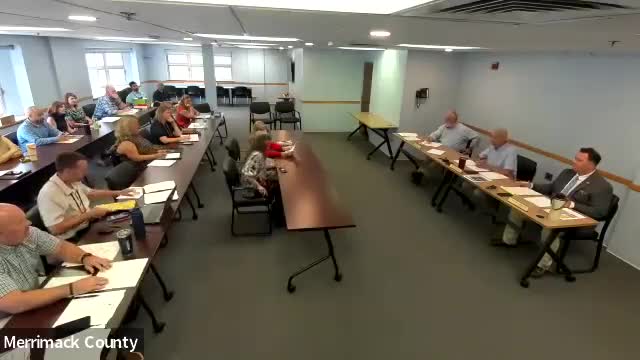
Summary
Pam Brown, joined by Diane Blasato French, delivered a lengthy public comment seeking a county investigation into alleged constitutional violations and said the matter is before the U.S. Supreme Court; the board granted an additional three minutes beyond its standard time limit and accepted a written copy of the submission.
Pam Brown and Diane Blasato French addressed the Merrimack County Board of Commissioners during public comment, urging the board to investigate what they described as widespread constitutional nonconformance and alleged deprivation of rights by state actors. Brown said the dispute has been submitted to the U.S. Supreme Court and invoked Article III. She cited federal criminal statutes (Title 18, sections 241 and 242) that criminalize deprivation of civil rights under color of law and argued that millions of citizens are affected.
Why it matters: The speakers asked the county to direct local law-enforcement leaders to “do their job” and to investigate alleged unlawful conduct; the board noted limits on its authority regarding independently elected officials such as the sheriff. The board accepted a written copy of the letter and granted a time extension for public comment on a motion.
What happened at the meeting: Brown read at length from a prepared letter outlining constitutional arguments and claimed hundreds of thousands of affected people; commissioners interrupted with procedural questions and asked whether the speakers had pursued federal law-enforcement avenues such as the FBI. A commissioner noted that the sheriff is an independently elected official and said the commission cannot direct the sheriff on how to execute duties. The board debated whether to allow additional speaking time; Commissioner Loveland moved to waive the four‑minute rule and grant three additional minutes, the motion was seconded and the extra time was provided. The board accepted a signed copy of the letter for its records and staff offered to review the submission offline.
What the board did and did not do: The board did not open an investigation at the meeting and did not agree to take enforcement action; it accepted the written material and permitted the extended comment period. Commissioners advised the speakers on alternative channels for federal civil-rights complaints (for example, the FBI) and emphasized the limits of the county commission over independently elected law-enforcement officials.