
Hancock County approves RFP advertising for animal shelter amid staffing concerns
Get AI-powered insights, summaries, and transcripts
Subscribe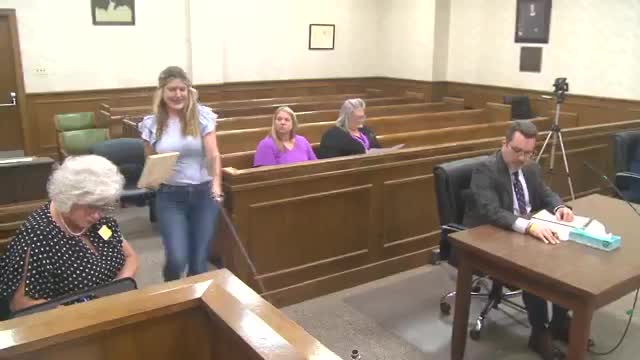
Summary
The Hancock County Commission voted to advertise a request for proposals to operate and manage the county animal shelter while commissioners and staff discussed recent staffing turnover, a new director, and contract safeguards.
Hancock County commissioners voted July 24 to advertise a request for proposals for operation and management of the Hancock County Animal Shelter after a discussion about staffing, recent leadership changes and funding.
The vote authorizes the county to solicit proposals from third-party organizations to operate the shelter; the tally recorded by the clerk was two yes votes and one no vote. The commission said any contract would be written to require compliance with state law.
The matter grew out of commissioners’ questions about long‑term operations and the shelter’s ability to combine county funding with nonprofit fundraising and grants. Commissioner Ogden, who has worked on the item, told the commission the intent is to use committed county funds as seed money and “couple it with their donations, their manpower, their ability to fundraise, their grant abilities” to expand care. The commission did not identify a preferred applicant; the vote approved only advertising the request for proposals.
The newly hired shelter director, Kaylee Stewart, presented the department’s recent recognition and introduced a dog used in public outreach. Kaylee Stewart, animal shelter director, said the shelter received a no‑kill shelter award and said, “We are no kill shelter, and we will plan on staying a no kill shelter.” Commissioners praised the award during the presentations portion but then shifted to operational questions.
Several commissioners urged caution about timing. One commissioner said the proposal was “potentially a very good idea, but I think the timing is very bad,” noting the shelter recently hired a new director and that staff morale and turnover have been issues. Commissioners discussed sequencing any contract award alongside a potential levy measure next year, and how an outside operator’s interest and the timing of voter approval could affect applicants and shelter operations.
On contracting, the commission said any third party operating the shelter would be required by contract to follow state law and the county’s terms. The county also discussed a small contract modification for kennel and play‑yard fencing repairs; staff raised whether that should be handled as a change order to an existing contract.
Discussion-only items included questions about how county oversight would continue if operations were outsourced and whether employees who had left would return under a third‑party operator. Formal action was limited to approval to advertise the RFP; no contract award was made at the meeting.
The commission approved the RFP advertising despite the split vote. Next steps outlined by staff include publishing the request for proposals, receiving responses, and returning to the commission for evaluation and any decision to award a contract.
Clarifying details and related items from the meeting include a $300 increase discussed for fenced repairs (new total $4,300 on the bid), recent turnover noted by commissioners, and the county’s statement that any contract would require compliance with state laws.