
Parents and officials flag rising class-size pressure at Riley Elementary as district monitors enrollment
Get AI-powered insights, summaries, and transcripts
Subscribe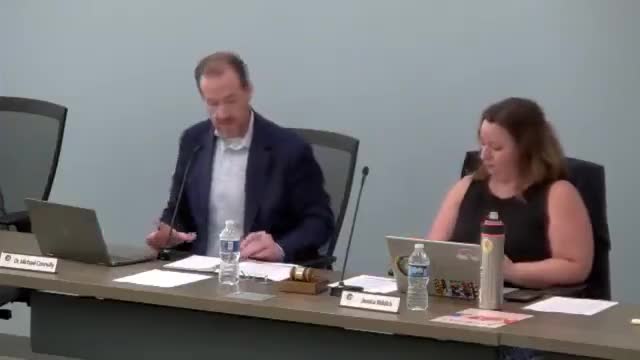
Summary
District 21 officials reported that Riley Elementary’s grade-level averages and districtwide enrollment trends are being monitored closely after parents and 28 written submissions raised concerns about classroom sizes; administrators said no binding action was taken tonight but will return with a school-by-school breakdown.
District 21 school officials on July 24 told the Board of Education they are watching enrollment closely after principals and parents raised concerns about classroom averages at Riley Elementary and other hot spots.
The issue surfaced during an update on student enrollment from Louis Roberts, the district’s new executive director for human resources, and again in public comment when a parent, Petra Ashman, described the difficulty of teaching and learning in larger classrooms.
Roberts told the board that the elementary averages shown to trustees are derived by dividing total students by the number of anticipated sections and that some specialized programs housed at a school can skew those averages. He said Riley had shown 54 students per grade level for first and second grades when the data were pulled, but that 13 of those students were assigned to a specialized program housed at Riley, bringing general-education averages down to about 22.5 in first grade and 24.5 in second grade. Roberts said principals continue to adjust enrollments in PowerSchool as sections are finalized and that the district is "keeping a very close eye on Riley."
Roberts also reported districtwide figures by school (examples cited in the presentation included Field: 472 students; Frost: 417; Kilmer: 561; Longfellow: 452) and said middle-school enrollment increases have led the district to add about 12.1 full-time-equivalent staff across the three middle schools to address larger cohorts. He singled out Cooper Middle School as having a “bubble group” and said the district added an additional core section FTE plus exploratory and shared part-time staff to accommodate that growth.
Public comment focused on classroom impacts. "When you have 23, let alone 27 students in one classroom, it becomes nearly impossible to give each child the attention and support they need," parent Petra Ashman told the board.
Board members also noted that registration delays make staffing and sectioning decisions harder. Dr. Connolly urged families to register as soon as possible, saying registration helps the district finalize staffing and class assignments. The board secretary reported the district had received 28 written public comments, all related to class-size concerns at Riley; those submissions were added to the meeting record, trustees said.
There was no formal board action on class-size policy at the July 24 meeting. Trustees directed staff to continue monitoring enrollments, to present a more detailed school-by-school breakdown, including average class sizes and ranges, at the next board meeting, and to report any needed adjustments to staffing or sectioning.
The board’s collective-bargaining agreement (CBA) was cited during discussion as the source of the district’s recommended class-size guidelines.
Trustees and administrators said they will continue to track Riley and other hot spots and will return to the board with updated figures at the August meeting or the next scheduled report. In the meantime, officials asked families to complete student registration promptly so principals can finalize sections and staffing."