
Ashland approves property tax cut, first reading OKs occupational tax increase and garbage-rate cut to boost city revenues
Get AI-powered insights, summaries, and transcripts
Subscribe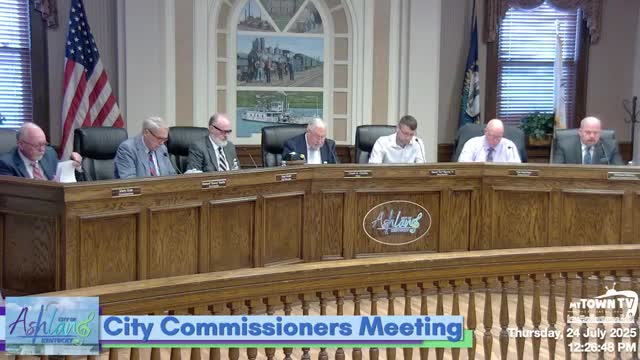
Summary
The Ashland commission adopted a 2025 ad valorem tax levy July 24 and on first reading approved a revenue package that reduces garbage rates by 20%, adjusts sewer billing to fund debt service and raises the occupational tax from 2% to 2.375% to help shore up the general fund.
The Board of City Commissioners took several interrelated revenue actions July 24 intended to ease household bills while addressing the city’s cash flow and debt obligations.
Commissioners gave second reading and final adoption to an ordinance fixing the city’s ad valorem tax levy for 2025. On first reading, the commission also approved an ordinance to reduce garbage rates by 20%, a separate ordinance modifying water/sewer rate-timing to fund debt service for the wastewater project, and an occupational license (payroll) tax increase from 2% to 2.375% as part of a revenue restructuring package.
City staff outlined the household impact of the garbage-rate reduction. “Households that are currently paying $27.59 will now pay $22.07,” a staff member said; low-income, disabled and elderly households that previously paid a reduced rate of $18.64 will see that rate go to $14.91 per month. Staff said the rate changes and other revenue measures will generate a net $1,700,000 increase in general-fund revenue tied largely to the occupational-tax adjustment.
Staff said adjustments to sewer billing cadence will help fund additional debt service needed for the planned wastewater upgrade. Even with the sewer-related increases, staff said the combined effect in the first year produces a net average utility-bill savings of $3.26 for customers.
The occupational tax increase was described as not taking effect until January 1; the transcript did not specify the calendar year for that effective date. City staff and commissioners emphasized that the revenue changes are part of a broader plan that also includes operational cost reductions and cash management steps to reduce reliance on the city’s line of credit.
Staff noted the city has already paid about $15,000,000 in cash for collection upgrades tied to CSO work, funded in part by a prior surcharge, and said careful operational management would continue alongside the revenue changes.
All measures described at the meeting passed the votes required at their respective readings; details such as effective dates and billing mechanics will be finalized in the ordinances and at the second-reading votes where required.