
Illinois officials tell House subcommittee broadband shortfalls and digital divide limit telehealth for rural veterans
Get AI-powered insights, summaries, and transcripts
Subscribe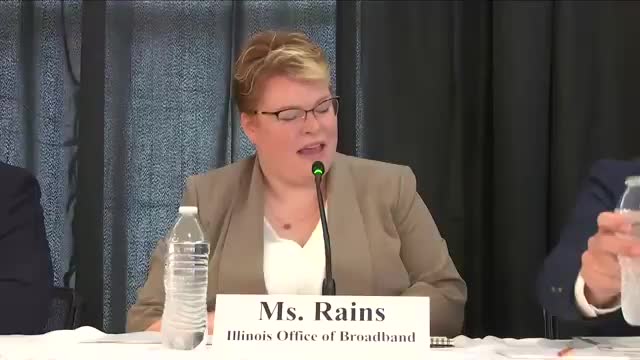
Summary
Illinois broadband officials and VA leaders told a House Veterans' Affairs subcommittee in Urbana that lack of fast, affordable Internet and digital skills is a major barrier to telehealth for rural veterans.
Illinois broadband officials and VA leaders told a House Veterans' Affairs subcommittee in Urbana that lack of fast, affordable Internet and digital skills is a major barrier to telehealth for rural veterans.
Why it matters: Telehealth expanded rapidly during the COVID‑19 pandemic and has become a core tool for reaching veterans in remote areas, witnesses said, but telehealth is only useful if veterans have reliable connectivity, appropriate devices, and basic digital skills.
Hillary Raines, representing the Illinois Department of Commerce and Economic Opportunity and the state Office of Broadband, testified that about 67% of Illinois veterans use broadband and that 57% of rural locations in Illinois are unserved or underserved at speeds below the FCC’s 100/20 Mbps benchmark. Raines told the subcommittee that three state and federally funded rounds of the Connect Illinois program have connected roughly 7,500 households so far and that the combined program and related projects will reach about 50,000 locations from roughly $350 million invested in the first three rounds.
Raines also explained that the federal Digital Equity Act had been poised to fund state programs (she cited an expected Illinois allocation of roughly $23 million) to support device access, training, and community telehealth rooms, but she said that the Digital Equity Act’s $2.75 billion of appropriated funding was terminated by executive order, leaving many planned local digital literacy and telehealth support programs unfunded.
Members and witnesses discussed technology options beyond fiber. Fixed wireless services, Verizon plug‑in home receivers and low‑Earth orbit satellite Internet can provide stopgap or long‑term solutions, but panelists warned about limitations: fixed wireless and satellite installations can be affected by weather, signal availability, and require middle‑mile fiber to feed wireless towers. Dr. Peter Caboli said the Office of Rural Health examined subsidizing satellite service for veterans but concluded the VA lacks clear legislative authority to pay monthly subscription costs; VA has run pilots to identify implementation issues but cannot broadly subsidize service without an authority change.
The panel stressed that digital connectivity is also an equity issue: older veterans are less likely to be digitally connected, and broadband subscription costs can be prohibitive for veterans on fixed incomes. Raines said Illinois’ Connect Illinois program and the federal Broadband Equity, Access, and Deployment (BEAD) program (referred to in testimony as BEED) can help expand infrastructure, and the state has applied for Digital Equity subgrants to provide device loans, training and telehealth support; those subgrant proposals far exceeded available funds, she said.
What witnesses suggested: A multi‑technology approach tailored to local geography — prioritizing fiber where feasible and complementing with fixed wireless or satellite — combined with device loan programs, digital literacy training and local telehealth access points could extend telehealth to more rural veterans. VA representatives noted VA’s Digital Divide programs that loan tablets preloaded for telehealth to eligible veterans, but witnesses said state and federal digital equity funding is still needed to scale community‑based support.
Ending: Lawmakers told witnesses they would continue oversight of broadband and telehealth barriers and explore whether federal authorizations, funding or pilot programs could accelerate affordable connectivity for rural veterans.