
House Ways and Means holds Las Vegas field hearing on "1 Big Beautiful Bill," tipped workers praise tax changes while Nevada officials warn of Medicaid and tour
Get AI-powered insights, summaries, and transcripts
Subscribe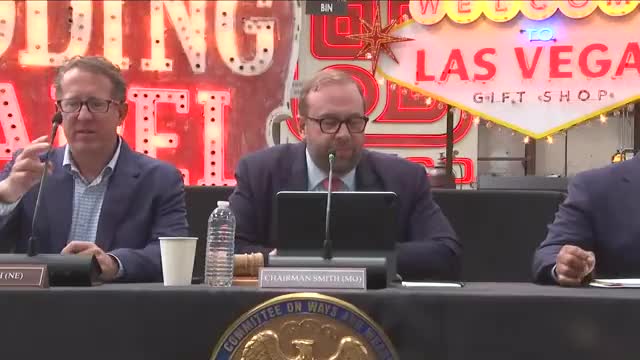
Summary
The House Ways and Means Committee convened a field hearing in Las Vegas to examine tax changes in H.R. 1, called the "1 Big Beautiful Bill," with witnesses and members debating whether the law helps working families or risks cutting health, nutrition and energy supports for Nevada residents.
LAS VEGAS — The House Ways and Means Committee convened a field hearing in Las Vegas to examine tax changes in H.R. 1, called the "1 Big Beautiful Bill," with witnesses and members debating whether the law helps working families or risks cutting health, nutrition and energy supports for Nevada residents.
Chairman Adrian Smith opened the hearing at YESCO Neon Sign Manufacturing and framed the bill as delivering permanent tax relief for workers and families through measures that include a $25,000 above-the-line deduction for tip income (commonly described at the hearing as "no tax on tips"), elimination of taxes on overtime and a new deduction affecting Social Security recipients. Ranking Member Richard Neal was recognized during opening remarks, and Representative Dina Titus and Representative Steven Horsford, both Nevadans, took part in the hearing.
The hearing assembled a mix of local workers and business leaders who described how changes would affect pay, hours and business investment. Patrick Rona, a server at RPM Italian, said, "This policy will let hardworking service professionals in Nevada, like me, keep more of what we earn." Sharon Simmons, a DoorDash driver, described the flexibility of gig work and said the tax changes would "literally allow me to see my family more often." Eric Byington, a paint foreman at YESCO, and Austin Robinson, director of manufacturing at Clickbond, said the bill would increase workers' take-home pay and encourage investment and hiring at small and medium manufacturers.
Nevada State Senate Majority Leader Nicole Cannizzaro and Representative Horsford offered a sharply different assessment of the package’s effects on state services and industries. Cannizzaro warned that provisions in the law affecting Medicaid eligibility, the Supplemental Nutrition Assistance Program and energy incentives would reverse progress Nevada made on coverage and renewable-energy jobs. "H.R. 1's provisions targeting Medicaid will erase much of this progress and lead to tens of thousands of Nevadans losing coverage," she said, citing state estimates that about 800,000 Nevadans rely on Medicaid.
Cannizzaro and others also raised concerns about tourism and gaming: she said Nevada has seen a decline in visitation and that the bill reduces funding for Brand USA, the federal tourism marketing organization. Horsford — the committee's top Democrat from Nevada — called the law the "big ugly law" and said it delivers a "cruel blow to working families," citing Medicaid and clean-energy provisions that he said would harm Nevada’s economy and hospitals. Horsford asked for and received the chairman’s commitment to work with Nevada members — including Representative Titus — to address a Senate change reducing the deduction for wagering losses, an item witnesses and members from the state said disproportionately affects Nevada.
Witnesses and committee members offered concrete figures throughout the hearing. Chairman Smith referenced a projected $1,300 tax cut for many tipped workers and a claimed $230 million impact to Las Vegas from the tips provision alone. Witnesses and members cited other numbers: Nevada restaurant and food-service employment (described by Patrick Rona as "over 227,000 jobs") and Clickbond’s shop-floor responsibilities (Austin Robinson said he oversees about 80% of the manufacturing workforce on the floor). Senator Cannizzaro warned of a roughly $350 million hit to Nevada’s state revenues between December 2024 and May 2025 tied to declining tourism and other factors.
Members pressed witnesses on how the provisions would affect wages, hiring and household budgets. Austin Robinson said permanent expensing for capital investments and tax certainty would encourage Clickbond to invest and hire; Eric Byington said tip- and overtime-related provisions gave hospitality and service workers a stronger incentive to work additional hours and save. Nancy Overman, a retiree and AMAC member, told the committee the $6,000 deduction for seniors would help those on fixed incomes and called expanded health savings account uses "one of the most practical reforms we have seen in years."
Democrats on the panel emphasized what they called trade-offs in the bill: they noted that some tax benefits in the bill are temporary while other tax cuts for corporations and high earners are permanent. Cannizzaro and Representative Susie Lee (cited by members during the hearing) argued that the temporary nature of several provisions—including the tips exemption—meant any short-term relief could be offset by longer-term cuts to Medicaid, SNAP and renewable-energy incentives. Democrats also cited reporting and CBO analysis in the hearing record about the distributional effects of the 2017 tax changes and related fiscal impacts.
Committee members and witnesses also described local responses and next steps. Cannizzaro said state leaders are considering special sessions to address budget shortfalls if federal changes reduce Medicaid funding or tourism revenues; she said Nevada was already anticipating tough choices because tourism-dependent sales and gaming taxes underpin many state services. Chairman Smith and several Republican members said they would pursue legislative fixes for items raised by Nevada officials, and Smith specifically committed to working with Representatives Horsford and Titus and other Nevada leaders on the gaming-loss deduction issue.
No formal committee votes or legislative decisions occurred at the field hearing; members took testimony and submitted documents for the hearing record. Several members asked for and had additional written materials entered into the record, including state analyses and media accounts of the bill’s effects in Nevada. The hearing record will remain open as committee members review written submissions and prepare potential follow-up actions or amendments.
The hearing underscored the stark differences between proponents, who described immediate, direct increases in take-home pay for tipped and overtime workers, and opponents, who warned of deeper fiscal and programmatic consequences for Nevada’s health-care system, food assistance and renewable-energy sector. The committee is expected to continue collecting testimony and to pursue targeted follow-up on items raised in the hearing, including the gaming-loss deduction and state-level fiscal impacts.
(Reporting note: testimony and direct quotes above come from the public hearing record and witness statements presented on the House Ways and Means Committee's Las Vegas field hearing.)