
Louisiana pardon board hears dozens of clemency requests; some commutations recommended, most clemency requests denied
Get AI-powered insights, summaries, and transcripts
Subscribe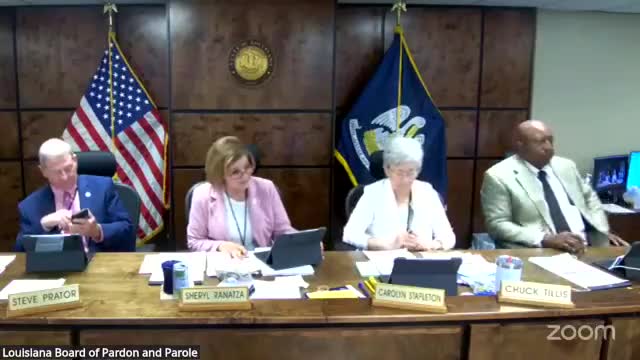
Summary
The Louisiana Board of Pardons and Committee on Parole met July 21, 2025, to consider more than a dozen clemency and parole-related requests from inmates at multiple state prisons; the board recommended a few commutations and one pardon but denied most requests after hearing victims' testimony and prosecutorial opposition.
The Louisiana Board of Pardons and Committee on Parole met July 21, 2025, to consider more than a dozen clemency requests from people serving sentences in state correctional facilities. The board convened at several prison sites by video and in person and heard testimony from applicants' family members, victims' families, wardens, the Jefferson Parish district attorney and the Louisiana Parole Project.
Why it matters: The board's votes determine which cases will be recommended to the governor for pardons, commutations or parole eligibility, a step that can shorten or otherwise alter the remaining prison time for applicants and that repeatedly drew stark differences between victims' families, prosecutors and supporters at the hearing.
Votes at a glance - Wilson ("Mapreeth/Mayberry") Pardon with restoration of firearms recommended to the governor (board recommendation recorded: majority yes) - Patricia Miller Commutation/parole eligibility: application denied (board split; 2 favorable / 2 not favorable) - Brenda Raines Commutation/parole eligibility: denied (board majority no) - David Patterson Commutation/parole eligibility: denied (2 no / 1 yes recorded at the hearing) - Patrick Courtney Commutation to 99 years with immediate parole eligibility recommended (board majority yes) - George Pratt Commutation: denied (board majority no; victim family opposed) - Ronald (Ron) Buckley Commutation/pardon: denied after executive session and victim opposition - Howard Higginbotham Commutation/pardon: denied (board majority no) - Donald (Don) Valer/Valier Commutation to 99 years with immediate parole eligibility recommended (board majority yes) - Lawrence (Larry) Coleman Clemency: denied (board majority no) - David Ham Gubernatorial pardon recommended but board declined to restore firearms (pardon only recommended) - Dale/Demma (Dale) R. Williams and other cases heard: denials recorded where victim opposition or prosecutorial opposition prevailed
What the board decided and why The board spent substantial time hearing victims' families and district attorneys, which proved decisive in several denials. Examples: - Patricia Miller: Jefferson Parish prosecution strongly opposed commutation, citing an extensive criminal history and institutional risk scores; the board split (two members favored relief or parole eligibility; two members opposed), and the application was denied. - Brenda Raines: Family members and the district attorney presented competing medical and victim-impact testimony. Board members noted she already has parole eligibility within a few years; the board voted to deny clemency. - Patrick Courtney: Board members repeatedly cited 34 years served, trustee status, program completion and active family support. The board voted to recommend commutation to 99 years with immediate parole eligibility and accompanying reentry support from the Louisiana Parole Project. - Donald Valer: After more than 40 years served with a limited disciplinary record and testimony from clergy and the Parole Project offering reentry housing and services, the board voted to recommend commutation to 99 years with immediate parole eligibility. - David Ham: The board noted full restitution paid after a 2006 felony theft conviction, plus long-term community service as a firefighter. The board voted to recommend a gubernatorial pardon but declined to restore firearm rights because Mr. Ham brought a firearm to a heated domestic dispute in Texas years later; board members said the firearms restoration was not appropriate in that record.
Victim and prosecutor testimony shaped many outcomes Across multiple cases the board cited the presence of victims or their family members and DA opposition in making decisions. Several DAs urged denials where they said institutional records, prior violent offenses or unexplained inconsistencies in applicants' accounts remained. Where applicants had stable reentry plans, long periods without serious discipline, and strong support from the Louisiana Parole Project and family, the board was likelier to recommend commutation with parole eligibility.
Next steps Board recommendations are advisory to the governor (pardons and restorations) or set eligibility for parole processes. Cases the board recommended will be transmitted to the executive for final action; denials are final for this session but applicants will be advised of reapplication timelines and programming recommendations the board said should be completed before they return.
Ending: The board paused or adjourned at the end of its July 21 docket after multiple site visits and an executive session, with several applicants told to pursue specified programming (e.g., Thinking for Change, substance-abuse or victim-awareness work) before a future consideration. The board recorded each vote and gave victims an opportunity to speak, and the full transcript of the meeting shows the specific roll-call remarks and vote counts for each case.