
Parole denied for Sharon Roberts after victims and law enforcement oppose release
Get AI-powered insights, summaries, and transcripts
Subscribe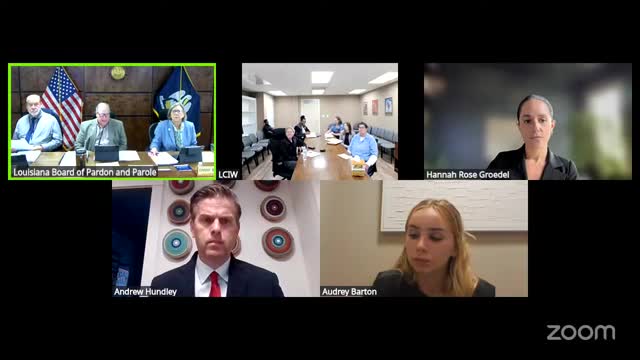
Summary
The parole board denied release for Sharon Roberts, 60, at a July 15 hearing at the Louisiana Correctional Institute for Women after victim impact testimony, law enforcement opposition and a record of prior supervision revocations.
Sharon Roberts, an inmate at the Louisiana Correctional Institute for Women (DLC 111955), was denied parole on July 15 after board members cited strong victim and law enforcement opposition and multiple prior supervision revocations.
Roberts read a statement to the board expressing remorse: “To the Gasboy family, I’m sorry that I caused the death of your mother. There’s not enough words to explain the remorse I feel for my crime and the pain and suffering I caused your family.” Her attorneys and the Louisiana Parole Project described long-term rehabilitation supports and a residential reentry plan should the board grant parole.
Roberts, serving a sentence described at the hearing as 31 years, 5 months and 13 days for manslaughter and arson-related convictions, has served roughly 23 years and is described by supporters as sober and engaged in institutional programming. Attorneys and social workers said Roberts was placed in special education as a child and that she has intellectual limitations that make verbal testimony difficult; her legal team supplied a written statement to the record. A social worker from the Louisiana Parole Project told the board Roberts reported 23 years of sobriety and would be referred to individual therapy and community mental-health resources upon release.
Victims’ family members delivered lengthy opposition statements. Tanya Gaspar, who identified herself as the victim’s niece and spoke for the family, recounted the circumstances of the 2002 fire that killed Amy Gaspar and said Roberts set a table on fire while the victim was asleep. Multiple family members described lasting trauma and urged denial. Board members acknowledged those victim statements and law enforcement objections when they announced their votes.
Board members noted Roberts had multiple prior supervision revocations and said those revocations, plus the strength of victim and law enforcement opposition, left them unconvinced release would be different now. Acting chair Pete Freeman read case dates into the record and summarized institutional records; member Barra stated he would vote to deny because of the “strong law enforcement proposition” and the victim opposition. The board voted to deny parole.
The board’s decision leaves Roberts to serve toward her good-time and full-term dates as recorded in the hearing file. The denial also noted the availability of a future administrative path (good-time discharge) should her status change under existing correctional rules.
Roberts’ supporters said the Louisiana Parole Project would accept her into a supervised residential reentry program that includes housing, job assistance and ongoing social-work support should parole be granted in a future proceeding.
Details in the record: Roberts’ parole eligibility date was read as 10/17/22, a stated good-time discharge date of 10/10/32 and a full-term date of 08/29/33; the hearing record lists her as a fifth-felony offender and lists institutional disciplinary history with no write-ups in the last 13 years, according to staff statements at the hearing.