
Committee on Parole grants conditional parole to Ladarius Carter; completion of in‑house substance program required
Get AI-powered insights, summaries, and transcripts
Subscribe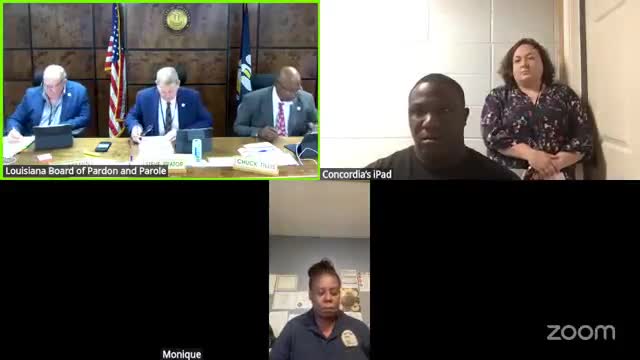
Summary
The Louisiana Committee on Parole granted parole to Ladarius (Ladarius/Ladarious) Carter on June 5, 2025, conditioned on completing an in‑house Department of Corrections substance‑abuse program and following any program recommendations. The decision followed staff reports and support from local law‑enforcement officials.
The Committee on Parole in Baton Rouge granted parole to Ladarius Carter on June 5, 2025, conditioned on completion of an in‑house Department of Corrections substance‑abuse program and compliance with program recommendations upon release.
Carter told the panel he was arrested for selling and using drugs and described seeking treatment while incarcerated. "Jail actually saved my life," he said on the record, saying he had completed classes and wanted to "give back to the community" and help younger people avoid the same path. Institution staff reported Carter had been a trustee, had no disciplinary write‑ups, and had completed multiple programs including risk management and faith‑based activities.
Supporters from the Fairview Police Department — including Fairview Police Chief Derek Freeman and court clerk Monique Bradstreet — spoke on Carter’s behalf and submitted multiple letters from local officers. Chief Freeman told the board Carter had been a reliable worker at the facility and that, in his judgment, Carter "would be an outstanding citizen" if released.
Board members questioned Carter about plans for sobriety on the street; Carter said he intended to change his people, places and things, attend NA meetings, obtain a sponsor and continue outpatient treatment. Board members also asked about an outstanding Mississippi charge; Carter said he did not yet have details. The institution also confirmed Carter had worked daily in the facility and completed the classes offered there.
After questioning and review of institutional reports and letters of support, the board voted to parole Carter on condition he complete an in‑house DOC substance‑abuse program and follow the program’s recommendations. The panel directed staff to follow up with the institution to provide Carter and the board with details about the specific DOC program identified during the hearing (the transcript records an unclear program name), and to document completion before supervised release.
Decision: Parole granted (conditioned on completion of in‑house DOC substance‑abuse treatment and adherence to program recommendations). The board recorded the decision at about 09:11 a.m.
The board’s file includes institutional reports, letters from local law‑enforcement officers and the inmate’s interview, which the board cited in explaining the conditional parole.