
Atherton Council Hears Briefing on SB 63 Regional Transit Measure; Takes No Action
Get AI-powered insights, summaries, and transcripts
Subscribe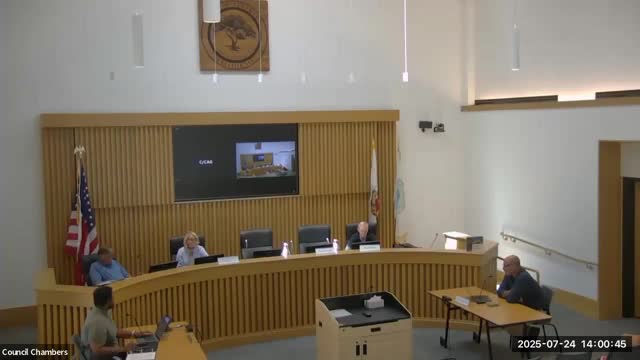
Summary
Mayor Lewis convened a special meeting of the Town of Atherton City Council on July 24 to gather council input before the City/County Association of Governments votes July 30 on whether San Mateo County should opt into SB 63, a proposed regional sales‑tax measure to address operating deficits at Caltrain and BART.
Mayor Lewis convened a special meeting of the Town of Atherton City Council on July 24 to gather council input before the City/County Association of Governments (CCAG) votes July 30 on whether San Mateo County should opt into SB 63, a proposed regional sales-tax measure intended to address operating deficits at Caltrain and BART.
Why it matters: SB 63 would allow a regional sales tax (options discussed included a quarter-cent or half-cent increase) to provide multi‑year operating support for major Bay Area rail operators and other transit services. Council members expressed concern about tax increases, local return-to-source, and how funds would be governed and audited; the council did not take formal action and left the CCAG vote to the town's CCAG representative.
Sean, a CCAG staff representative, described the measure as "a regional measure, and it is contemplating a regional sales tax to address impending service cuts or perhaps operating deficits at the major rail carriers" and said the draft legislation remains incomplete. He said the statute currently includes Alameda, Contra Costa and San Francisco counties and would offer San Mateo and Santa Clara the option to opt in; SamTrans would make a final decision after CCAG recommendations.
Key financial figures discussed in the meeting included a countywide Caltrain deficit cited as about $75 million (total annual shortfall for the operators discussed) and an estimated San Mateo County share of roughly $32 million. Sean said a half‑cent tax in San Mateo County is estimated to generate about $120 million a year and a quarter‑cent about $60 million; a half‑cent scenario was described as yielding a return‑to‑source for SamTrans of approximately $37 million.
Council members pressed for accountability and cost controls. Council member Woodmer said officials and transit managers should be "looking at what they're going to do to save money internally," and questioned whether cutting costs or scaling service had been examined before proposing new revenue. Mayor Lewis and other members repeatedly raised concerns that increasing a sales tax during a period of economic strain would be burdensome to residents.
Council discussion also covered Measure A (San Mateo County's existing sales tax for transportation). Staff and presenters explained that one option considered in planning is shifting some Measure A funds to help cover Caltrain obligations if no regional measure is adopted. Sean said that change would primarily affect capital categories (highways, local streets and roads, bicycle and pedestrian projects and grade separations) and that local jurisdictions rely heavily on Measure A funds for street maintenance.
Council members asked about local benefits to Atherton. Speakers noted Atherton does not have a Caltrain station and that local direct ridership is limited; councilors therefore questioned the town's net benefit from an opt‑in decision. One council member noted the polling (EMC Research) indicated Measure A renewal without a tax increase polled best.
On timing and process, Sean said the legislation (SB 63) as discussed would permit a citizen's-initiative path with a 50%+1 threshold and that the measure could be structured as a 10–15 year sunset. He said CCAG's July 30 action would be whether to recommend opt‑in and, if so, whether to include conditions about measure size and accountability/efficiency metrics; that recommendation would then be forwarded to the SamTrans board for its decision.
No formal action by the Town Council was taken at the July 24 special meeting. As the meeting closed, a council member said, "No action by the council today," and the council left the matter for the town's CCAG voting representative to carry to the July 30 CCAG meeting.
What comes next: CCAG will consider an opt‑in recommendation at its meeting July 30; SamTrans would then decide whether to opt in and the bill would proceed through the legislative process with input from San Mateo County's delegation if it advances.
Clarifying notes drawn from the meeting: the CCAG staff said Caltrain and BART face a combined operating shortfall that staff characterized as approximately $75 million (total) and that San Mateo County's proportionate share was estimated at about $32 million; those figures were presented by CCAG staff as subject to change. The draft legislative language and final allocations were not complete at the time of the Atherton meeting.