
KPD liaison outlines training, recruitment and conference plans to boost trust with LGBTQ community
Get AI-powered insights, summaries, and transcripts
Subscribe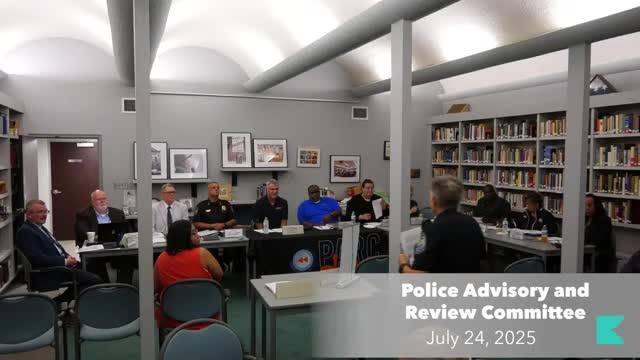
Summary
Knoxville Police Department Sergeant Phyllis Tonkin, the department's LGBTQ liaison, told the Police Advisory Review Committee she will attend the 2025 International LGBTQ Conference in Austin and is pursuing training, policy review and targeted recruiting to improve relationships and cultural competency.
Sergeant Phyllis Tonkin, the Knoxville Police Department's LGBTQ liaison officer, told the Police Advisory Review Committee she will attend the 2025 International LGBTQ Conference in Austin, Texas, and is pursuing training, policy review and recruitment to strengthen trust between the department and LGBTQ residents. "My role as the LGBTQ Liaison Officer is not just a title, it's a mission," Tonkin said.
Tonkin told the committee she intends to use conference materials and networking to develop brief, practical training for officers on respectful communication, documentation of gender identity and the specific concerns of victims in LGBTQ communities. "When we show cultural competency, when we use correct language, respect people's identities, and show genuine understanding, we break barriers down," she said.
The committee heard that Tonkin plans to increase the department's external visibility by attending community events such as Pride-related festivals, school presentations and resource fairs, and to work with recruiting staff to encourage qualified LGBTQ applicants to consider law enforcement careers. "This department values you, your experience matters, and we need people like you to help serve everyone better," she said of the recruitment message she plans to promote.
Josie, identified at the meeting as PARC's community manager and the mayor's LGBT liaison, thanked KPD for creating the liaison position and noted it is not common among all departments. "Not all police departments have this position, so we're very lucky to have that there," Josie said, citing KPD's participation in a recruitment booth at a recent Pride event.
A committee member who identified herself only as Cynthia and who said she spent 22 years at the FBI and later worked with an LGBTQ advocacy organization, praised the liaison role as a trust-building model and encouraged Tonkin's conference attendance. "When you have these roles established in police departments ... it builds trust," Cynthia said, and said such trust often spreads to other marginalized groups.
Tonkin said the liaison role includes internal work to educate officers and external work as a point of contact for community members who might otherwise hesitate to engage with police. She described examples of barriers, including transgender people worried about misgendering and LGBTQ victims who fear not being taken seriously. "If people don't feel safe coming to us, we can't protect them, investigate crimes, or build strong community relationships," she said.
The committee did not take a formal vote related to Tonkin's travel or programs during the meeting. Tonkin said she will report back to the committee after the conference and share any training materials or best practices she brings back.