
Students and community speakers urge Keller ISD to challenge Texas’ SB 10 requiring Ten Commandments in classrooms
Get AI-powered insights, summaries, and transcripts
Subscribe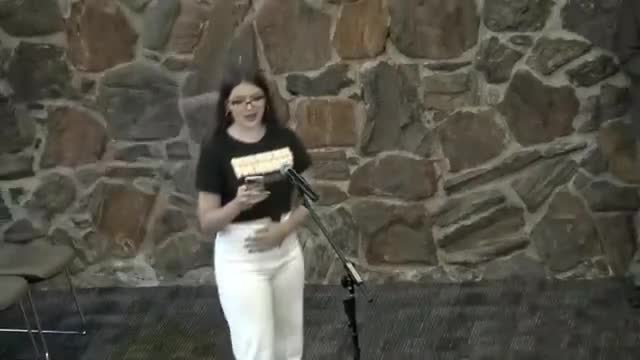
Summary
Multiple students and community members used public comment at the July 24 Keller ISD Board meeting to call the board to pursue legal action against Texas Senate Bill 10, saying the measure would violate the separation of church and state and harm students.
Scores of students and community members told the Keller ISD Board of Trustees on July 24 that the newly passed Texas Senate Bill 10, which requires display of the Ten Commandments in public-school classrooms, would be unconstitutional and harmful to students. Speakers urged the board to seek legal counsel and consider legal action to block enforcement of the law.
Why it matters: Speakers said the law would single out non-Christian students and undermine classroom inclusion in a district that enrolls roughly 34,000 students. Several urged trustees to act quickly so that the district can protect students’ rights and inclusivity.
At the public-comment portion of the meeting, students and recent graduates used their allotted three minutes to press the board for specific action. Zara Anderson Himelsbach, who identified herself as leader of Sunrise Terrence Campaign for Public Schools and an incoming sophomore at Central High School, told the board, “This is a blatant violation of the separation of church and state, and I urge you, our board, to take legal action against the state legislature by seeking legal counsel to take steps to abolish this law.”
Multiple speakers referenced prior court rulings and recent decisions in other states. Several cited a Louisiana court decision that struck down a similar measure as precedent; one speaker referred to a recent Supreme Court decision by name. Jacob Everett, a sophomore at Central High School, said the law “is trying to give the 10 commandments to be in every single classroom in this entire district, which could be a really good thing if this was in a Catholic school district. We are not a Catholic school district, so we shouldn't have this here.”
Speakers also tied their appeals to broader concerns about district governance. Zara Anderson Himelsbach and others accused some trustees of past decisions they called exclusionary and urged the trustees they named to resign. Multiple callers — including Chance Womack, Leilana Matas, Zephyr Peoples, Chloe Hedrick and Gabrielle Gordon — asked the board to protect students they said are vulnerable to discrimination if the law is enforced.
Board response and limits: The public-comment period is the forum for members of the public to speak to the board; trustees do not respond to comments at that time, and no formal board action on SB 10 occurred during the meeting. Several speakers asked for board-initiated litigation or legal counsel to challenge the law; the transcript records no motion or vote on that request during this meeting.
What speakers asked for: Students repeatedly asked the board to seek legal counsel and “take legal action” to block SB 10’s requirements. Some also urged trustees perceived as complicit with “transphobic” or exclusionary policies to resign. Community speaker Gabrielle Gordon, a long-time district resident, urged support for student groups and district programs that promote inclusion.
Next steps noted in the meeting: Trustees did not take formal action on the requests during the July 24 meeting. The public comments were recorded in the minutes and will be part of the board record; any future district legal action would be subject to formal board consideration and a vote at a later meeting.
Ending: The public-comment segment took roughly an hour of the meeting and included many speakers focused on SB 10; the board did not announce a plan or vote on legal action during the session.