
Council adopts Safe Streets and Roads for All plan so city can pursue FHWA implementation grants
Get AI-powered insights, summaries, and transcripts
Subscribe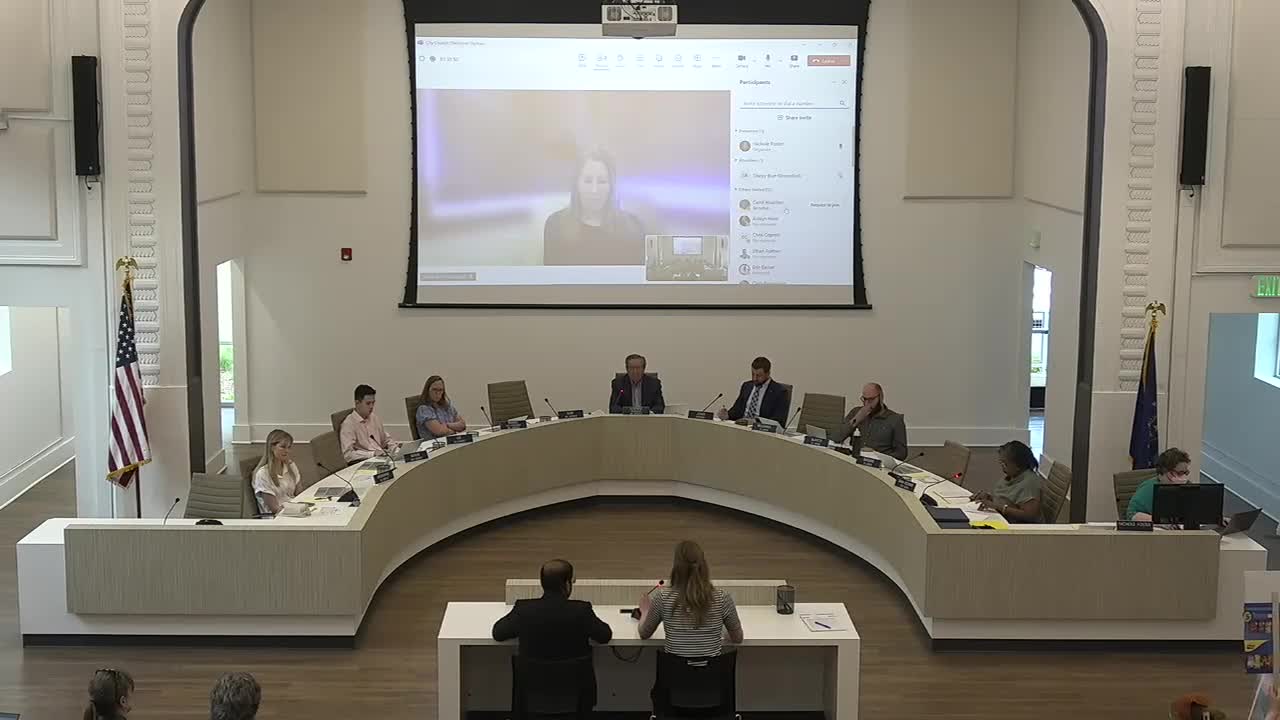
Summary
The West Lafayette Common Council on June 2 adopted a resolution endorsing the city’s Safe Streets and Roads for All comprehensive safety action plan, clearing the way to apply for Federal Highway Administration implementation grants.
The West Lafayette Common Council on June 2 adopted a resolution endorsing the city’s Safe Streets and Roads for All (SS4A) comprehensive safety action plan, clearing the way to apply for Federal Highway Administration implementation grants.
The council adopted Resolution 8-20-25 by a 6-0 roll-call vote. City Engineer Natalia Bartos said the plan was developed after the council’s earlier Vision Zero policy and a federal planning grant. American StructurePoint led the work; the consultant described the plan’s methodology and prioritized projects and programs.
Why this matters: Adoption lets the city apply for FHWA implementation grants that typically range from $2.5 million to $25 million and require significant federal matching. The plan identifies corridors and intersections with high injury rates and builds a project list the city can advance into design and construction.
Bartos told the council the plan identifies about 14 roadway segments and 10 intersections where safety interventions are needed, naming corridors such as Sagamore Parkway, Northwestern Avenue and Salisbury Street and intersections including River Road at State Street, Lindbergh Road at Northwestern Avenue, and Salisbury Street at Wiggins Street. She said the planning work positions the city to seek implementation funding and to prioritize projects with the highest safety impact.
Shashad Gjarin, the American StructurePoint project manager, said the SS4A plan follows a Vision Zero approach and includes leadership commitment, safety analysis, equity considerations and project selection. He summarized that implementation grants would fund development and construction of projects identified in the action plan and that the upcoming FHWA project call closes June 26.
Public commenters acknowledged the plan’s goals but urged the city to consider future traffic that could result from large new developments. Jason Anderson, a long-time traffic-commission attendee, said the traffic commission had not vetted the plan and asked the council to postpone adoption for further review. He urged the council to re-examine city code about the traffic commission’s advisory role and to coordinate with NDOT for corridors outside city control.
Other residents and engineers asked how the plan would anticipate traffic changes tied to the proposed SK hynix semiconductor project and whether the plan’s multi-year priorities adequately account for rapid changes north of Sagamore Parkway. One commenter noted the plan relies on historical data and suggested additional data sources and scenario planning to capture projected heavy-truck and commuter traffic tied to new industrial development.
Funding and next steps: Bartos said an implementation grant would typically be 80% federal with a 20% local match and that the city will apply to the June 26 FHWA call. She asked council adoption to demonstrate local commitment and to allow the city to apply. The city and the Area Planning Commission submitted separate SS4A planning efforts; staff explained West Lafayette proceeded with a city-scale plan because county- and Lafayette-scale data did not sufficiently isolate city conditions.
Discussion versus action: Council members asked questions and heard public input; they then took formal action to adopt the resolution and authorize application for FHWA implementation funds. The council recorded a 6-0 vote in favor.
Ending: With the resolution adopted, West Lafayette may submit implementation grant applications and pursue design work on prioritized safety projects. Council and staff said projects from the action plan will be coordinated with the MPO and other agencies as needed.