Get Full Government Meeting Transcripts, Videos, & Alerts Forever!
Get email alerts on the Arts Funding topic
No spam. Unsubscribe anytime.
Arts Commission Proposes Changes to Vision Arts Grants to Improve Access for Small Groups
Summary
The Arts Commission presented proposed refinements for the Vision Arts competitive grant program — including mandatory info sessions for new applicants, clearer rules, a seeded independent review panel and expanded outreach — to make the $150,000 annual program more accessible to smaller organizations.
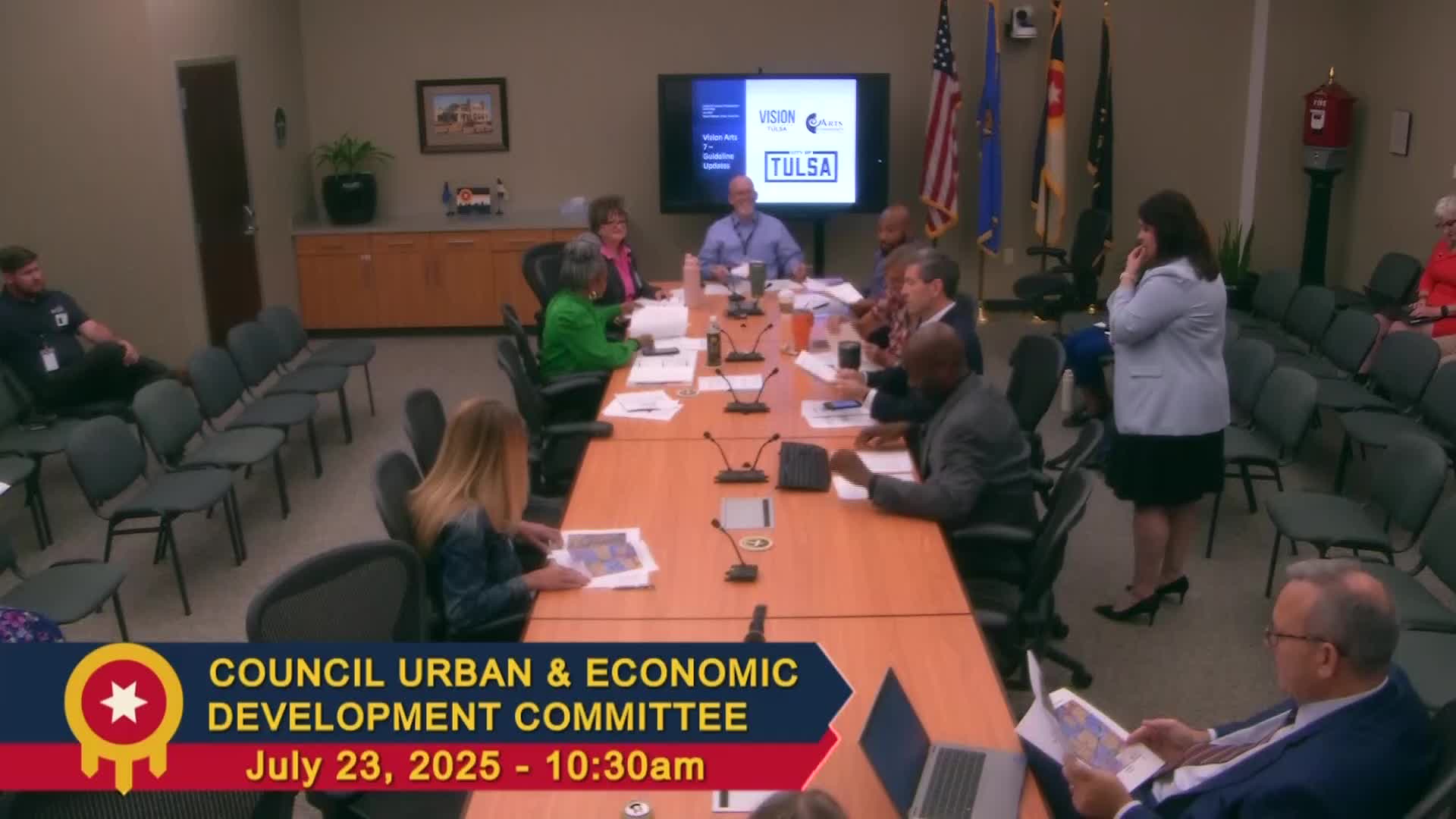
Representatives of the Arts Commission presented proposed changes to the Vision Arts grant program aimed at making the fund more accessible to small, Tulsa‑based cultural organizations.
Aboon Kabam, chair of Division Art 7 and a member of the Arts Commission, said Vision Arts is the arts component of the Vision Tulsa sales tax package approved by voters in 2016 and that $150,000 is set aside each year through 2031 for competitive, project‑based grants intended to spark economic and neighborhood development.
Kabam said the commission proposes three key improvements for the next funding cycle: (1) mandatory information sessions for first‑time or never‑funded applicants to level the playing field and reduce incomplete applications; (2) seeding the independent review panel (IRP) by Oct. 31 so reviewers have about ten weeks to score proposals; and (3) clearer plain‑language guidance and an easy‑to‑find table of ineligible expenses. He also said staff plan to post short “how‑to” videos, step‑by‑step budget templates and FAQs to reduce application intimidation.
Kabam described the intent as building applicants’ grant writing capacity so small organizations can compete for other sources of state and federal arts funding as well as Vision Arts. He said the commission hopes to open applications on Oct. 1 and bring funding recommendations to the council next spring if the commission’s vision is approved.
Councilors praised the focus on reviewer diversity, longer review timelines and outreach. A councilor said the expanded guidance and mandatory sessions should help applicants who are intimidated by grant processes. The item was a presentation and no formal vote was recorded.
The commission noted the program’s role as one of the few sources of catalytic arts funding in a period of declining state and federal arts support and framed the proposed changes as investments in neighborhood vitality and workforce development through arts programming.