Get Full Government Meeting Transcripts, Videos, & Alerts Forever!
Get email alerts on the Housing Policy Zoning topic
No spam. Unsubscribe anytime.
Urban Leaders fellows urge incremental zoning changes, faith‑based housing and more by‑right ADUs to close Tulsa’s housing gap
Summary
Urban Leaders fellows presented recommendations including a faith‑based housing overlay and more by‑right ADUs to help close Tulsa’s estimated 13,000‑unit housing gap.
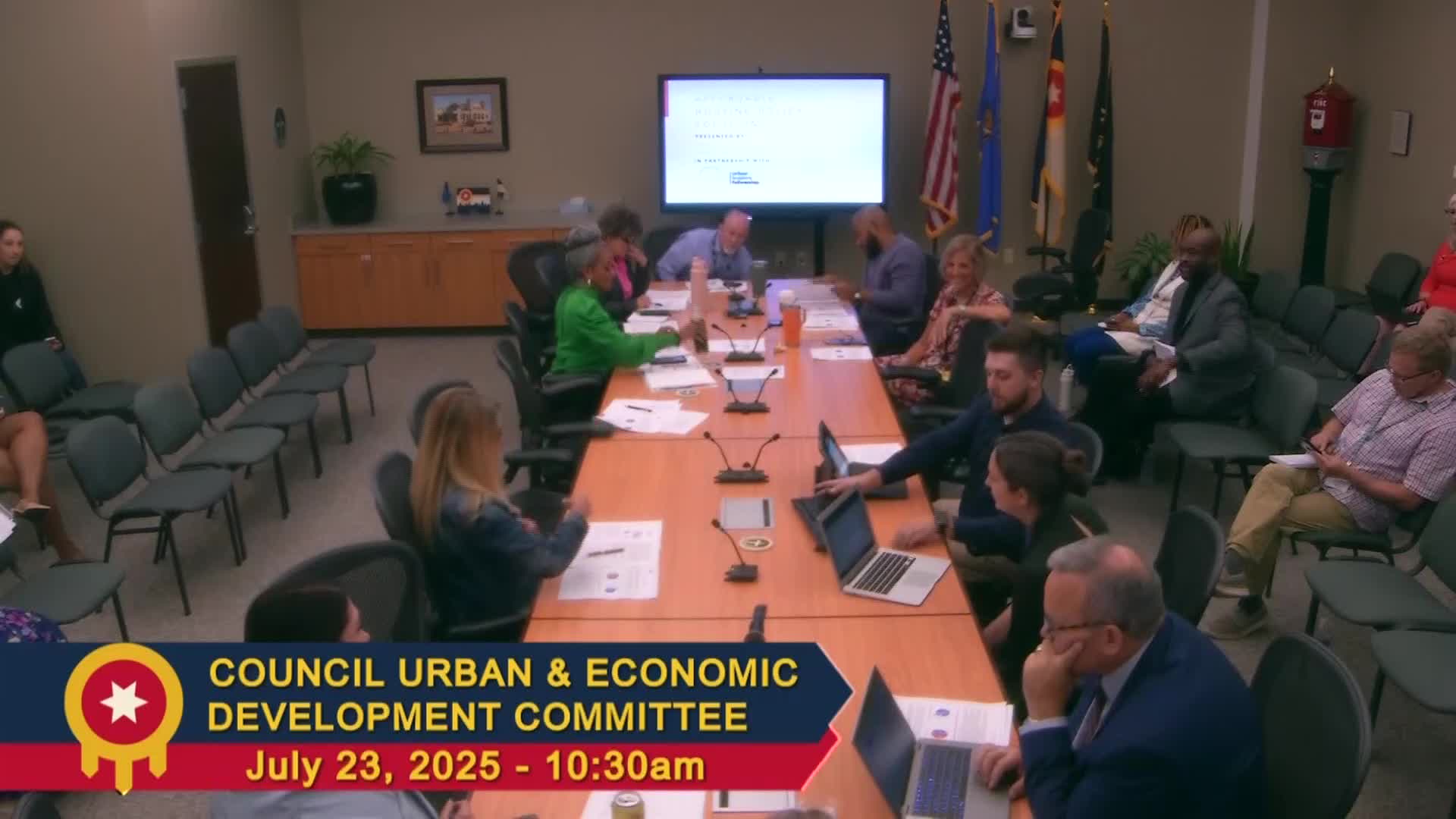
Two fellows with the Urban Leaders fellowship presented a data‑driven set of housing policy recommendations Wednesday, urging the council to pursue high‑impact incremental changes to increase housing supply rather than a single large code rewrite.
Leah, one of the fellows partnered with the mayor’s office and Housing Forward, said Tulsa faces a headline figure of a roughly 13,000‑unit housing gap; the fellows translated that into a target of about 460 additional homes per year to close the shortfall on current trends. They also reviewed vacant land data and found the bulk of vacant acreage zoned residential is in single‑family districts, which limits opportunities for missing‑middle and multifamily development.
The fellows recommended two near‑term policy changes. First, they proposed enabling faith‑based organizations (FBOs) to opt into a zoning overlay allowing affordable housing development on FBO property, coupled with tailored building regulations and streamlined approvals. The presentation noted there are more than 2,000 acres of property owned by religious organizations in Tulsa and cited municipal examples from Antioch, San Diego and other cities that have used overlays or technical assistance to facilitate FBO housing projects.
Second, the fellows proposed expanding by‑right ADU allowances in targeted residential zones to reduce the number of special‑exception requests to the Board of Adjustment. Their data showed 20 ADU special‑exception petitions between June 2024 and June 2025 accounted for roughly 15% of the board’s caseload; none were denied but many consumed multiple meetings. The fellows suggested allowing ADUs by right in certain RS (residential) categories would address a large share of recent requests without a blanket citywide change.
Councilors asked about community engagement and the risk of local opposition. One councilor noted successful local examples, such as a tiny‑home village on donated land and the Cathedral District discussions, and said careful, high‑touch neighborhood engagement would be necessary. Another councilor expressed concerns about potential faith‑based conflicts (for example, whether programmatic or faith‑based conditions could limit access) and asked how to ensure nondiscrimination and inclusiveness in FBO‑led projects.
The fellows said the overlay approach would be opt‑in for religious organizations and that local momentum exists: some faith communities had already expressed interest or were in redevelopment discussions. Fellows recommended pairing any regulatory change with community‑led engagement to address NIMBY concerns and cited South Bend and Austin as contrasting examples of incremental community work versus a rapid, litigation‑prone code rewrite.
The presentation did not request immediate votes; it was offered as a policy briefing and a set of options for the council to consider. Fellows and councilors agreed the city could test pilots and targeted overlays rather than attempt a single comprehensive zoning rewrite.