Get Full Government Meeting Transcripts, Videos, & Alerts Forever!
Get email alerts on the Housing Policy topic
No spam. Unsubscribe anytime.
Urban Leaders fellows recommend incremental zoning changes, faith‑based housing and expanded ADU rights to address Tulsa’s housing shortfall
Summary
Two Urban Leaders fellows told councilors July 23 that Tulsa faces a roughly 13,000‑unit housing gap and proposed targeted, incremental zoning changes — including facilitating housing on faith‑based organization land and expanding accessory‑dwelling unit rights — to increase supply without broad, rapid code overhauls.
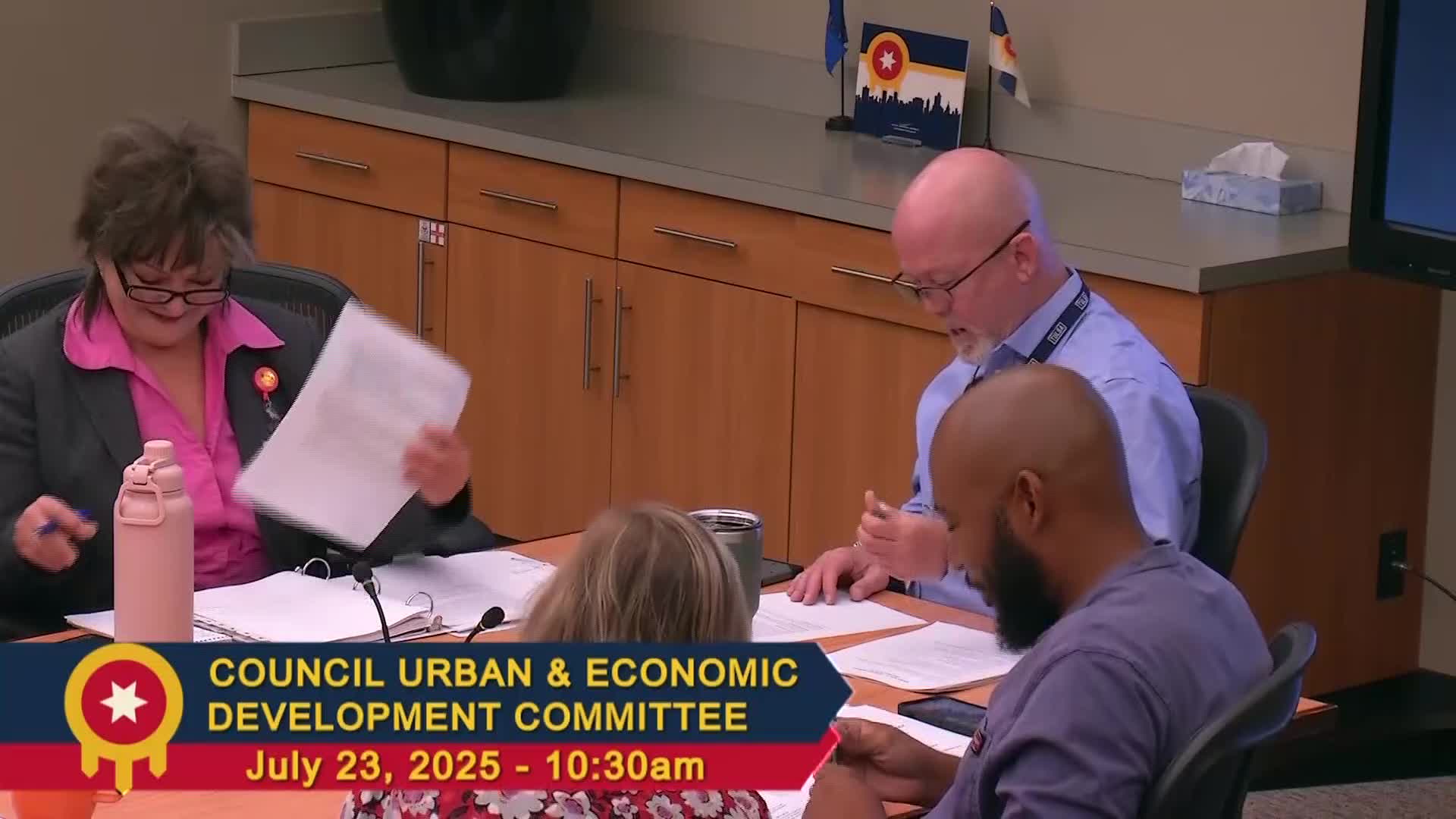
Two fellows with the Urban Leaders Fellowship presented housing research and policy recommendations to the Tulsa Urban Economic Development Committee July 23, urging “high‑impact incremental” zoning changes to help close an estimated 13,000‑unit housing gap.
Leah, identified in the record as a fellow, and her partner Jack described analysis showing about 19,000 acres of identified vacant land in Tulsa but noted much of that acreage is in nonresidential or single‑family residential zoning and therefore not immediately conducive to multifamily or “missing middle” housing. Leah said the supply analysis “unabstracts what that actually looks like,” and Jack added that favorable acreage for missing‑middle development is substantially smaller — “less than 1,000 acres,” according to their review.
Their recommendations focused on two incremental policy changes: enabling faith‑based organizations (FBOs) to opt into tailored overlays that would allow affordable housing development on land owned by churches and other religious organizations, and expanding accessory dwelling unit (ADU) rights by right in selected residential zones to reduce demand for Board of Adjustment special exceptions. The fellows cited other cities’ experiences: South Bend’s community‑led zoning changes as a positive example and Austin’s CodeNext litigation as a cautionary case against sweeping, rapid code rewrites.
On faith‑based housing, the presenters said Tulsa has more than 2,000 acres owned by religious organizations, mostly in single‑family residential zones, and that several local congregations have already expressed interest in redevelopment. They proposed an opt‑in overlay to streamline building regulations for willing congregations while preserving local review and community engagement.
On ADUs, the fellows reported 20 special‑exception ADU cases between June 2024 and June 2025 that consumed roughly 15% of the Board of Adjustment’s caseload; none were denied. They suggested allowing ADUs by right in higher‑density residential zones (for example, RS‑3 and up) to remove administrative burden and speed production where demand exists.
Councilors asked about community engagement strategies to reduce NIMBY resistance, infrastructure limitations (power lines and other utilities) that can delay development, and faith‑based providers’ capacity to operate inclusive housing services. Councilor Hall Hubbard and others pointed to existing local examples, including a tiny home village on donated land and other faith‑based redevelopment efforts, and asked for a more detailed, neighborhood‑level map identifying where missing‑middle opportunities exist.
The fellows said their work is part of a seven‑week program and that the presentation is informational; the committee did not take formal action during the meeting.