
Planning Board votes to remove proposed wetland buffers from conservation-district draft
Get AI-powered insights, summaries, and transcripts
Subscribe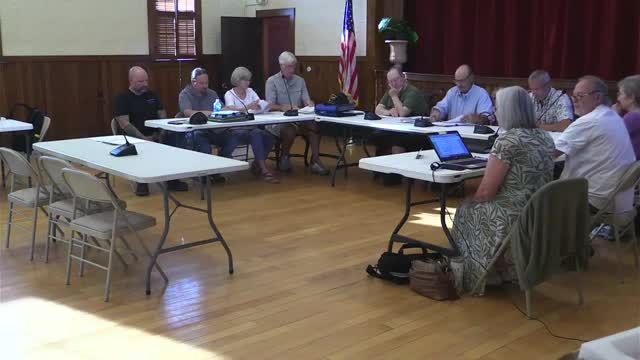
Summary
After more than two hours of debate, the Swansea Planning Board voted 4–3 to remove buffer language from the draft Wetlands Conservation District ordinance, while agreeing to continue work on definitions, conditional-use criteria and possible setbacks ahead of public hearings.
At a meeting at Wickham Hall, the Swansea Planning Board voted to remove buffer language from the draft Wetlands Conservation District ordinance after a lengthy discussion about property impacts, ecology and process. The motion to remove buffers, made by Planning Board member Brandon Selb and seconded by Planning Board member Michael York, passed on a roll-call vote of four in favor and three opposed.
The vote matters because the draft ordinance had proposed a 75-foot naturally vegetated buffer around some wetlands and vernal pools; proponents said the buffer was a science-based compromise and a minimum to protect breeding habitat, while opponents said it would amount to a taking of private property and could prevent expected uses such as building or parking. "The science recommends a minimum 100-foot buffer. We're going easy with a 75-foot buffer," said Jay, a member of the Conservation Commission who participated in the discussion.
Board members debated both technical and practical effects. Planning Board member Richard Lane and others warned that buffers would limit landowners' ability to use portions of their lots and could remove as much as a half-acre from buildable area around a small (about 500-square-foot) vernal pool when a 75-foot buffer is applied. Supporters responded that buffers protect habitat, flood control and other wetland functions and that conditional-use permits and careful site review would allow some activities to proceed if properly designed.
The board also approved two earlier motions to shorten the warrant language: one to remove item C under the ordinance's stated purpose (motion by Richard Lane, seconded by Michael York) and a separate motion to remove item F. Both procedural edits were approved before the larger buffers debate.
Members agreed on several next steps rather than finalizing a full ordinance immediately. The Conservation Commission will provide a proposed definitions section (including suggested wording for vernal pools, peatlands and buffers) and staff member Adam said he will coordinate revised language and statutory citations. The board discussed using setbacks (a fixed distance for buildings or structures from a wetland) as an alternative to a vegetated buffer; a 25-foot setback was mentioned as a possible compromise, and board members asked staff and the Conservation Commission to draft setback language to review before public hearings.
On conditional uses, board members discussed moving detailed permit criteria into site-plan regulations versus keeping them in the zoning ordinance. Planning Board members noted RSA 674:21 and said they will ask the town attorney whether conditional-use criteria must appear in the zoning ordinance or may be placed in site-plan regulations; the attorney had not yet reviewed the draft at the time of the meeting. Adam said he would circulate a revised draft of the conditional-use section so the board and Conservation Commission could refine the language and the list of activities that would require conditional-use permits.
The board recorded the roll-call vote on buffers as: Brandon Selb — yes; Michael York — yes; Scott Lehi — yes; Selectman’s representative James Tempesta — yes; Richard Lane — no; Mark Scalera — no; Victoria Aimes — no. The motion carried 4–3. Members emphasized the vote is not final policy: the removed buffer language can be reintroduced later, and the board will hold public hearings and solicit more information before placing a warrant article before voters.
The meeting included detailed line-by-line review of permitted and conditional uses (for example, whether construction or new utility pads should be allowed by conditional use) and discussion of technical thresholds (the draft text includes language treating freshwater wetlands over 1,000 square feet differently and discussed vernal pools with 500-square-foot thresholds in examples). Board members agreed to continue work with the Conservation Commission and staff and to ask the attorney for guidance on process and placement of permit criteria.
The board adjourned after confirming those next steps and scheduling further review and public hearing preparation.