Get Full Government Meeting Transcripts, Videos, & Alerts Forever!
Get email alerts on the Homelessness Shelter topic
No spam. Unsubscribe anytime.
Champaign officials and residents press for clearer Strides shelter finances as city cites safety in emergency viaduct closure
Summary
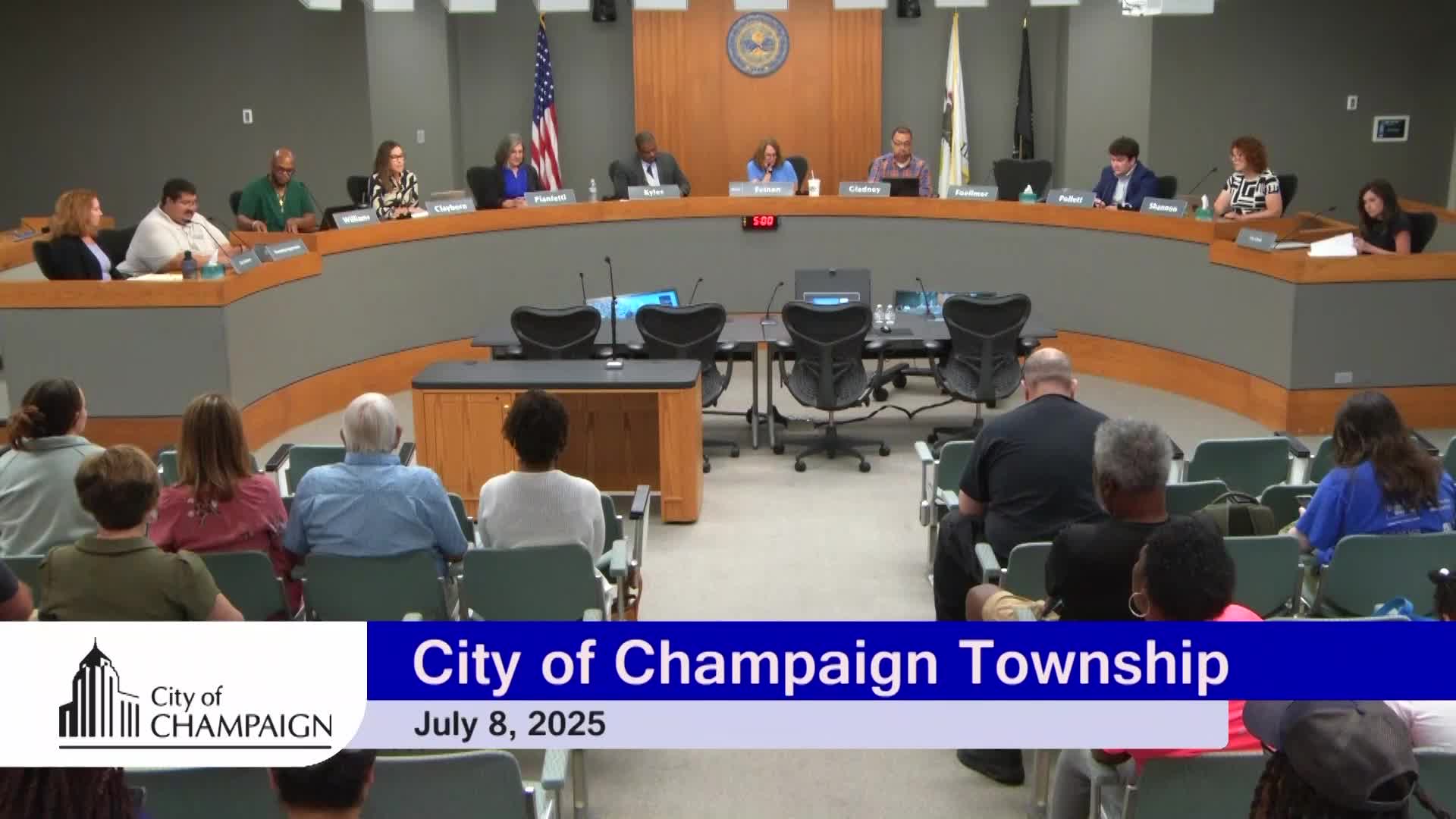
At a July 8 joint Champaign Township and City of Champaign meeting, residents pressed elected officials for more detailed accounting and program data for the Strides emergency shelter while city staff described an emergency closure of the Main Street viaduct after escalating safety incidents and stepped-up outreach to residents living there.
Township and city officials and dozens of residents pressed for clearer financial details and more daytime services for the Strays(Strides) emergency shelter — repeatedly called “Strides” in testimony — during separate township and city council sessions July 8.
Residents asked for line-item detail, check memos and cost-per-person accounting after reviewing a monthly expense report the township released for June. "If we're using $30,000 for office supplies, we should know what those supplies were," said China Figueroa Dixon of Champaign County, who urged officials to redirect purchases toward services that shelter guests use. Martell Miller, a Champaign resident who distributes water and supplies downtown, told the board, "Shelter is very well needed. I hope the city never decides to close." Daniel Thompson, co-owner of Mad Goat Coffee, described multiple medical and safety incidents his staff have seen near the viaduct and downtown and urged more coordinated daytime services: "We need to be clear and decisive about forward decisions about how we're serving our community and throw resources behind that."
Township supervisors and the shelter operator acknowledged the expense report was pulled directly from the financial system and lacked the narrative detail board members requested. Council member Pollitt asked whether the report could include the memo associated with each check. "I do have access to that so I can put that in next time," the township supervisor replied. Council member Shannon asked for a breakdown that would show staffing levels, salaries, and per‑client day costs; other board members asked the supervisor to provide the full check register, a narrative budget for Strides and the status of community donations.
Multiple public speakers said closure of the Main Street viaduct, which the city implemented on an emergency basis in late June, has left vulnerable people with fewer daytime options and urged more permanent housing and services. "We should be putting more money into Strides," Jessica Yacine of Urbana told the council. "The community is really stepping up." Others stressed that businesses and residents downtown were experiencing safety and public‑health problems tied to the viaduct encampment.
City staff described an escalation that led to the emergency closure. Deputy City Manager (public engagement lead) told the council staff increased outreach and, during a concentrated action, spoke with 23 individuals who had been living under the viaduct: five accepted mental-health and recovery services, two returned home and 10 entered waiting lists for shelters or housing programs; some residents declined offers of help. After those outreach efforts, contractors cleaned the viaduct, removed property for storage when residents requested it and installed temporary fencing. The deputy manager said the action aimed to protect both people living under the viaduct and the public, including downtown businesses and visitors.
Officials and community groups asked for a set of specific deliverables and short-term actions. Council members and speakers recommended: monthly financial reports with check memos and a one‑line cost‑per‑person figure; documentation of Strides' program goals and whether it provides day programming or only overnight beds; inventory of community and private donations and how they are used; an estimate of the shelter's funding runway and what grants or ARPA (American Rescue Plan Act) funds support operations; and a cost estimate for extending hours or adding daytime services. "What does it look like to extend services? What would it cost to extend services?" Deputy Mayor Kyles asked the supervisor.
Township action: the township board voted to place the May summary of expenditures on file during its portion of the meeting; the motion passed with the customary voice vote. The city did not take a legislative vote to close the viaduct; city staff described an administrative emergency response and follow-up outreach and cleanup.
Why it matters: Council members, shelter operators and activists all said existing emergency shelter capacity does not meet local needs and that the community is at risk of repeating cycles of short-term fixes. Several speakers asked for a longer-term, cross‑sector plan that would include a public–private partnership to build more permanent housing (several speakers referenced a local proposal called Hope Village) and more robust daytime services so people have safe places to be outside of overnight shelter hours.
City and township staff said they will provide a revised, more detailed financial report on Strides, including check memos, and explore sending an interim summary to board members before the next meeting. Township members also asked staff to publicize donation wish lists and other ways the community can contribute.
The meeting left several outstanding questions for follow-up: whether Strides can expand programming or hours within current funding; how community donations have been spent; the shelter's per‑guest daily cost; the timeline for any external grants or IHDA (Illinois Housing Development Authority) assistance; and how the city will balance public‑safety concerns with outreach to people who remain unsheltered.
More details from the meeting: speakers described a range of responses that included volunteer distribution of water and supplies, calls for more mental‑health and substance‑use resources, and repeated requests for clearer fiscal transparency from township staff. Officials emphasized that the viaduct closure was intended as a temporary safety measure and that engagement and referral continued while city staff offered storage and relocation assistance to residents who accepted it.
The township supervisor moved that the board "put the summary of expenditure for May 2025 on file." The motion was seconded and carried. The city manager and deputy city manager reported continuing outreach and said the closure followed criminal and safety incidents that city staff had documented. "We had to do it," the deputy city manager said of the closure, adding staff took steps to connect residents with services and to protect public safety.
Ending: Township and city officials said they will return with more complete financial documentation, and council members urged residents and service providers to participate in forthcoming planning sessions on housing, shelter operations and daytime services. Residents and business owners said they will continue to press for faster, visible changes while help is coordinated across jurisdictions.