Get Full Government Meeting Transcripts, Videos, & Alerts Forever!
Get email alerts on the Water Rates topic
No spam. Unsubscribe anytime.
City proposes 12% water revenue increase, to replace summer tiers with year‑round tiers
Summary
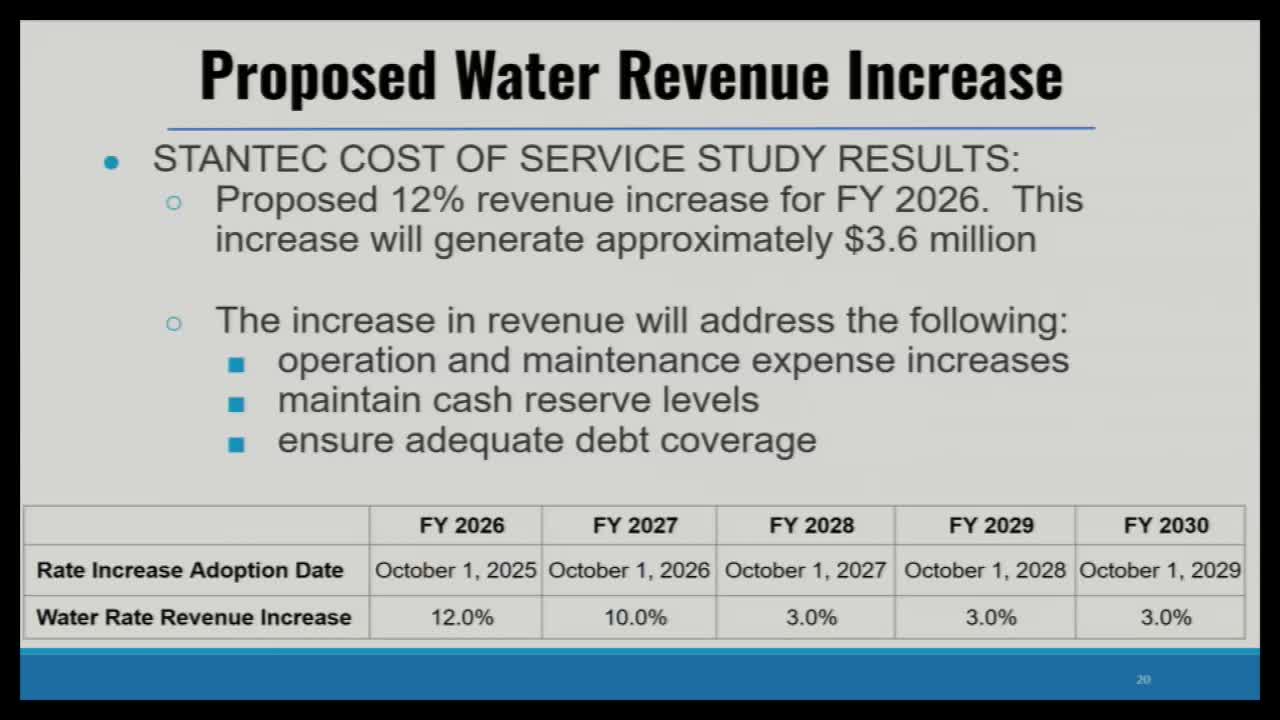
Staff presented a proposed FY2026 water revenue adjustment (12% / ~$3.6M) and a change to a year‑round tiered volume structure intended to recover peak day/hour costs; consultant estimated about 65% of customers would see bills fall.
City utility staff recommended a FY2026 water revenue adjustment and changes to the rate structure to respond to rising costs and to protect cash reserves. Erin (utility staff) said the proposed 12% revenue increase for FY2026 would generate about $3,600,000 and is intended to address higher operation and maintenance expenses — notably compensation and increased material and construction costs — and to preserve debt coverage following recent water‑treatment projects.
The chief technical change staff proposed was to end the separate summer/non‑summer rate schedule and replace it with year‑round tiered usage. Under the proposal the Tier 1 allowance would be reset to 100% of a customer’s winter‑quarter average consumption and apply year‑round; water used above that winter‑quarter baseline would move into higher tiers intended to recover the city’s peak‑day and peak‑hour supply costs. Staff said the consultant estimated about 65% of customers would see their bills drop under the new structure because their year‑round use would remain in Tier 1.
Why it matters: water rate structure and revenue assumptions feed the FY2026 budget, determine debt coverage, and influence long‑term capital funding for planned projects. Staff said the change is intended to reduce volatility and allocate higher costs to customers whose irrigation or other seasonal uses drive peak demand.
Staff also proposed several fee changes tied to cost‑of‑service: raising monthly base charges by meter size (for example, residential 5/8–3/4" meter base fee up by $0.25/month) and implementing connection/system equity fees immediately (the Water and Light Advisory Board recommended full implementation rather than phasing). Erin and other staff said the last substantive miscellaneous‑fee adjustments dated from 2014 and a billing/communication calculator is available on the finance web page so customers can estimate individual impacts.
Next steps and process: staff said the water changes will be part of the budget and will return to council for a public hearing and vote prior to adoption so the new rates can be implemented with the October 1 billing cycle. No formal council action occurred at the work session.