Get Full Government Meeting Transcripts, Videos, & Alerts Forever!
Get email alerts on the Work Program Staffing topic
No spam. Unsubscribe anytime.
Lexington planning staff cites state rule changes and limited capacity; entrance corridor and townhouse standards deferred
Summary
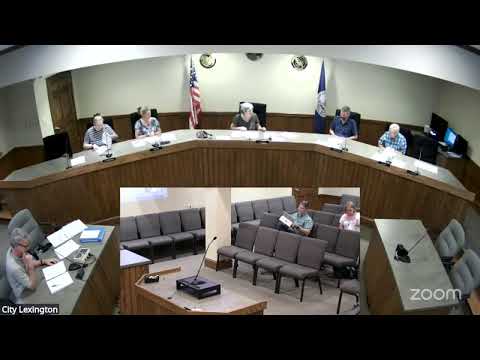
At the July 24 Lexington Planning Commission meeting, Arnie of the City of Lexington Planning Department reviewed the commission’s 2025 work program and told members recent state changes and staffing limits will affect scheduling for entrance‑corridor and townhouse work.
At the July 24 Lexington Planning Commission meeting, Arnie of the City of Lexington Planning Department reviewed the commission’s 2025 work program and told members recent state changes and staffing limits will affect scheduling for entrance‑corridor and townhouse work.
The work program matters because timing affects when the commission can review zoning standards that would shape development on visible corridors and potential infill parcels. Arnie listed priorities in roughly the order provided to the commission: a mini‑warehouse application (nearing finalization), an entrance‑corridor zoning amendment to codify signage language tied to city‑paid signs, updated townhouse design standards and a zoning code amendment to allow “missing middle” residential types. He said he has received preliminary legal guidance on new state site‑plan and subdivision rules and that those rule changes need attention before the entrance‑corridor rewrite.
Arnie said short‑term‑rental rules should be completed by year‑end so the city can align a revised ordinance with the January registration cycle: “I would prefer [short‑term rental] be done by the end of the year,” he told commissioners. He also reported that attorney review will be required for the state rule changes and added that with limited staff capacity — he described himself as currently the only person in the planning office handling this workload — some items will have to be staggered.
Commissioners discussed whether they could help by reviewing drafts or offering targeted input, and one commissioner offered to take a closer look at entrance‑corridor materials to provide preliminary comments for staff. Arnie said he would accept commission assistance but could not commit to when a full public discussion would return to the commission until legal reviews and higher‑priority items are addressed.
No formal votes were taken on the work program during the meeting; the session was an informational staff report and a request for commission direction on priorities and possible commissioner participation.
The packet also referenced a Strong Towns local conversation and a W. Neal/Mudd Center for Ethics program on sustainable land use for 2025–26 as potential public engagement partners that could tie into the comp‑plan effort.
Arnie asked commissioners to submit specific procedural or legal questions via email for the city attorney; he said the city attorney can provide guidance on conflicts or statutory interpretation when questions are formulated in advance.