Get Full Government Meeting Transcripts, Videos, & Alerts Forever!
Get email alerts on the Comprehensive Plan topic
No spam. Unsubscribe anytime.
Planner asks Lexington commission to adopt Weldon Cooper projections, approves survey and open-house plan
Summary
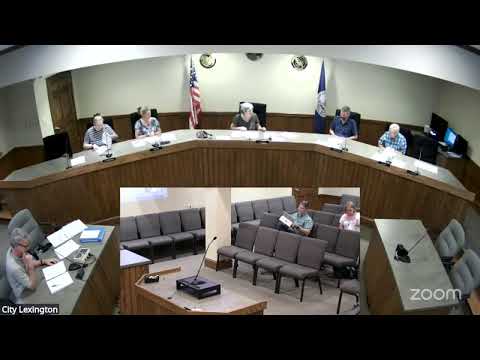
At the July 24 meeting of the Lexington Planning Commission, Jeremy Crute, planner with the Central Shenandoah Planning District Commission, updated the commission on the city’s comprehensive plan revision and asked members for guidance on population projections, a public-survey draft and plans for an open-house public engagement event.
At the July 24 meeting of the Lexington Planning Commission, Jeremy Crute, planner with the Central Shenandoah Planning District Commission, updated the commission on the city’s comprehensive plan revision and asked members for guidance on population projections, a public-survey draft and plans for an open-house public engagement event.
The presentation matters because the population projections and public input will shape housing, water and transportation estimates across future chapters of the comprehensive plan. Crute said draft chapters should start arriving for review within a week and that the project team will circulate a community-profile appendix and a draft survey for commissioners’ comments.
Crute said the population projections in the community profile come “straight from the Weldon Cooper Center out of UVA,” and that the new July release estimates roughly 2 to 3% population growth each coming decade, producing a projection “of little over 7,700 by 2050.” He asked whether the commission was comfortable using Weldon Cooper as the basis for plan forecasts. He told commissioners he could add low and high scenarios and recommended including a medium estimate based on recent local growth rates: “I will go back and look at the growth rate over, say, the last 25 years,” he said, and use that as a comparator while keeping Weldon Cooper as a high scenario.
Commissioners asked for confidence ranges and for the team to check apparent inconsistencies in the appendices. Crute agreed to review the American Community Survey-derived income and population tables that a commissioner flagged — notably a jump in median household income from about $34,004 to $89,006 in table B‑8 — and to compare 1‑year and 5‑year ACS estimates to identify sampling artifacts that could explain the change. He said he would send corrected tables if needed.
Crute reviewed the draft survey and described plans to offer both a two‑page paper version and an online version hosted in SurveyMonkey. He said the online survey could include branching logic to offer optional follow‑up questions and that the project team will treat answers to optional sections as supplemental qualitative input separate from the core dataset. He recommended keeping the core questionnaire short to maximize response rates and placing optional or open‑ended prompts at the end.
On communications, commissioners asked that the survey split questions about routine city information from emergency alerts. Crute also agreed to add a question asking how respondents receive city notices and emergency notifications. He said the project team can create a QR code for the online survey and distribute printed copies at city locations.
Crute described the proposed open‑house format: multiple stations (transportation, land use, parks/placemaking, infrastructure and historic resources), map‑based dot exercises and a limited‑resource prioritization activity. He recommended facilitators at each station but said the in‑person stations could still collect usable input without a full facilitator team. Commissioners suggested adding a separate station or a focused map exercise for the Spotswood and VDOT parcels to collect parcel‑specific input.
Timeline and next steps: Crute said draft chapters will follow in the coming week, he will send a revised survey draft the next morning, and he requested comments back within a week (the commission agreed to aim for next Thursday). He proposed holding the first public open house in early to mid‑August.
Quotation highlights from the meeting include Crute saying, “They estimate roughly 2 to 3% of population growth,” and, on next steps, “I will go back and look at the growth rate over, say, the last 25 years.” Commissioners and staff also discussed making high/medium/low projection scenarios and splitting emergency vs. routine communications questions in the survey.
Documents and data flagged for correction or follow up include the community profile appendices (population and income tables), a revised survey that will incorporate a communications question and a proposed open‑house agenda. Crute asked commissioners to send edits by email and not to reply‑all to avoid an in‑meeting communication among members.
The commission did not adopt formal policy in this meeting; Crute sought direction and requested written comments on the draft survey and appendices.
Looking ahead, the plan team will circulate corrected appendices and draft chapters for review, create the SurveyMonkey version of the questionnaire and finalize an open‑house date once the commission returns comments.