Get Full Government Meeting Transcripts, Videos, & Alerts Forever!
Get email alerts on the Community Development Block Grant topic
No spam. Unsubscribe anytime.
Pasco planning commission holds public hearing on 2026 CDBG funding; applicants seek about $1.2 million as city prepares recommendation
Summary
City staff told the commission Pasco’s estimated 2026 CDBG entitlement is $650,000 but after required set‑asides and a Section 108 debt payment roughly $400,000 remains for allocation; 14 proposals totaling about $1.2 million were presented at the public hearing.
City staff opened a public hearing on the City of Pasco’s 2026 Community Development Block Grant annual action plan and allocation, telling the Planning Commission that the city estimated a HUD entitlement of $650,000 for 2026 but that required deductions—20% for administration and a Section 108 debt payment of about $250,000—leave roughly $300,000–$400,000 available for grant projects. Kristen Webb, who presented the program rules and timeline, said the city received 14 proposals requesting about $1.2 million and that staff will return next month with a scoring‑based recommendation for the commission to consider before the City Council takes final action and the city submits its allocation to HUD.
The split matters because the Consolidated Plan priorities—affordable housing, neighborhood and economic development, homeless interventions and public services—drive which projects score well, but the available funds are smaller than the total requests. Webb noted that HUD caps public service activities at 15% and that staff will use HUD scoring criteria to make recommendations.
Applicants who presented and key details:
- Upwards (Boost childcare). Melanie Fore, community impact manager, said Boost pairs in‑home child care providers with coaching and digital tools to streamline operations and increase revenue. Fore said the program would be free to participating providers and families “not just through the program year but in perpetuity,” and that Upwards requested $128,000 to support a pilot to assist roughly 16 family child care providers, create teaching‑assistant jobs and expand openings for more than 200 families. Commissioners asked whether Upwards is a for‑profit or nonprofit; Fore described the organization as a social enterprise that operates both as a pass‑through for some subsidies and under contracts with employers and the Department of Defense; she told commissioners Upwards currently works with some Pasco providers but has not launched Boost in the city.
- YMCA of the Greater Tri‑Cities. Steve Howland (director) and Rob Wilkinson (Pasco program director) described the Martin Luther King Center after‑school and soccer programs the YMCA has run with city support for about 40 years. Wilkinson said typical annual participation across the center is about 3,000 youth and adults (summer numbers vary) and that soccer registration has grown from about 1,500 in 2023 to roughly 2,000 in 2024 and could reach about 2,500 for the current year.
- Arc of Tri‑Cities. Sue Peterson described Partners and Pals, Voyager, adult recreation and therapeutic‑recreation programs that serve children and adults with intellectual and developmental disabilities, emphasizing year‑round activities, transportation by bus for camps and large attendance at seasonal events.
- Boys & Girls Clubs of Benton and Franklin Counties. Elizabeth McLaughlin requested $30,000 to expand and sustain teen programming at the Pasco Clubhouse, emphasizing workforce readiness, academic enrichment and leadership development; she said the clubhouse has served Pasco youth for decades and is equipped to manage federal grant reporting.
- Columbia Ability Alliance (aka Columbia Industries). Kim Perron, chief operating officer, described a community center serving adults with intellectual and developmental disabilities, regular outings, music and fitness programs and respite that provides scheduled drop‑off services; Perron said the center subsidizes some clients and seeks CDBG funds to expand scholarships for private‑pay clients.
- Tri‑County Partners/Habitat for Humanity. Jett Richardson and grants coordinator Noah Dixon requested funds to reestablish a critical home‑repair program, offering repairs such as ramps, roofing, siding and accessibility modifications. They described a revolving 0% interest loan to homeowners below 80% area median income and said the affiliate has built affordable homes and seeks to resume repairs that preserve affordable housing stock.
- City of Pasco proposals (Parks & Recreation and community development). Staff summarized city proposals that did not have in‑person presenters: Pasco Specialty Kitchen equipment ($50,000 request); Peanuts Park North improvements ($100,000); ADA‑accessible playground equipment ($100,000); owner‑occupied rehab and facade improvement projects; and funding for a code‑enforcement officer assigned to low‑ and moderate‑income census tracts. The facade program is a 75/25 match with the city paying up to $25,000 per project.
Commissioner discussion and staff process notes:
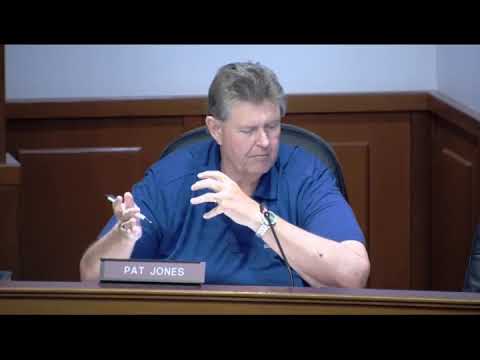
Several commissioners emphasized the scoring system that staff will use and asked to see how applicants’ other funding sources are reflected in application budgets; Webb said applicant budgets and other funding sources are included in their packets and scoring materials. Commissioner Pat Jones and others raised the recurring tension of city departments and outside nonprofits competing for the same CDBG pot; Jones urged residents to recognize the difference between funds that should be city‑funded and federal CDBG funds that the city must allocate under HUD rules.
Commissioners also questioned the role of for‑profit or social‑enterprise applicants; Webb said the program’s paperwork generally prioritizes nonprofits but that for‑profit entities can be eligible under certain economic‑development objectives and that eligibility depends on the activity and how it meets HUD objectives.
The public hearing officially closed at the end of the applicant presentations; no allocations were adopted at the meeting. Webb said staff will return next month with rankings and a staff recommendation for the commission to vote on and forward to City Council, after which council will set a final allocation for submission to HUD.
Ending: The commission closed the hearing and moved into workshop items. The staff recommendation, scoring packet and a final commission recommendation are scheduled to follow at the next meeting.