Get Full Government Meeting Transcripts, Videos, & Alerts Forever!
Get email alerts on the Water Quality Monitoring topic
No spam. Unsubscribe anytime.
Baltimore County staff collect insect samples at Deep Run to assess stream health
Summary
Baltimore County environmental staff described collecting and identifying aquatic insects at Deep Run in Meadowood Park to score stream health and guide local actions such as reducing fertilizer use and planting riparian buffers.
At Deep Run in Meadowood Park County Park, a Baltimore County environmental staff member described collecting biological samples from the stream to assess water quality by identifying aquatic insects and other invertebrates. "I'm here with my coworker Megan Brosh, and we are at Deep Run at Meadowood Park County Park. We're taking water quality samples," the staff member said. The sampling is intended to produce a single, comparable score that helps the county communicate how streams are doing.
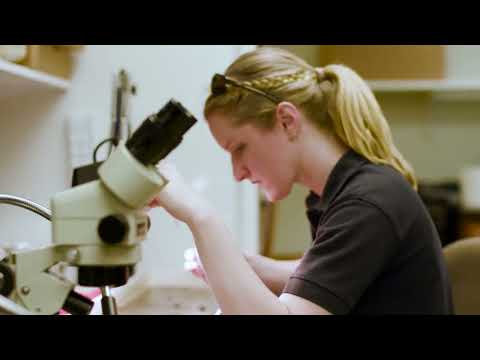
The staff member said the team collects both chemical and biological samples: "So what that means is we take chemical samples, we take samples to find out where pollutants are coming from, from pipes that come into the stream. And then we also take biological samples, which is what we're gonna be doing today." The biological method described involves disturbing rocks and vegetation to dislodge insects and other arthropods, then subsampling and identifying organisms under a microscope.
Under the protocol described, technicians "pick about a 120 organisms out" for a subsample and identify them to genus. Each genus is assigned a tolerance value for pollutants such as temperature, salinity or nutrients; the county then "would come up with a score," the staff member said. The staff member explained the ecological meaning of those results: "If we have a lot of organisms that are very pollution tolerant, then that tells us that there might be some pollutant of some kind in the stream. ... If we have very sensitive organisms here, then we know that this is a pretty clean stream overall." The speaker cited mayflies as an example of organisms that indicate better water quality: "Mayflies are really, great to find. They're pretty rare, in this county. Only some of the best streams have them." The staff member also noted a caddisfly that does not build a case as an observable example in samples.
The segment also framed individual homeowner behavior as part of watershed health. "One common mistake I think that people make is thinking that, just cause you don't have a stream on your property or in your backyard or in your neighborhood that you're not part of the problem or part of the solution. You definitely are. We all live in a watershed," the staff member said. The speaker urged residents to minimize fertilizer use and to consider planting or maintaining trees, shrubs or grasses along streams: "If you plant trees or shrubs or grasses or whatever you can near that stream to shade it, it's gonna create a whole host of better areas for them to live." The staff member linked warmer water temperatures and lack of shade to declines in sensitive aquatic species.
The information summarized here was presented as an explanation of sampling methods and homeowner actions rather than as the result of a specific new study or regulatory action. No motions, votes or formal county decisions were discussed in this audio segment. The county program branding in the segment urged listeners to follow local outreach channels for additional information: "This has been a watershed moment for Clean Green Baltimore County. Follow us on Facebook at Clean Green Baltimore County to find out more ways you can help keep our county clean and green."